
7 Best Free & Open-Source Vercel Alternatives (2025): Self-Hosted PaaS for Developers

If you're building modern web apps, React, Next.js, Vue, Svelte, or even static sites, you need Vercel and Netlify in your toolkit. These aren’t just deployment platforms; they’re accelerators for innovation, built by developers, for developers.
Imagine pushing code and having it live in under 10 seconds. That’s not a fantasy, it’s Vercel’s edge: instant preview deployments, Git-integrated CI/CD, serverless functions, and edge caching that actually speeds up your app globally. Every commit gets its own unique URL. Test, share, iterate—no setup, no friction. It’s like time travel for dev workflows.
Then there’s Netlify, the rockstar of JAMstack. With one-click deploys from GitHub, automated builds, and instant rollback (yes, revert to any previous version with a single click), it’s the ultimate safety net.
What is Git-integrated CI/CD?
Git-integrated CI/CD is the backbone of modern, reliable web development. Every time you push code to GitHub, it auto-tests, builds, and deploys—no manual steps. CI catches bugs early with linting and tests; CD delivers safely to staging or production. Platforms like Vercel and Netlify make this seamless: preview URLs for every branch, instant rollbacks, zero downtime.
It’s fast, secure, and scalable, perfect for React, Next.js, and headless CMS projects. No more “it works on my machine.” Just confidence. For developers building therapeutic tools, books, or apps, CI/CD means faster iteration, fewer errors, and full control.
It’s not just automation, it’s trust in your workflow. Boost your dev speed, reduce risk, and ship with impact. Git + CI/CD = unstoppable.
Both platforms shine with edge computing, meaning your assets run closer to users, faster load times, better UX, higher SEO rankings.
 Hazem Abbas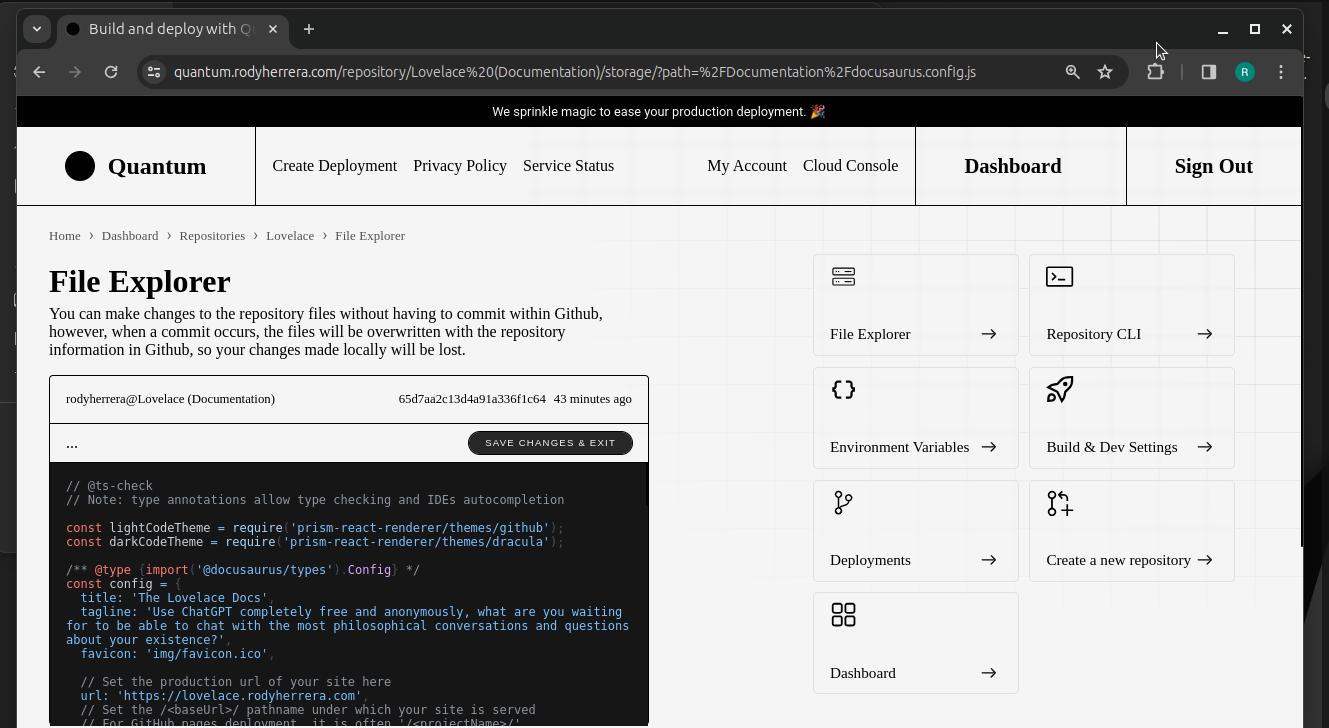
They handle SSL, CDN, image optimization, and even form handling out-of-the-box. And yes, they support custom domains, environment variables, and secure secrets.
But here’s the kicker: both are headless, open-source friendly, and play perfectly with tools like Strapi, Directus, Payload, and PocketBase. You build the backend. They serve the frontend. No vendor lock-in. Full control. Pure flexibility.
They’re also error-proof by design: atomic deploys mean if something fails, nothing breaks. You’re never stuck between “working” and “broken.” You’re always in control.
For me, doctor, developer, builder of healing systems, this speed, stability, and simplicity isn’t just convenient. It’s essential. I deploy research, books, and therapeutic tools fast, safely, and with zero distractions.
Why You Need Self-hosted Vercel Alternatives?
- Avoid Vendor Lock-in: No more being trapped by platform policies, pricing changes, or sudden feature removals.
- Full Data Control: Keep your code, logs, and user data on your own servers, critical for privacy and compliance.
- Cost Efficiency: Eliminate recurring cloud fees; run on affordable VPS (e.g., $5/month).
- Customization & Flexibility: Tailor deployments, CI/CD pipelines, and infrastructure to your exact needs.
- Ethical & Sustainable: Support open-source, avoid corporate surveillance, and build systems with integrity.
- Resilience: Self-hosted platforms auto-restart after crashes, ensuring uptime without relying on third-party stability.
Best Vercel Open-source Self-hosted Alternative
1- Tau

Tau is a lightweight, self-hosted PaaS built as a single binary. It enables developers to deploy Git-native apps with zero downtime, real-time logs, and full control, scaling effortlessly while eliminating vendor lock-in and reducing infrastructure overhead.
Tau is a framework for building low maintenance & highly scalable cloud computing platforms that software developers will love!
tau is a single binary with no external dependencies except standard system libraries. On top of that, it requires minimal configuration.
 taubyte
2- Dokploy
Dokploy is a free, self-hosted PaaS that turns complex infrastructure into simple clicks. With it you can deploy any app, Node.js, Python, PHP, Go, Ruby, you name it, in seconds. Spin up MySQL, PostgreSQL, MongoDB, Redis, or MariaDB with zero setup. No more “it works on my machine” chaos.
With built-in Docker Compose support, real-time monitoring, and automatic Traefik routing, Dokploy handles scaling, networking, and load balancing like a pro, even across multiple nodes via Docker Swarm.
Dokploy's features
- Applications: Deploy any type of application (Node.js, PHP, Python, Go, Ruby, etc.).
- Databases: Create and manage databases with support for MySQL, PostgreSQL, MongoDB, MariaDB, and Redis.
- Backups: Automate backups for databases to an external storage destination.
- Docker Compose: Native support for Docker Compose to manage complex applications.
- Multi Node: Scale applications to multiple nodes using Docker Swarm to manage the cluster.
- Templates: Deploy open-source templates (Plausible, Pocketbase, Calcom, etc.) with a single click.
- Traefik Integration: Automatically integrates with Traefik for routing and load balancing.
- Real-time Monitoring: Monitor CPU, memory, storage, and network usage for every resource.
- Docker Management: Easily deploy and manage Docker containers.
- CLI/API: Manage your applications and databases using the command line or through the API.
- Notifications: Get notified when your deployments succeed or fail (via Slack, Discord, Telegram, Email, etc.).
- Multi Server: Deploy and manage your applications remotely to external servers.
- Self-Hosted: Self-host Dokploy on your VPS.
 Dokploy
3- Coolify
Coolify is your self-hosted cloud, no vendor lock-in, full control. Deploy apps, databases, and sites on your own VPS, bare metal, or Raspberry Pi with just an SSH connection.
It’s like Heroku or Vercel, but yours. Keep all configs on your server. If you ever leave, your data stays safe. Simple, powerful, open-source. Run your projects your way, fast, free, and future-proof.
Many of my friends are using it, their business projects.
 coollabsio
4- Quantum

Quantum is an open-source, self-hosted PaaS that actually puts you in control.
You can easily deploy GitHub repos with real-time CI/CD: push code → instant, zero-downtime deploy. Developers will have full access to containers, logs, env vars, all on your own server.
I’ve moved 15 apps from Vercel to Quantum, zero stress, full freedom. For builders of healing systems, books, and ethical tools: Quantum isn’t just a platform. It’s your digital sanctuary.
 rodyherrera
5- /dev/push
This is an amazing open-source and self-hostable alternative to Vercel, Render, Netlify and the likes. It allows you to build and deploy any app (Python, Node.js, PHP, ...) with zero-downtime updates, real-time logs, team management, customizable environments and domains, etc.
Its features include:
- Git-based deployments: Push to deploy from GitHub with zero-downtime rollouts and instant rollback.
- Multi-language support: Python, Node.js, PHP... basically anything that can run on Docker.
- Environment management: Multiple environments with branch mapping and encrypted environment variables.
- Real-time monitoring: Live and searchable build and runtime logs.
- Team collaboration: Role-based access control with team invitations and permissions.
- Custom domains: Support for custom domain and automatic Let's Encrypt SSL certificates.
- Self-hosted and open source: Run on your own servers, MIT licensed.
 hunvreus
6- Delivery
Delivery is a lightweight, self-hosted alternative to Vercel, Netlify, and Heroku. It simplifies deployment: push code to GitHub → instant, zero-downtime live site. No complex configs. Full control, no lock-in. Built for speed, security, and simplicity.
Run on your own server, your data, your rules.
 younes101020
7- Kubero
Kubero is a self-hosted PaaS that simplifies Kubernetes deployment. Deploy Docker containers or source code instantly, no Helm, no expertise. 160+ one-click app templates (WordPress, Grafana, DBs). Follow 12-factor principles. Full control, zero lock-in. Run on your server.
It is open-source, secure, and free. Perfect for developers building ethical, scalable apps with integrity.
Kubero's other features include:
- Add-ons Integration: Deploy PostgreSQL, Redis, and more with one click.
- API & CLI: Automate workflows with REST API and command-line tools.
- Metrics & Monitoring: Real-time CPU, memory, storage, and network tracking.
- Notifications: Get alerts via Discord, Slack, or webhooks on build/deploy success/failure.
- Vulnerability Scans: Scheduled or on-demand security scans for running apps.
- Application Logs: View logs instantly in the web UI.
- Safe Restarts: Restart apps safely from the dashboard.
- Web Console: Access container terminals directly in the browser.
- Scheduled Tasks: Manage cronjobs effortlessly.
- Multi-Tenancy: Support for multiple teams or projects.
- SSO & OAuth2: Secure login via GitHub and OAuth2.
- Basic Auth: Protect apps with simple username/password access.
 kubero-dev