
How Copenhagen's Triple-Helix Life Sciences Model Is Driving Global Change


If you were to think of the famously healthiest cities in the world, we’re betting that Copenhagen would come pretty high on your list. After all, Copenhagen is so well-regarded in the healthcare world that you might imagine you can book a trip, look up luggage storage near Copenhagen Central Station, and return home happier and healthier than ever before. And, to be honest, you wouldn’t be far wrong. The question is – how exactly has this unsuspecting city become such a health hotspot?
Ultimately, this superior position stems from a few different things. Copenhagen’s robust health policy certainly features, while it’s also true that healthy choices are simply baked into the culture here. But Copenhagen’s triple-helix life sciences model is perhaps most beneficial of all.
Not only is a strong leaning towards life sciences changing the lifestyles of Copenhagen residents, but it's also driving global change. But what exactly is a triple-helix model, and why is it having so much impact?
Explaining the Triple-Helix Trend: How is it Helping?
This approach, which ultimately aims to bridge healthcare gaps between discovery, commercialisation, and patient care, refers simply to a cross-collaboration approach to scientific care. Effective, Copenhagen has developed a healthcare structure where academia, private industry, and public health services work as collaborative allies, rather than as competitors.
The result?
A cooperative ecosystem that fulfils itself, rather than falling apart and ultimately letting patients down. With this approach, Copenhagen has been able to significantly accelerate medical research and diagnostic evaluations, while also streamlining the delivery of medications that might otherwise have been decades in the making.
The Role of Copenhagen Life Science
It’s impossible to talk about Copenhagen’s impact on life sciences without referring to Copenhagen Life Science, a cross-sector partnership that’s set to run until 2030, and which has been formed directly in line with the triple-helix model. The partnership has key goals, including achieving health equality and developing approaches to complex conditions like obesity and mental health. This is a goal the partnership is achieving by taking that triple-helix approach even further, to include collaborations across everything from municipalities to pension companies and SMEs.
According to the mission statement on their website, Copenhagen Life Science aren’t just fuelling life sciences within Copenhagen itself. Their goal is also to inspire change worldwide by becoming a frontrunner in public health with an inspiring model that other countries can also get behind.
Understanding Medicon Valley
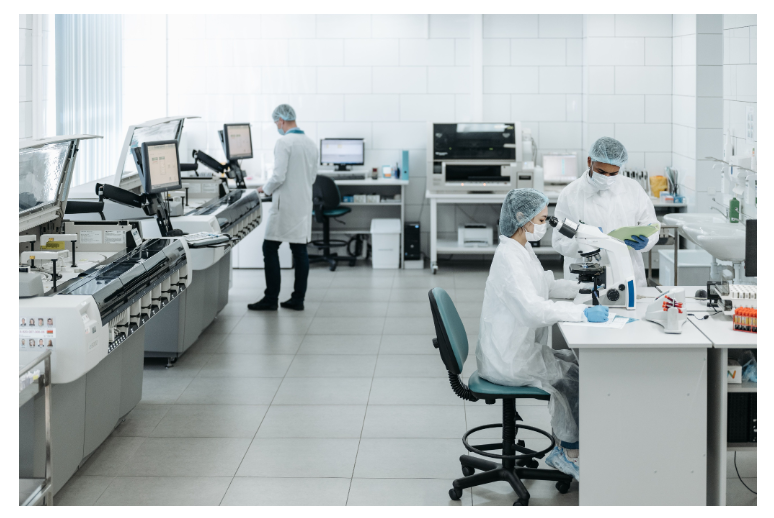
Copenhagen’s triple-helix model is especially inspiring when you consider that the city definitely has the infrastructure to back it up. In fact, Copenhagen is home to one of the world’s top life sciences clusters, the aptly named ‘Medicon Valley’. This health hotspot, which welcomes as many as 100,000 scientists annually, is home to world-class universities, hospitals, and biotech companies, which, in keeping with this famed approach, all work together to achieve world-changing outcomes. A trip here will see you coming face-to-face with 600 life science companies, 17 universities, and 32 hospitals. There’s no denying how impressive that is, let alone when you consider the collaborative elements at play.
Copenhagen’s facilities of note especially include:
- Academic & research institutions: Famed institutions including Denmark’s largest academic health and sciences medical institution, the University of Copenhagen (UCPH), as well as the Technical University of Denmark (DTU), which holds the mantle for bioengineering and life science research.
- Biotech and Pharmaceutical Headquarters: Copenhagen is home to the headquarters of many world-renowned life science and biotech companies, including Novo Nordisk, which specialises in the development of obesity treatments, like the first ever oral pill for diabetes and weight loss. Famed viral vaccine provider, Bavarian Nordic, is also headquartered here.
Introducing ‘The Copenhagen Cluster’
Copenhagen might seem to have life sciences sorted internally, but its triple-helix approach doesn’t just apply to Copenhagen institutions. In fact, Copenhagen-based scientists are increasingly adding global collaborations into the mix.
Enter ‘The Copenhagen Cluster’, which refers to an expansive cross-border life sciences ecosystem that spans across Eastern Denmark and Southern Sweden. This ‘cluster’ is home to some iconic life sciences locations, including Medicon Valley as discussed, but also Copenhagen’s Bioscience cluster, and beyond.
This cross-border approach is pretty much unique worldwide, and it proves that innovation doesn’t happen in a silo. The best results in life sciences and all other areas of healthcare really do happen when we work together, whether that means sticking close to home or branching out a little further.
What all of This Means for Global Life Sciences
So now we come to the crux of this article – what lessons can Copenhagen’s model actually bring to the world of life sciences at large? Well, to sum it up, top messages here for the rest of the world include –
- Innovation doesn’t happen in a silo: Copenhagen is living proof of the value found in a collaborative approach, especially when compared to currently crumbling, closed-door healthcare approaches in areas like the UK. It shouldn’t be a case of silence between departments and constant miscommunication. Truly effective medical revelations can only really happen as part of a whole.
- Infrastructure is Key: Copenhagen’s approach holds undeniable value, but it’s a system that would’ve been shouting into a void if Copenhagen didn’t have the infrastructure to back it up. This is a country that’s really invested in life sciences and healthcare research, with huge results for residents and beyond. Countries wanting to tread a similar path will need to invest in many of the same ways.
- Some solutions are worth fighting for: The success of Copenhagen-based companies like Novo Nordisk is also living proof that true innovation requires hard work. Their oral GLP-1 medications have now received world renown, and they began from the spark of an idea, and the resilience to keep going even when the puzzle seemed impossible to solve.
Copenhagen’s approach to life sciences is undeniably inspirational, and it’s only set to gain more worldwide momentum in the coming years, as the Copenhagen Life Science partnership and ongoing world-class innovations continue to show us what medical research looks like when it’s done right.