Beyond the Copy-Paste: How to Use AI to Actually Get Smarter, How Every Student Should use AI? 6 Easy Steps


I’ll never forget the moment I saw a student’s spark go out. It was during a creative writing workshop, and M. (let's call her that) was staring at a blank document, her cursor blinking in a steady, mocking rhythm. She had so much to say, but the fear of starting, of getting it wrong, had completely paralyzed her. She whispered, “I just don’t have any good ideas.”
My heart broke a little. I knew she was a brilliant, curious thinker, but she was stuck in the tyranny of the blank page.
A few months ago, I sat with her again, this time as she was drafting a history paper. The same anxious look was beginning to form. But this time, she did something different. She opened a new tab, and instead of frantically Googling for quotes, she started a conversation. She typed: “Help me brainstorm three different arguments about the causes of the Industrial Revolution that aren’t just ‘the steam engine’.”
 Hazem Abbas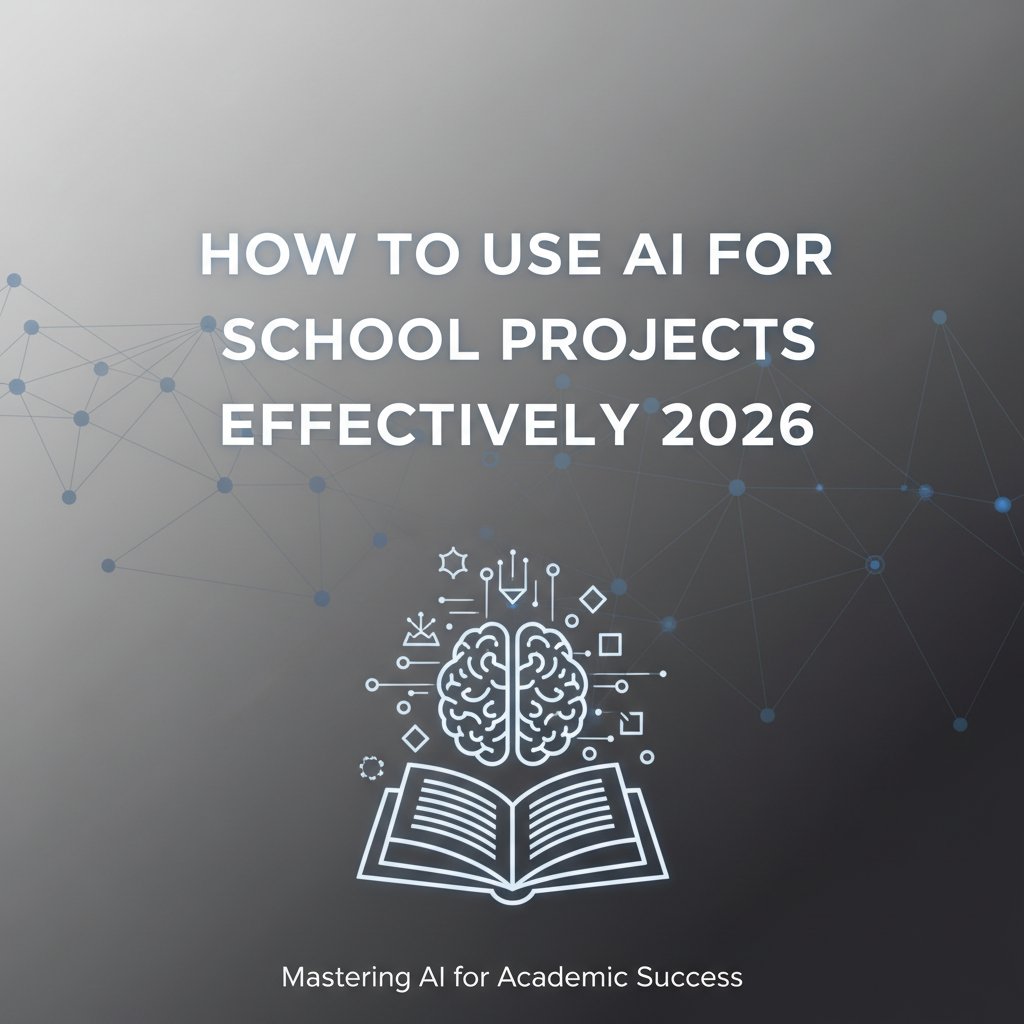
What happened next was magic. Not because the AI gave her a perfect answer, it didn’t. It gave her a starting point. One idea was cliché, another was fascinating but off-topic, and the third… the third made her sit up straight. “No, that’s not quite right,” she muttered to the screen, “but what if I combined it with this other thing we read?” Her cursor started moving, tentatively at first, then with confidence.
The AI hadn’t written her paper; it had handed her a key to unlock her own thoughts.
That’s when I knew the real educational value of Generative AI. It’s not about replacing learning, it’s about being the partner that helps a student like "M: find her voice again. Here’s how I believe we can use GenAI to grow as thinkers, creators, and lifelong learners:
1. Use GenAI as a Thought Partner, Not a Shortcut
Think of it as that curious, knowledgeable friend who helps you explore ideas—not the one who does your thinking for you. Try asking:
- “What are three different ways to approach this math problem?”
- “Can you explain the concept of photosynthesis in simpler terms?”
- “Help me brainstorm some creative angles for my essay on climate change.”
The goal isn’t to copy the answer. It’s to see a map of possibilities so you can choose your own path.
2. Challenge the Output, Be the Editor
This thing can be confidently wrong. Your most important job is to be a critical thinker. Always ask:
- Is this actually accurate?
- Does this align with what I’ve learned in class or from other sources?
- Can I verify this with my textbook or a trusted site?
Questioning the output isn’t rude; it’s the heart of real learning.
 Hazem Abbas
3. Use It to Overcome the Blank Page
Stuck? Let it be your spark.
Ask:
“Give me five unique thesis statements about renewable energy.”
Then, pick the one that intrigues you most, tear it apart, refine it, and build your own argument around it. The AI gives you a flicker; you are the one who lights the fire.
4. Practice Explaining Concepts Back
One of the best ways to learn is to teach. Try teaching the AI:
- “Explain the water cycle as if I’m 10 years old.”
- “Now explain it again, but as if I’m a geology major.”
This forces you to clarify your own understanding and immediately shows you where your knowledge gets fuzzy.
5. Use It to Personalize Your Learning
If a concept feels abstract and distant, make it real. Say:
- “Give me three real-life examples where quadratic equations are used.”
- “Create a quiz for me with 5 problems based on the Pythagorean theorem.”
You’re not just memorizing; you’re finding meaning.
6. Reflect on the Process, Not Just the Result
After you use GenAI, take a moment. Ask yourself:
- What did I learn from this interaction?
- How did it help me think differently?
- What would I do differently next time?
This simple act of reflection is what turns using a tool into genuine growth.
Remember: The most powerful skill you can build with GenAI is the art of asking better questions. The future doesn’t belong to those who have all the answers, it belongs to those who are insatiably curious, who know how to explore, question, and grow.
You are not competing with AI. You are learning with it. Do it wisely. Do it with purpose.
— Your Teacher