Integrating AI with Medical Records: A Doctor-Developer’s Vision for Smarter, Safer, and More Humanized and Personalized Healthcare


By Dr. Hamza Mousa, MD & Software Developer
As both a physician and a developer deeply immersed in the world of artificial intelligence, I’ve stood at the intersection of two rapidly evolving fields: clinical medicine and cutting-edge technology. Every day, I witness the immense potential, and the real-world challenges—of integrating AI into healthcare. Now, with the rise of Generative AI (GenAI), Large Language Models (LLMs), AI Agents, and AI automation, we stand on the cusp of a transformation that could redefine how we use electronic medical records (EMRs), not just as digital filing cabinets, but as intelligent, proactive partners in care.
Let me break this down in human terms, because at the end of the day, healthcare is about people.
What’s New in AI? Beyond the Hype
You’ve probably heard terms like Generative AI, LLMs, and AI Agents. Here’s what they mean in practical healthcare terms:
- Generative AI (GenAI): This is AI that can create new content, like summarizing a patient’s complex history, drafting a referral letter, or explaining a diagnosis in plain language a patient can understand.
- Large Language Models (LLMs): Think of these as ultra-smart, context-aware language engines (like GPT, Claude, or Med-PaLM). Trained on vast medical literature and clinical data, they can interpret, reason, and generate human-like text, but they’re not infallible. They need guardrails.
- AI Agents: These go a step further. An AI Agent isn’t just reactive, it can act. Imagine an agent that monitors your EMR in real time, flags a potential drug interaction before you prescribe, schedules follow-ups based on care gaps, or even coordinates with labs and pharmacies autonomously.
- MCP (Model-Client-Provider) Architecture: In secure AI deployments, this refers to how the AI model (server), the clinician’s interface (client), and the healthcare system (provider) interact. Properly designed, it ensures data never leaves the hospital’s secure environment, critical for privacy.
- AI Automation: This streamlines repetitive tasks, coding, prior authorizations, charting, freeing clinicians to do what they do best: care for patients.
 Hazem Abbas
How AI Integrates with Electronic Medical Records
Today’s EMRs are powerful but often clunky. They demand data entry, not insight. AI integration changes that.
Imagine this:
You finish a patient visit. Instead of spending 20 minutes typing notes, an AI scribe listens (with consent), generates a structured clinical note, and populates the EMR.
It cross-references guidelines, suggests preventive screenings you might have missed, and flags inconsistencies, like a rising creatinine in a patient on NSAIDs.
Or you may also wanna consider this:
An AI Agent continuously analyzes your panel of diabetic patients. It identifies those with HbA1c >9% who haven’t had a foot exam in 12 months, auto-generates outreach messages, and slots them into your schedule, closing care gaps before complications arise.
This isn’t science fiction. With APIs, FHIR standards, and secure on-premise or cloud-based LLMs, this integration is already happening in forward-thinking health systems.
 Hazem Abbas
The Benefits: Where AI Meets Human Care
1. Reducing Medical Errors
AI can cross-check prescriptions against allergies, renal function, and drug databases in real time. Studies show up to 80% of serious medical errors are preventable, AI acts as a tireless second pair of eyes.
2. Enhancing Clinical Workflow
Doctors spend nearly 50% of their time on administrative tasks. AI automation for documentation, coding, and prior auths can reclaim hours each week, time better spent with patients or in rest (yes, physician burnout is real).
3. Improving Healthcare Quality
AI-driven insights ensure adherence to evidence-based protocols. Missed mammograms, overdue colonoscopies, uncontrolled hypertension, AI surfaces these silently, systematically, and scalably.
4. Boosting Patient Satisfaction
Patients want clarity, speed, and empathy. GenAI can generate personalized after-visit summaries in their native language. AI chatbots can answer routine questions 24/7.
Faster responses, fewer errors, and more face-to-face time = higher trust and satisfaction.
5. Saving Resources
By preventing hospital readmissions, optimizing medication use, and streamlining operations, AI integration can significantly reduce costs.
One health system reported a 15% drop in administrative overhead after deploying AI scribes and coding assistants.
 Hazem Abbas
The Concerns: Privacy, Security, and Ethics
With great power comes great responsibility.
Patient privacy is non-negotiable. Feeding sensitive health data into public LLMs is a hard no. That’s why on-premise or HIPAA-compliant, zero-retention AI models are essential. Data should never be used to train public models without explicit, informed consent.
Prompt hacking is another real risk. If an AI system is poorly secured, a malicious actor could craft inputs (“prompts”) to extract protected health information (PHI) from the model’s responses. Robust input validation, output filtering, and audit trails are critical.
And let’s not forget: AI doesn’t replace clinical judgment. It augments it. An LLM might suggest a diagnosis, but only a human clinician can weigh psychosocial context, patient values, and subtle cues no algorithm can capture.
 Hazem Abbas
The Path Forward: Human-Centered AI
As a doctor who codes, I believe the future of healthcare isn’t “AI vs. doctors”, it’s AI with doctors. The goal isn’t automation for its own sake, but augmentation that restores the humanity of medicine.
When AI handles the paperwork, we get back to listening.
When AI flags risks, we intervene earlier.
When AI explains complex conditions simply, patients feel empowered.
This integration—done right, ethically, and securely—can drive healthcare quality improvements, reduce medical errors, streamline clinical workflow, save resources, and most importantly, elevate patient satisfaction.
We’re not just digitizing medicine. We’re reimagining it—with intelligence, integrity, and heart.
Dr. Hamza Mousa is a physician and software developer working at the intersection of clinical care and AI innovation. He advocates for responsible, human-centered AI deployment in healthcare systems worldwide.
Read More!
 Hazem Abbas
 Hazem Abbas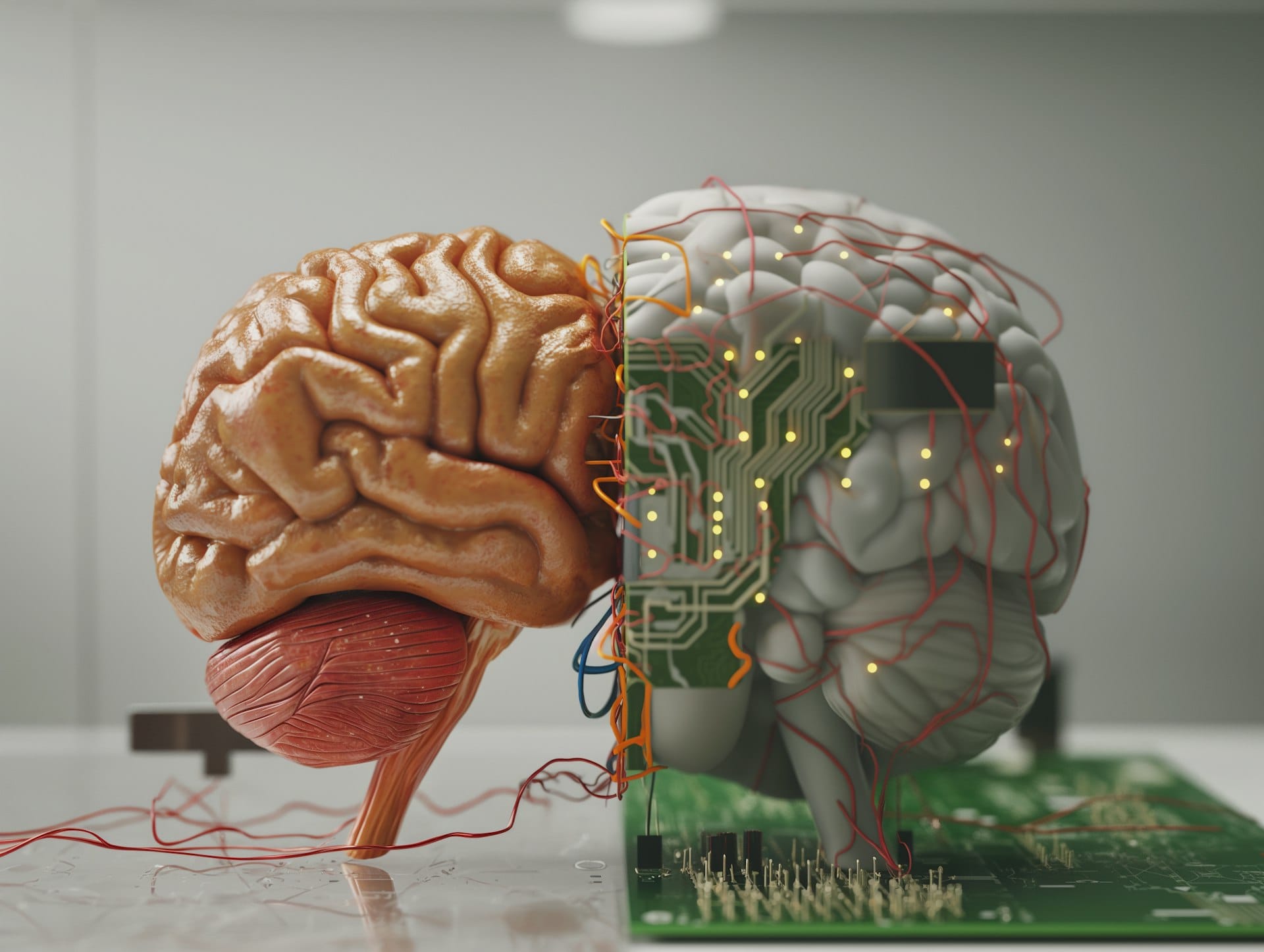
 Hazem Abbas
 Hazem Abbas
 Hazem Abbas
 Hazem Abbas
 Hazem Abbas