OverChat, is it the time to Replace OpenWeb UI for your Own Private AI Work?

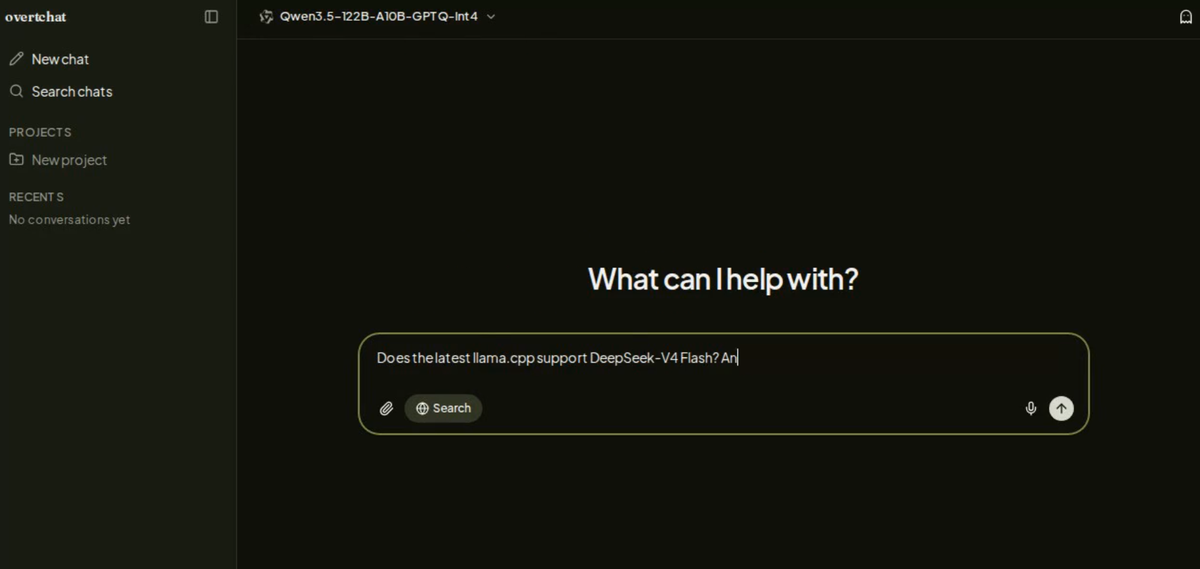
For a long time, Open WebUI has been the default recommendation for self-hosted AI chat interfaces. It’s feature-rich, visually polished, and widely adopted. But as our local AI workflows grow more demanding, a once-great tool can start to show its cracks. Enter OverChat (stylized in the community as overtchat), a lightweight, privacy-first alternative built on a simple premise: it should just work.
If you’ve ever felt friction in your daily AI interactions, it might be time to rethink your stack. Here is why Open WebUI is losing its edge, and why OverChat might be the exact tool you’ve been waiting for.
Why Open WebUI Is Struggling to Keep Up
Open WebUI set out to be a comprehensive solution, but that ambition has come at a steep cost to performance and simplicity:
- Performance Bottlenecks: On long replies, the browser tab can peg your CPU and balloon past a gigabyte of RAM. This happens because the streaming pipeline re-broadcasts the entire growing message body on every single token, resulting in an O(N²) byte complexity. Pasting any sizable chunk of text can freeze the page for seconds.
- Migration Headaches: Recent release lines (like v0.9) have shipped with migration regressions. Users often find themselves having to
docker execinto containers and manually edit Alembic scripts just to get the app to boot after a simpledocker pull. - UI Heaviness: Underneath the hood, the interface feels bloated. Settings pages are cluttered with toggles for features most users will never touch. Web search demands its own API key, TTS requires separate setup, and there are essentially "a hundred surfaces in front of a single text box."
If you want a plugin marketplace, image generation, and a code interpreter, Open WebUI still has its place. But if you want a chat app that opens in under a second and stays out of your way, it’s time to look elsewhere.
The OverChat Philosophy: Less Is More
OverChat was built to eliminate friction. It strips away the unnecessary complexity and focuses on what actually matters for a private, self-hosted AI workflow:
- Radically Lightweight: The entire Docker image is just 600 MB (compared to Open WebUI’s 1.7 GB). It runs on one process, one SQLite file, and a tiny Redis container (~13 MB idle, capped at 64 MB) whose only job is to ensure a mid-reply page reload doesn’t drop your tokens. No Postgres, no Celery, no separate API services.
- Frictionless Migrations: Schema updates are handled by a single Drizzle command on container boot. No manual script editing required.
- Sensible Extensibility: There is no plugin runtime, no pipelines, and no complex functions framework. Tools are limited to two clean AI SDK definitions:
web_search(powered by a bundled SearXNG instance) andfetch_url(Defuddle to Markdown). - No Vector DB Overhead: OverChat ditches RAG, embeddings, and heavy vector databases. Instead, it uses SQLite FTS5 + BM25, populated by database triggers, making chat search blazingly fast. Web search results are injected directly into context as clean JSON.
 Hamza Musa
What’s in the Box?
Despite its minimal footprint, OverChat doesn’t compromise on core functionality:
- Universal LLM Support: Connect to Anthropic, Google Gemini, OpenAI, Groq, OpenRouter, xAI, Mistral, DeepSeek, Ollama, vLLM, or llama.cpp—all through a single, unified
@ai-sdk/openai-compatibleclient. - Built-in Tools, Zero Setup: Web search works out of the box via the bundled SearXNG (no API keys needed). Text-to-speech is handled by the bundled Kokoro engine.
- Optional Speech-to-Text: Opt-in STT via Parakeet TDT v3, which processes entirely on your machine (supporting both CPU and NVIDIA GPU profiles).
- Robust Organization: Multi-user auth (first signup is admin), persistent and auto-titled chat history, full-text search, file uploads (PDF, Word, Excel, CSV, images, code), and projects with per-project system prompts.
- Mobile Ready: A native Android thin-client app is available on Google Play. It connects directly to your self-hosted instance, meaning your chats and files never leave your server. (iOS is currently in progress).
 Hamza Musa
Privacy as a Core Architecture, Not an Afterthought
For those of us who self-host, privacy isn’t a feature—it’s the entire point. OverChat respects this deeply:
- Zero Telemetry: No analytics, no hidden pings, and no external calls except to the LLM endpoint you explicitly configure.
- True Data Ownership: All your data lives in a single SQLite file. You can copy it, back it up, or delete it with absolute certainty.
- Transparent Mobile Exception: The Android client sends crash reports to Sentry, but strictly without any chat content or credentials.
The Verdict
The era of tolerating bloated, resource-heavy interfaces for the sake of "having all the features" is ending. OverChat proves that a self-hosted AI interface can be elegant, fast, and fiercely private without sacrificing utility.
With a simple docker compose up -d, you get a resilient, multi-user, privacy-respecting chat environment that gets out of your way and lets you focus on the work that matters.
If you value simplicity, local-first architecture, and tools that respect your hardware and your data, OverChat isn’t just an alternative—it’s the upgrade you’ve been looking for.
Ready to try it? Check out the repository, clone it, set your .env, and experience what a truly lightweight AI workspace feels like.
 yoloyash