Static Web Server: The Tiny Web Server That Just Gets It, and It is Free!

Let me ask you something: How many times have you needed to serve a static site, your React app, Svelte static website, a docs folder, a prototype, and ended up wrestling with python -m http.server, npx serve, or some bloated Docker container just to see it live?
Yeah. Me too.
That’s why I’m genuinely excited about SWS; Static Web Server, a tiny, blazing-fast, Rust-powered web server built for one job: serve static files like a pro, without the noise.
And honestly? It’s not just good. It’s elegant.
Why SWS Feels Like a Breath of Fresh Air
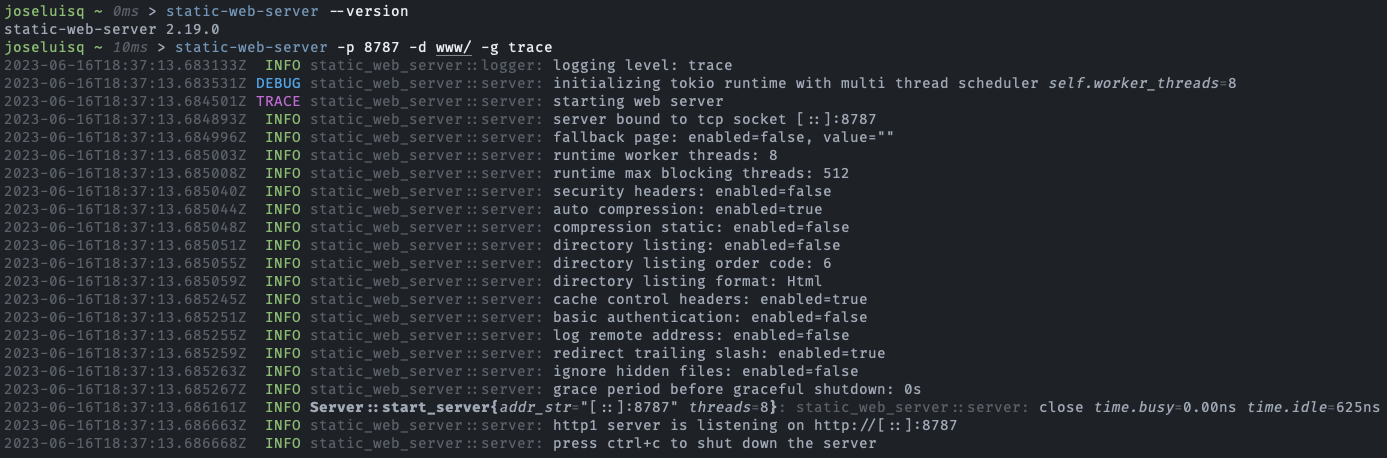
Imagine this: You’re working on a frontend project. You’ve got your build ready. You run: static-web-server -p 8000 -d ./build
… and boom your site is live at http://localhost:8000. No config. No setup. No bloat.
But here’s what makes it real magic:
- It’s written in Rust, so it’s memory-safe, fast, and secure by design.
- Asynchronous & concurrent, thanks to Tokio and Hyper, meaning it handles 10k+ requests per second (yes, really) with minimal CPU and RAM.
- HTTP/2 support out of the box, faster loading, multiplexed streams, smarter caching.
- Runs everywhere: Linux, macOS, Windows, Android, even inside Docker or Wasm via Wasmer. Yes, in the browser.
This isn’t just another “hello world” server. This is production-grade, lightweight, and actually meant for real work.
The Real Benefits (Not Just Hype)
Let’s cut through the fluff. Here’s what SWS actually solves:
| Problem | How SWS Fixes It |
|---|---|
| Slow local dev servers | Serves assets in under 5ms — seriously. |
| Memory-heavy tools | Uses <10MB RAM. Runs on old laptops. |
| Inconsistent behavior across platforms | Same binary. Same experience. |
| Security risks in scripting servers | Zero unsafe code. Rust owns the safety. |
| No HTTP/2 or advanced features | Built-in support. No extra config. |
And yes, it’s tiny. The binary? Often under 5MB. That’s smaller than a single modern JS bundle.
Why This Matters Now
We’re in an era where speed, security, and simplicity are no longer luxuries, they’re necessities.
- Devs want instant feedback.
- Ops teams want stable, low-overhead services.
- CI/CD pipelines need reliable, repeatable servers.
- Edge computing demands lightweight binaries.
This amazing small project hits all of them, not because it’s flashy, but because it’s thoughtful.
It doesn’t try to be everything. It just does one thing, serve static files, and does it better than anything else I’ve used.
Who Should Use SWS?
- Frontend devs building SPAs (React, Vue, Svelte, etc.)
- Docs teams serving static documentation
- CLI tool authors needing embedded servers
- DevOps engineers tired of Docker overhead
- Hackathon builders who want "run it and go"
- Anyone who’s ever said, "I just want to see my files!"
Features
- Built with Rust, which focuses on safety, speed and concurrency.
- Memory-safe and significantly reduced CPU and RAM overhead.
- Blazing fast static files-serving and asynchronous powered by the latest Hyper, Tokio and a set of awesome crates.
- Single 4MB (uncompressed) and fully static binary with no dependencies (Musl libc). Suitable for running on any Linux distro or Docker container.
- Optional GZip, Deflate, Brotli or Zstandard (zstd) compression for text-based web files only.
- Compression on-demand via Accept-Encoding header.
- Partial Content Delivery support for byte-serving of large files.
- Optional Cache-Control headers for assets.
- Termination signal handling with graceful shutdown ability and grace period.
- HTTP/2 and TLS support.
- Security headers for HTTP/2 by default.
- HEAD and OPTIONS responses.
- Lightweight and configurable logging via tracing crate.
- Customizable number of blocking and worker threads.
- Optional directory listing with sorting and JSON output format support.
- CORS with preflight requests support.
- Basic HTTP Authentication.
- Customizable HTTP response headers for specific file requests via glob patterns.
- Fallback pages for 404 errors, useful for Single-page applications.
- Run the server as a Windows Service.
- Configurable using CLI arguments, environment variables or a TOML file.
- Default and custom error pages.
- Built-in HTTP to HTTPS redirect.
- GET/HEAD Health check endpoint.
- Support for serving pre-compressed (Gzip/Brotli/Zstd) files directly from disk.
- Custom URL rewrites and redirects via glob patterns with replacements.
- Virtual hosting support.
- Multiple index files.
- Maintenance Mode functionality.
- Available as a library crate with opt-in features.
- First-class Docker support. Scratch, latest Alpine Linux and Debian Docker images.
- Ability to accept a socket listener as a file descriptor for sandboxing and on-demand applications (e.g. systemd).
- Cross-platform. Pre-compiled binaries for Linux, macOS, Windows, FreeBSD, NetBSD, Android (
x86/x86_64,ARM/ARM64) and WebAssembly (via Wasmer).
Try It Today
Install it in seconds:
cargo install static-web-server
Serve any folder:
sws --port 3000 --root ./dist
Done.
No config. No headaches. Just fast, safe, beautiful serving.
Final Thought
In a world full of over-engineered tools, SWS stands out not because it’s complex, but because it’s simple, smart, and powerful.
It’s the kind of tool that quietly makes your life better, every time you use it.
So if you're tired of slow, fragile, insecure local servers… Give Static-Web-Server a spin.
You might just fall in love with how good a simple server can feel.
Resources & Downloads
 static-web-server
 Jose Quintana