How 3D Medical Animation Can Revolutionize Continuing Medical Education


Lifelong learning in medicine is a vital addition to the medical practice of professionals to keep them abreast of the new developments in medical sciences. More conventional ways of teaching such as lectures and textbooks may not be sufficient to explain treatment procedures and difficult anatomical processes.
The introduction of 3D medical animations has brought a new effective way of learning; dynamic and interactive means of learning as opposed to standard presentation and in-take of medical knowledge. Medical practices and conditions can be visualized more realistically, to help medical professionals grasp more knowledge about them, and retain the information better.
Improving Understanding of Complex Concepts
Medicine entails a complex structure, consisting of many anatomical structures and physiological processes which can be hard to visualize in two-dimensional illustrations. 3D medical animations demonstrate deep anatomical and physiological structures to allow the learner an in-depth look in three dimensions. As an example, the dynamics of the heart can be grasped much easier when learners can observe the movements and interaction in a condition similar to the real environment.
Medical animation in 3D also facilitates enough of a linkage between theory and practice. Its use enables healthcare professionals to perform step by step visualization of the procedures with a view to capturing the likely complications and variations.
This visual presentation promotes critical thinking and increases the capacity to transfer theoretical knowledge into real life. This makes medical education more effective, interesting, and manageable by learners in different fields.
 Hazem Abbas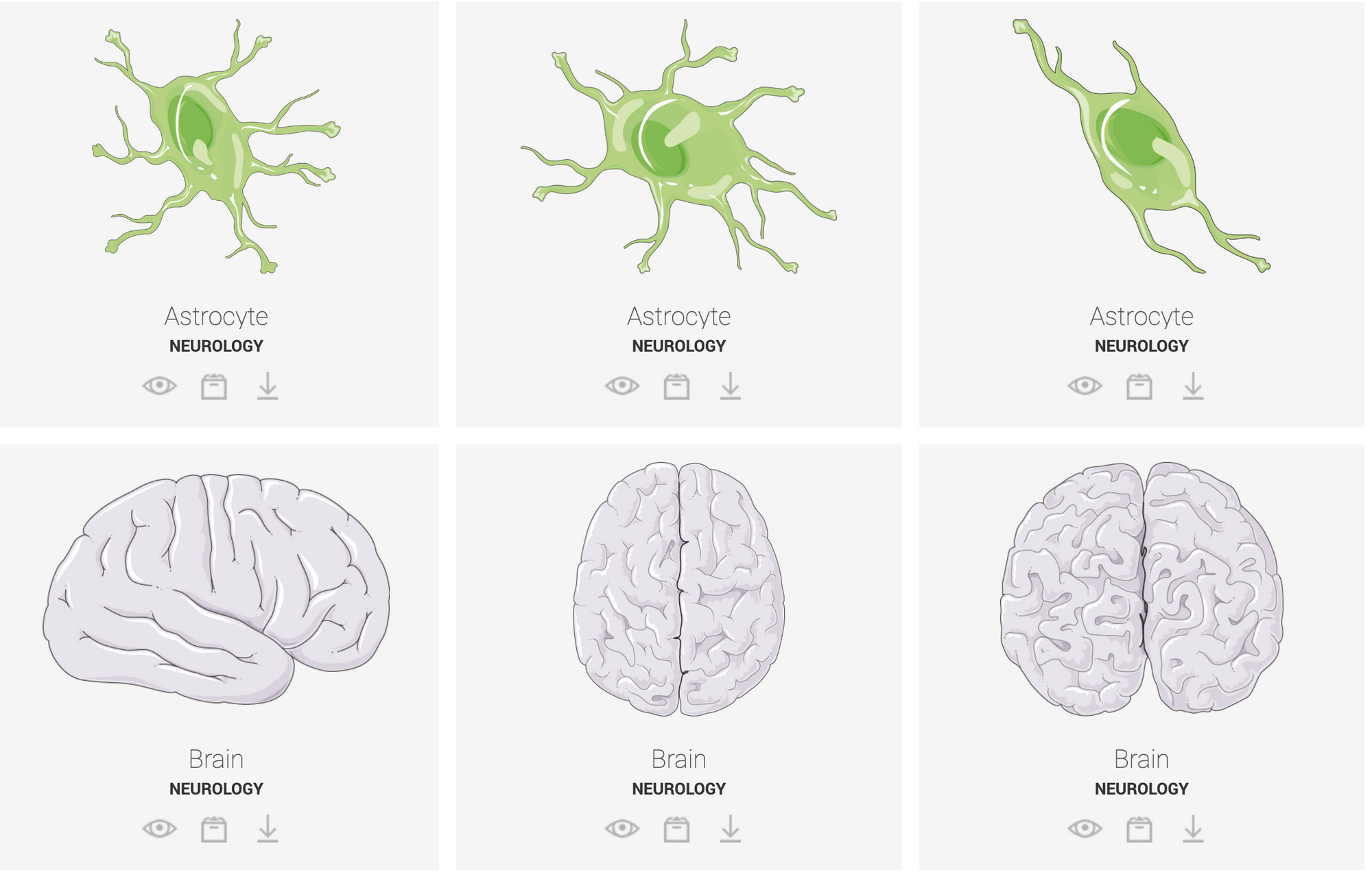
Enhancing Engagement and Retention
Conventional means of imparting continuous medical education tend to lose the focus of learners particularly when the subject matter is complex or exceptionally technical. Medical animation brings in a factor or interactivity that can enhance engagement to great levels. With the introduction of movements, color coding, and realistic graphics, it is more probable learners will remain concentrated and remember the information over a more extended period of time. When people use 3D animations in the study of something, the immersive quality draws attention like nothing a picture or explaining the concept in words would do.
Also, active learning is facilitated through the possibilities of manipulation of 3D models and multiple perspectives of viewing the structure. Within a particular procedure learners can repeat certain steps or they can decide to take a different path to other steps and this helps to cement the knowledge and retain it in memory.
In a world where, in the field of healthcare, every medical professional must regularly enhance his/her set of competencies, the interactive format will help practitioners not only learn but also memorize the material, and continuous education will become more efficient.
Supporting Remote and Flexible Learning
Medical specialists may be busy and unable to take time off to get training in person. With 3D medical animation, doctors, and nurses can learn at their own time and convenience since it is available via digital devices such as laptops and tablets.
These animations can be used within online courses, virtual simulation, and mobile applications so that the learner may access it at any time and place. This accessibility is critical in the sense that it would not limit continuing medical education by geographical and time restrictions.
It is possible to deliver consistent training in many institutions by using 3D medical animations as a part of remote learning. It is possible to provide complex procedures conducted on a regular basis, which would have the same high quality of the educational process with all the learners. This strategy will strengthen collaboration between institutions and facilitate the spreading of state-of-the-art medical information to a wider audience and help to generate better healthcare results.
Advancing Practical Skills and Simulation
To develop medical skills, there is no alternative to actual practice, but time is a constraint at times, and particularly in some surgeries, since some surgeries may be complex to practice. 3D medical animation can fill this gap. The combination of repeatable observation of animations and subsequent interaction enables learners to be familiar with procedural tasks and landmarks, as well as to make them in reality later.
Along with that, medical animation can be used in conjunction with virtual reality or simulation tools to give unusual realistic training scenarios. This integration will enable the learners to develop skills in decision-making, time constraints of various procedures, and error recovery with no harm to patients. Quality maps are projected to be increased through repetitive exposure to drilling complex procedures through the creation and use of 3D medical animations, which will improve the confidence and competence among healthcare practitioners thereby assuring them of successfully delivering safe and effective care.
 Hazem Abbas
Use of 3D medical animations in continuing medical education portrays a paradigm shift in medical education. Intuitively breaking down difficult-to-grasp content, enhancing active student participation and retention, promoting versatile learning, and developing practical skills, medical animation allows achieving results that are hard to beat, even within the healthcare community. In a world where technology keeps changing, 3D medical animations are going to increasingly gain prominence as the means through which medical professionals have to be equipped with skills and information to keep up with the current trends of healthcare practice.
 Hazem Abbas