In the Age of AI, Are You Still a Developer? No We are Conductors


Let's skip the corporate AI hype. We all know the drill by now: someone on LinkedIn posts a shiny video of an AI generating a full-stack todo app in twelve seconds, and the comments section immediately descends into a tribal war between "software engineering is dead" and "it's just an advanced autocomplete."
The truth is much messier. Software engineering isn't dead, but the version of it we practiced five years ago-the one where you made a comfortable living memorizing syntax, fighting Webpack configs, and copy-pasting solutions from Stack Overflow-is on life support.
Today, the AI writes the code. It writes the boilerplate, it writes the regex, it writes the unit tests. If your entire value proposition as a developer is "I can type syntax into a code editor," you are competing with a machine that charges twenty bucks a month and doesn't sleep.
So, how do you stand out? How do you remain a vital, irreplaceable developer in an ecosystem saturated with synthetic code?
You stop being just a coder, and you start becoming an architect of intelligence. You learn how to bridge the gap between deterministic logic (traditional code) and probabilistic reasoning (large language models).
If you want to build things that actually matter today, here is the real, unvarnished stack of what you need to master. Not tomorrow. Now.
1- MCP (Model Context Protocol): The Missing Nervous System
Let's start with the thing that is quietly shifting the tectonic plates of development environments right now: MCP.
For the longest time, working with an LLM felt like talking to a brilliant, blind savant trapped in a sensory deprivation tank. You had to copy your code, paste it into a browser tab, wait for a response, copy the response, and paste it back into your IDE. It was exhausting. Even standard extensions just felt like glorified autocomplete.
Then came the Model Context Protocol.
Think of MCP as an open-source, standardized nervous system for AI models. Instead of every single developer building custom, fragile tooling to connect their favorite LLM to their local files, databases, or terminal environments, MCP provides a universal protocol. It allows an AI client-like Claude Code or advanced terminal agents-to securely and deeply read, navigate, and modify your actual workspace.
When you use an MCP-driven tool, the model doesn't just see the snippet you highlighted. It understands the architecture of your repository. It can run a grep command across your codebase, inspect your local SQLite database, check a schema, and execute a build script to see if its own changes broke your project.
If you aren't integrating MCP or specialized agentic command-line interfaces into your daily workflow, you are working at a massive temporal disadvantage. It's the difference between building an engine with a hand wrench versus an automated assembly line.
2- Structural Prompting: Beyond "Write Me a Script"
Most developers write terrible prompts. They treat the LLM like a magic genie, tossing a vague sentence at it and getting frustrated when the output is messy or misses edge cases.Bad Prompt: "Write a Python script to scrape a website and save it to a database."
If you give a vague prompt, the AI has to guess. And when an AI guesses, it hallucinates or falls back on generic, sub-optimal boilerplate.
To stand out, you need to understand Structural Prompting. This means treating your prompt exactly like code. You define the role, you set strict system constraints, you provide clear context, and most importantly, you specify the Structured Output.
If you are building an application where an AI feeds data into a backend API, free-form text is useless. You cannot parse "Sure, here is the data you requested!" inside a production pipeline. You need to force the model to return strict, predictable data structures-usually raw JSON or YAML-that adhere to an exact schema.
JSON{
"status": "success",
"data": {
"items": []
}
}
When you master structural prompting, you stop using AI as a chatbot and start using it as a deterministic computing node within your software architecture.
3. Learn the Negative Prompting: The Art of the Boundary
We talk a lot about telling the AI what to do. We don't talk enough about telling it what not to do.
In complex application development, Negative Prompting-explicitly defining exclusions, constraints, and forbidden patterns-is what keeps your system from derailing. LLMs are eager to please; by default, they will try to fill in gaps even when they shouldn't, or they will introduce legacy libraries because they saw them frequently in their training data.
When instructing an AI to refactor an older codebase, your negative instructions are often more important than the positive ones:
"Do not use deprecated library X; use modern native API Y instead."
"Do not truncate the code with // rest of code here placeholders under any circumstances."
"Do not introduce external dependencies for utility functions."
Setting these strict boundaries reduces the chaotic variance of LLM outputs. It forces the model to work within the precise architectural lines you have drawn, saving you hours of cleaning up accidental technical debt.
Prompt Engineering: How to Be a Proper Prompt Engineer? 7 Advices and Recommended Tools
4- AI Agents: From Autocomplete to Autonomous Peers
An LLM is a single turn: input goes in, output comes out. An AI Agent, however, is an entirely different beast. It is an LLM wrapped in a loop of execution, observation, and self-correction.
[Goal] -> [Plan] -> [Action (Tool Use)] -> [Observe Result] -> [Evaluate/Fix] -> [Success]
Agents have autonomy. When you give an agent a goal-like "Find the memory leak in this microservice and patch it"-it doesn't just write a speculative piece of code. It looks at the logs, writes a diagnostic script, runs it, analyzes the output, modifies a file, runs the test suite, realizes it broke an unrelated integration test, rolls back the change, and tries a different approach.
As a developer, you need to know how to build, configure, and guide these agents. This means understanding how to give them safe, sandboxed tools (like file system access, terminal execution, or API keys) and how to monitor their trajectory so they don't spin out of control or cost you a fortune in API tokens. You are no longer just writing the code; you are managing a digital team of junior developers.
5- RAG & Vector Databases: Giving the Brain a Memory
An AI model's knowledge is frozen at its cutoff date. If you ask a raw model to write code using a library that was released or heavily updated last week, it will confidently hallucinate a bunch of non-existent methods.
This is why you must understand RAG (Retrieval-Augmented Generation).
RAG is how we give the AI a localized, real-time memory. Instead of retraining a massive model-which costs millions of dollars-we store our documentation, our internal codebases, or our customer data inside a specialized database called a Vector Database (like Chroma, PGVector, or Pinecone).
When a query comes in, we don't send it straight to the LLM. First, we convert the text into a mathematical vector-a string of numbers representing its semantic meaning.
We look up the most relevant pieces of information in our vector database, grab that fresh context, and stuff it into the prompt along with the original question. Suddenly, the AI can reason over your private, up-to-the-minute data with perfect accuracy. If you want to build AI tools that solve real business problems, RAG is the entry ticket.
 Hazem Abbas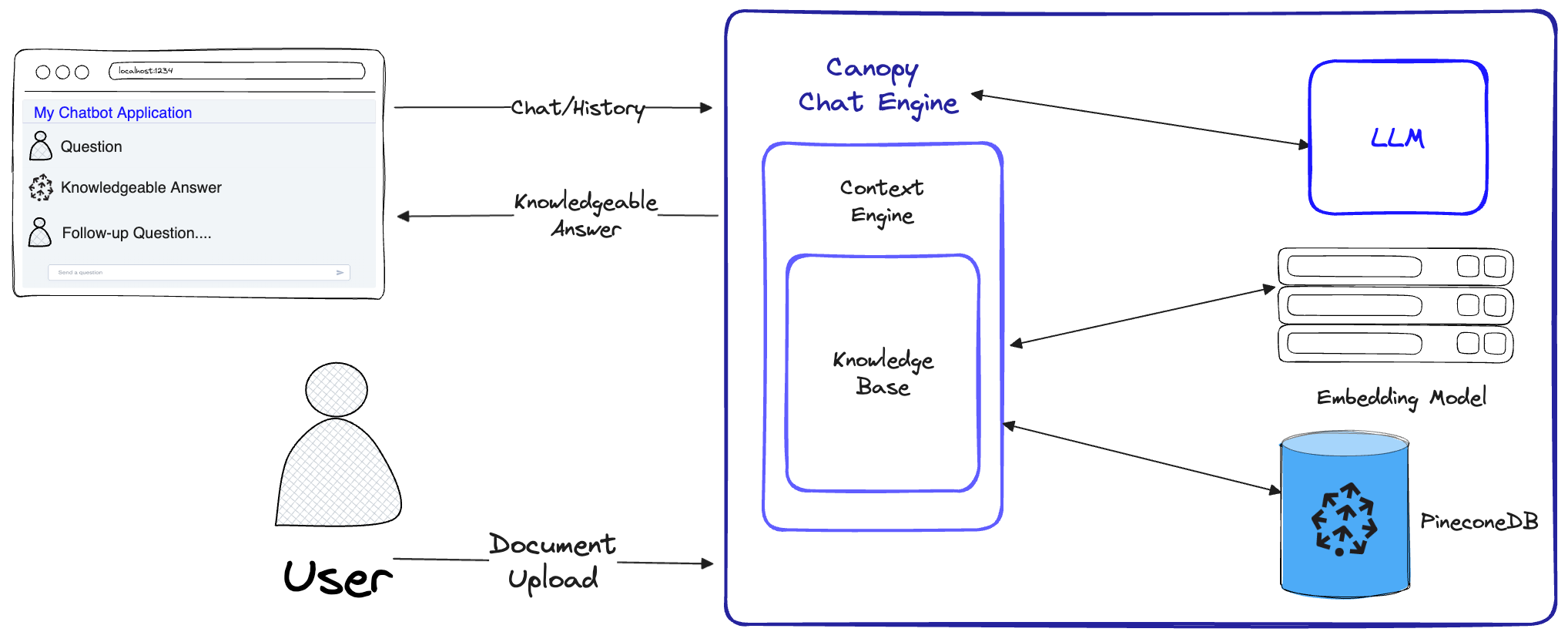
6- Check and Test Your Code: The "Trust But Verify" Paradigm
Here is a hard truth that nobody wants to admit: AI writes beautiful-looking code that is frequently, subtly broken.
It will miss subtle concurrency edge cases. It will introduce silent security vulnerabilities. It will use a method signature that looks perfectly logical but doesn't actually exist in the specific version of the library you are targeting. Because the code looks clean and runs on the first try $80%$ of the time, developers get lazy. They copy, they paste, they push to production, and then everything explodes at 3:00 AM.
In the age of AI, your primary job is no longer writing code; it is verifying it.
You must become a master of automated testing. If you aren't writing robust integration tests, end-to-end tests, and strict type-checking setups, you are playing Russian roulette with your codebase.
7- AI Orchestration: Building the Machinery
When your application advances beyond a single prompt, you run into a coordination problem. You might need one model to classify a user's intent, another specialized model to extract data from a document, a vector search to find context, and a final model to synthesize the response.
This is AI Orchestration.
You need to know how to use orchestration frameworks (like LangChain, LlamaIndex, or building your own lightweight state machines) to chain these pieces together cleanly. Orchestration involves managing state, handling API failures gracefully, routing inputs dynamically based on complexity, and ensuring that data flows smoothly from one node to the next without leaking context or breaking the application pipeline.
8- Local AI: Taking Back Control
Cloud APIs (like OpenAI or Anthropic) are fantastic for prototyping, but they come with heavy strings attached:
- Cost: Token costs scale brutally with production volume.
- Privacy: Many industries cannot legally send sensitive user data or proprietary code to third-party servers.
- Latency & Reliance: If their servers go down, or change their underlying models overnight, your application breaks.
A great developer knows how to build, run, and optimize Local AI.
Thanks to tools like Ollama, Llama.cpp, and Hugging Face, you can run incredibly capable open-source models right on your local machine or self-hosted cloud infrastructure. You need to understand how to select the right model for the job, how to run quantized models (compressed versions that require significantly less VRAM), and how to deploy them efficiently.
Using a massive frontier model in the cloud to do simple text classification is like hiring a rocket scientist to do basic addition. It's overkill, and it's expensive. A true professional knows when to spin up a lightning-fast, local Small Language Model (SLM) that runs locally for pennies, reserving the massive cloud models exclusively for heavy-duty architectural reasoning.
The Verdict: The Shift from Builder to Conductor
The developers who are panicking right now are the ones who viewed code as the final product.
Code was never the product. The product is a solved problem. Code is just the medium we have historically used to instruct computers how to solve that problem. Now, we have a tool that speaks human language and can write that medium for us at lightning speed.
This doesn't diminish your value; it amplifies it. Instead of spending three days fighting syntax errors or writing tedious boilerplate, you can spend those three days thinking about system architecture, data integrity, user experience, and robust security.
You aren't being replaced by the AI. You are being promoted to the conductor of an entire orchestra of digital intelligence. Learn the layout of the stage, master the tools, and start directing the music.
 Hazem Abbas