Why Directus Is Our Foundation for AI-Driven Healthcare Apps
Why we chose Directus over Strapi, Sanity, and Contentful for our AI-powered healthcare apps. A deep dive into real-time sync, PostgreSQL integration, BioMCP compatibility, and why control, privacy, and developer freedom matter in medical tech.

You know what it’s like, sitting in research mode, staring at a wall of options, wondering if you’re making the right choice.
That’s exactly where my team and I were last quarter: deep in the trenches of headless CMS evaluation, building something meaningful for our users, and needing a foundation that was powerful, flexible, and actually built for developers who care about control.
We weren’t just looking for another “content management” tool, we were hunting for a system that would grow with us, respect our codebase, and not force us into rigid patterns.
So we tested Directus, Strapi, Sanity, Contentful, Prismic, and even dabbled in some custom solutions. We ran benchmarks. We stress-tested APIs. We broke things on purpose. And after weeks of real-world testing, one platform stood outnot because it was flashy, but because it felt right.
 Hazem Abbas
Here’s why we chose Directus, and why, if you’re a developer building something serious, you should consider it too.
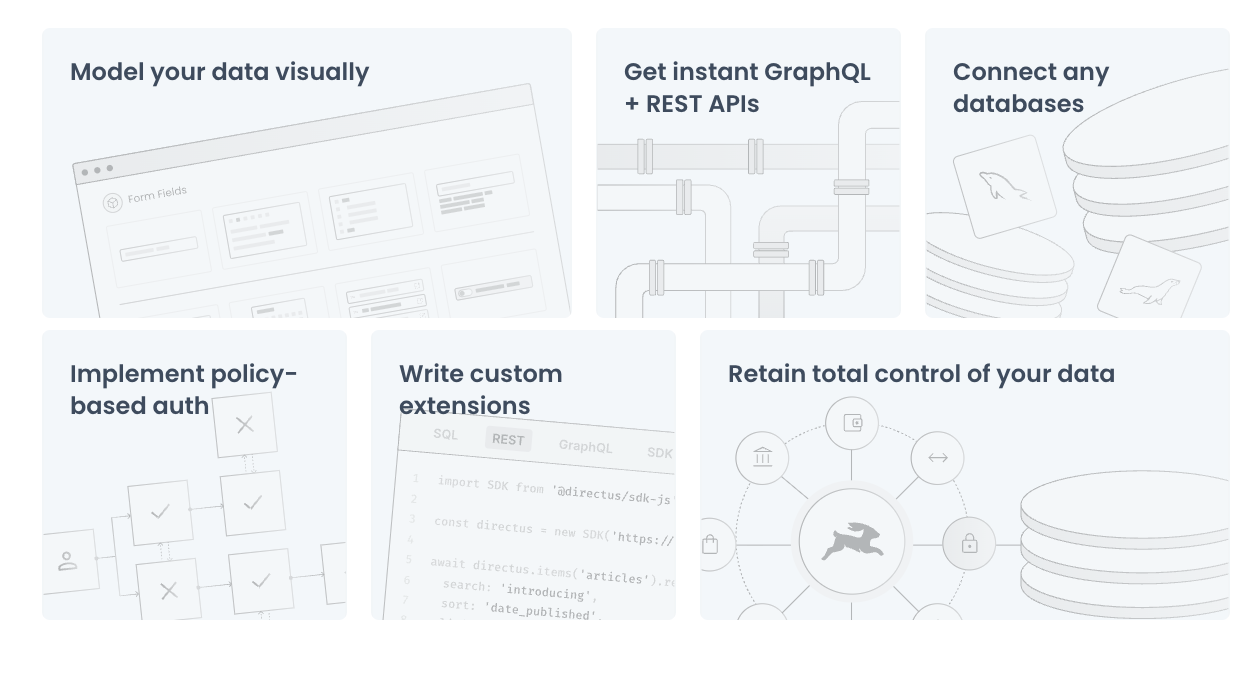
You Want Control? Directus Gives It to You, No Jargon, No Hacks
Let’s cut through the noise: most headless CMS platforms treat your database like a black box. They want to own your schema, your relationships, your data flow. But with Directus, it’s different.
Your database is still yours. Your tables, your constraints, your foreign keys, they stay intact. Directus doesn’t impose its own structure. It reflects yours.
When you connect Directus to your PostgreSQL instance (or MySQL, SQLite, MariaDB, or SQL Server), it doesn’t rewire your schema. It reads it. It understands it. Then it gives you a beautiful, intuitive admin interface that mirrors your actual data model, no mapping, no abstraction layer. You’re not fighting the system. You’re collaborating with it.
This isn’t just convenient, it’s liberating. For a team that values transparency, ownership, and clean architecture, this is non-negotiable.
We’re using PostgreSQL, our go-to for complex relational data, full-text search, and transactional integrity. But we wanted flexibility. What if we needed to switch later? Or support multiple databases?
Directus supports PostgreSQL, MySQL, SQLite, MariaDB, and MS-SQL Server, all out of the box. That means we’re not locked in. Our data model remains portable. If we ever decide to move, refactor, or expand, we can do so without rewriting half our stack.
That kind of freedom? Priceless.
Something I have to mention here, when prototyping on SQLite instance, you may face some issues to migrate your collections to PostgreSQL instance, So, it is better to work on PostgreSQL.
However, it is important to note that Directus with SQLite comes with some real-time challenges and limitations, you may use it to build your app with Directus SDK, but it is better to work on MySQL or PostgreSQL.
Real-Time? Built-In. No Configuration Needed.
You’ve probably spent hours setting up WebSockets, managing event listeners, or wrestling with third-party services just to get live updates. With Directus, real-time is baked in.
As soon as you enable the WebSocket server (which takes 2 lines of config), your frontend apps start receiving live updates, whether someone edits a record, uploads a file, or publishes content. No extra middleware, or 4complex setup. Just instant sync.
And it’s not just for dashboards. We use it for:
- Live collaboration in medical case notes
- Real-time notifications for patient intake workflows
- Instant feedback loops in our AI-powered therapy app
It just works, and it feels effortless.
Moreover, it comes with Redis support, that can saves you time, provide caching server for your queries, and data, which we will discuss in the next part.
Redis: The Secret Weapon You Didn’t Know You Needed
Performance matters. Especially when you’re serving healthcare data, clinical insights, or mental health tools where latency can impact user experience.
Directus integrates Redis seamlessly. It uses it for:
- Session storage
- Cache invalidation
- Pub/sub messaging for real-time events
But here’s the kicker: you don’t have to be a DevOps expert to set it up. Just point it to your Redis instance, and boom, your app becomes faster, more responsive, and ready to scale.
No need to build your own caching layer. No guesswork, Just performance that scales with your needs.
Deploy in Minutes, Not Days
We all know the pain: “It works on my machine.” Then you try to deploy it to staging… and suddenly everything breaks.
And because it’s modular, lightweight, and well-documented, you can integrate it into your CI/CD pipeline without friction. Migrations? Version-controlled. Environments? Synced. Rollbacks? Simple.
You spend less time debugging infrastructure and more time building value.
Your Schema, Your Rules, No Forced Models
You’ve seen those CMS platforms that demand you define a “content type” before anything else. Then you realize you can’t add a new field without jumping through hoops. Or worse, you end up with a bloated, inflexible schema.
With Directus, you design your collection first. Then you let Directus expose it. Need a patient_notes table with JSONB fields? Done. A therapy_sessions table with timestamps, references, and status flags? Already there.
Directus doesn’t ask you to conform. It adapts. You keep full control over constraints, indexes, triggers, and relationships. Want to add a check constraint? Go ahead. Need a computed column? Use a view. All within the DB, all visible in Directus.
This is how systems should work, when you’re building for healthcare, privacy, and long-term reliability, this level of control isn’t optional. It’s essential.
Migration Management That Actually Works
We’ve all been burned by database migration hell. “Why did it break in production?” “I didn’t change anything!” “It worked locally!”
Directus solves this with built-in migration tracking. Every schema change is version-controlled. You can generate migrations, apply them across environments, and roll back if needed, all from the CLI or API.
We now treat our database schema like any other code. We commit changes. We review them. We merge. We deploy. No more “it worked on my machine.”
This is real developer velocity.
SDK That Feels Like Part of Your App
Let’s talk about the JavaScript/TypeScript SDK.
Most CMS SDKs feel like an afterthought. Clunky. Incomplete. Missing key features. Not type-safe.
The Directus SDK? It’s the opposite.
- Full TypeScript support (auto-completion, strict typing)
- Clean, intuitive syntax
- Handles authentication, file uploads, filtering, relations, and pagination with ease
- Integrates perfectly with React, Vue, Svelte, and even Node.js backends
It doesn’t feel like a wrapper. It feels like a natural extension of your app.
And when you’re building AI-driven tools that need to fetch clinical data, EMR records, or research metadata, this kind of reliability matters.
Directus SDK also supports REST and GraphQL, so you do not need to install any other SDK, all you need is to configure your SDK.
Directus Flow: Automate Without Writing Middleware
Remember the days of writing custom cron jobs, webhooks, and event handlers just to send an email when a form was submitted?
With Directus Flow, you can automate it visually, or with code.
We’ve used it to:
- Trigger AI analysis on uploaded patient notes
- Send Slack alerts when a high-risk case is flagged
- Sync patient data to external analytics tools
- Process image thumbnails automatically
It’s event-driven, composable, and integrates with your entire stack. Best part? You don’t need to write a single line of backend code for most workflows.
It’s like having a low-code engine, but one that respects your architecture.
And that's is a life-saver for us, as we start building our business logic using flows, which gave us time to focus on the app itself.
Extensions: Customize Without Breaking Anything
Sometimes you need something beyond the core. Maybe a custom dashboard. A new permission rule. A unique data export format.
Directus extensions are first-class citizens.
They’re modular, well-documented, and follow the same principles as the core platform. You can:
- Add custom UI components
- Extend the API
- Inject logic into workflows
- Build reusable packages
And because they’re written in JavaScript/TypeScript and follow standard patterns, they’re easy to maintain, test, and share.
We’ve already built two internal extensions—one for HIPAA-compliant audit logging, another for integrating with our BioMCP research agent system.
Directus Extensions comes in different types to help you scale your business, you have hooks, modules, interfaces, display, layouts, endpoints, operations, panels that you can not just download and use, but also study the code of they are open-source.
You can also build your own extension as it is just basic code with JavaScript, and Vue (if you are building an interface or a display extension), because it comes with developer-friendly documentation.
Directus AI: BioMCP Example
Our Model Context Protocol (MCP) server is designed to give AI agents access to reliable, contextual biomedical and scientific literature, without exposing sensitive patient data.
By connecting Directus to BioMCP, we’ve created a secure, closed-loop system where:
- Clinical case notes (stored in PostgreSQL via Directus) are processed
- Anonymized, structured metadata is extracted
- BioMCP uses this context to power AI reasoning: e.g., “What recent studies support this treatment plan?”
- Answers are returned with citations, filtered for relevance and safety
- All interactions are logged, auditable, and compliant
No data leaves our private network. No models trained on protected health information. No third-party APIs.
Just intelligent, ethical AI, powered by your own data, governed by your rules.
How It Works in Practice:
- A clinician adds a new patient note in Directus.
- A webhook triggers a flow that sends anonymized keywords to BioMCP.
- BioMCP searches PubMed, arXiv, and our internal knowledge base.
- It returns a curated list of relevant papers and summaries.
- The clinician sees this directly in their workflow, inside the app.
All without ever leaving the trusted environment.
Final Thought: This Isn’t Just a CMS, It’s a Data Foundation
After trying Strapi, Sanity, Contentful, Prismic, and others, we realized something important:
Most headless CMS platforms are designed for marketers. They prioritize speed, simplicity, and visual editing, great for blogs, marketing sites, or e-commerce. But we’re building something deeper.
We’re building tools for mental health, chronic conditions, AI-assisted medicine, and privacy-first digital experiences.
For that, you need more than a content editor. You need a system that:
- Respects your database
- Supports real-time, secure data flows
- Enables automation without complexity
- Grows with your vision
It’s not magic. It’s not black-box abstraction. It’s a transparent, modular, developer-first platform that puts you in control, exactly how Linux taught me to think.
Because at the end of the day, whether you're running LLMs locally, managing patient data, or building VR therapy games, you deserve a system that empowers you, not limits you.
So if you’re in research mode, tired of choosing between power and simplicity…
Try Directus.
Set it up in 10 minutes. Test it with real data. See how it fits your workflow. smooth learning curve, dozens of tutorials and educational video resources
And when you do, you’ll understand why we didn’t just pick it, we chose it.
Because sometimes, the best tool isn’t the flashiest. It’s the one that lets you focus on what really matters.
What about you? Have you tried Directus? What made you choose it, or stick with another platform? Let’s talk in the comments. I’d love to hear your story.
— Hamza
(Developer, Doctor, Horseman, Open-Source Advocate)
medevel.com
More Resources
 Hazem Abbas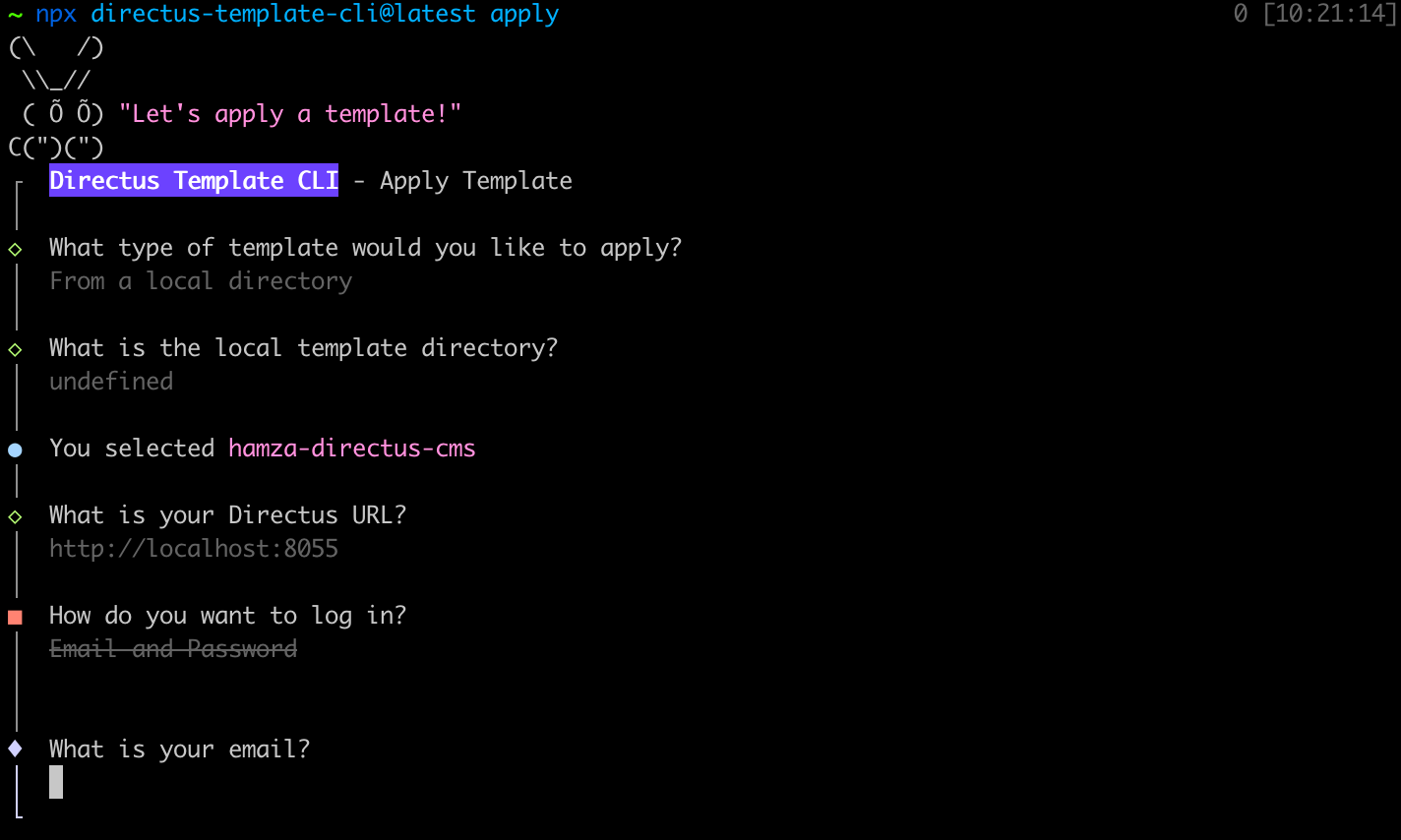
 Hazem Abbas
 Hazem Abbas