Game Server Showdown 2025: Which Open-Source Engine Is Right for Your Multiplayer Game?


A couple of weeks ago, I was hanging out with some friends, fellow game devs who’ve been deep in the trenches building their next big multiplayer project. One was working on a fast-paced co-op shooter in Unity, another crafting a retro-style MMO in Godot, and the third experimenting with massive online environments in Unreal Engine.
We grabbed coffee, swapped war stories, and eventually, the conversation turned to multiplayer networking.
That’s when it hit me.
They were all struggling, badly, with choosing the right multiplayer game server for their projects. One had spent weeks trying to roll their own netcode, only to hit walls with lag, desync, and cheating.
Another was leaning on a third-party SaaS solution but worried about long-term costs and lock-in. The third admitted they’d heard names like Colyseus, Nakama, or Agones, but didn’t really know what they were, or worse, assumed open-source meant “unreliable” or “not for commercial use.”
I was stunned. These are smart, talented developers. And yet, none of them fully grasped the power and accessibility of open-source game servers, free, battle-tested, community-driven tools that could solve most of their problems overnight.
So I told them: “You don’t have to build everything from scratch. There are incredible open-source multiplayer frameworks out there, free to use, even commercially, under permissive licenses like MIT. You can customize them, scale them, and deploy them on your own terms.”
Their eyes lit up. “Wait… we can actually use these for free? And modify them?”
Absolutely.
This realization sparked something in me. I’ve written plenty about game engines, but not enough about the invisible backbone that makes multiplayer games possible: the game server. And with the rise of real-time sync, authoritative servers, matchmaking, and cloud-native deployment, now is the perfect time to shine a light on the best open-source game server solutions available today.
Whether you're an indie dev using Unity, a solo creator in Godot, or a small studio leveraging Unreal, there’s a free, flexible, and scalable solution waiting for you. From Colyseus for lightweight, WebSocket-based real-time games, to Nakama for social features like chat, leaderboards, and in-app purchases, to Agones for Kubernetes-powered dedicated server orchestration, these tools are not just viable, they’re thriving.
And the best part? They’re open-source, meaning you own your infrastructure, avoid vendor lock-in, and tap into vibrant communities of developers just like you.
This post is for my friends, and for you. A fresh, updated guide to help you cut through the noise, understand your options, and choose the right multiplayer game server for your next project. No fluff. No hype. Just real tools, real use cases, and real freedom.
Let’s dive in.
Open-source free Game Servers that Work in 2025
1- Nakama
In my opinion, Nakama is the best open-source game server for creating multiplayer experiences and adding reactive real-time features—not just for games, but for applications as well.
Nakama supports several professional game engines, including Unreal Engine, Unity, and Godot—the increasingly popular indie game development favorite (and my personal favorite).
Nakam's features include:
- Users - Register/login new users via social networks, email, or device ID.
- Storage - Store user records, settings, and other objects in collections.
- Social - Users can connect with friends, and join groups. Builtin social graph to see how users can be connected.
- Chat - 1-on-1, group, and global chat between users. Persist messages for chat history.
- Multiplayer - Realtime, or turn-based active and passive multiplayer.
- Leaderboards - Dynamic, seasonal, get top members, or members around a user. Have as many as you need.
- Tournaments - Invite players to compete together over prizes. Link many together to create leagues.
- Parties - Add team play to a game. Users can form a party and communicate with party members.
- Purchase Validation - Validate in-app purchases and subscriptions.
- In-App Notifications - Send messages and notifications to connected client sockets.
- Runtime code - Extend the server with custom logic written in Lua, TypeScript/JavaScript, or native Go code.
- Matchmaker, dashboard, metrics, and more.
You can easily set up Nakama as a binary application on your server, or if you prefer, deploy it using Docker with just a single command, and you're ready to go. Nakama is written using Go language, so expect top tier performance.
 Hazem Abbas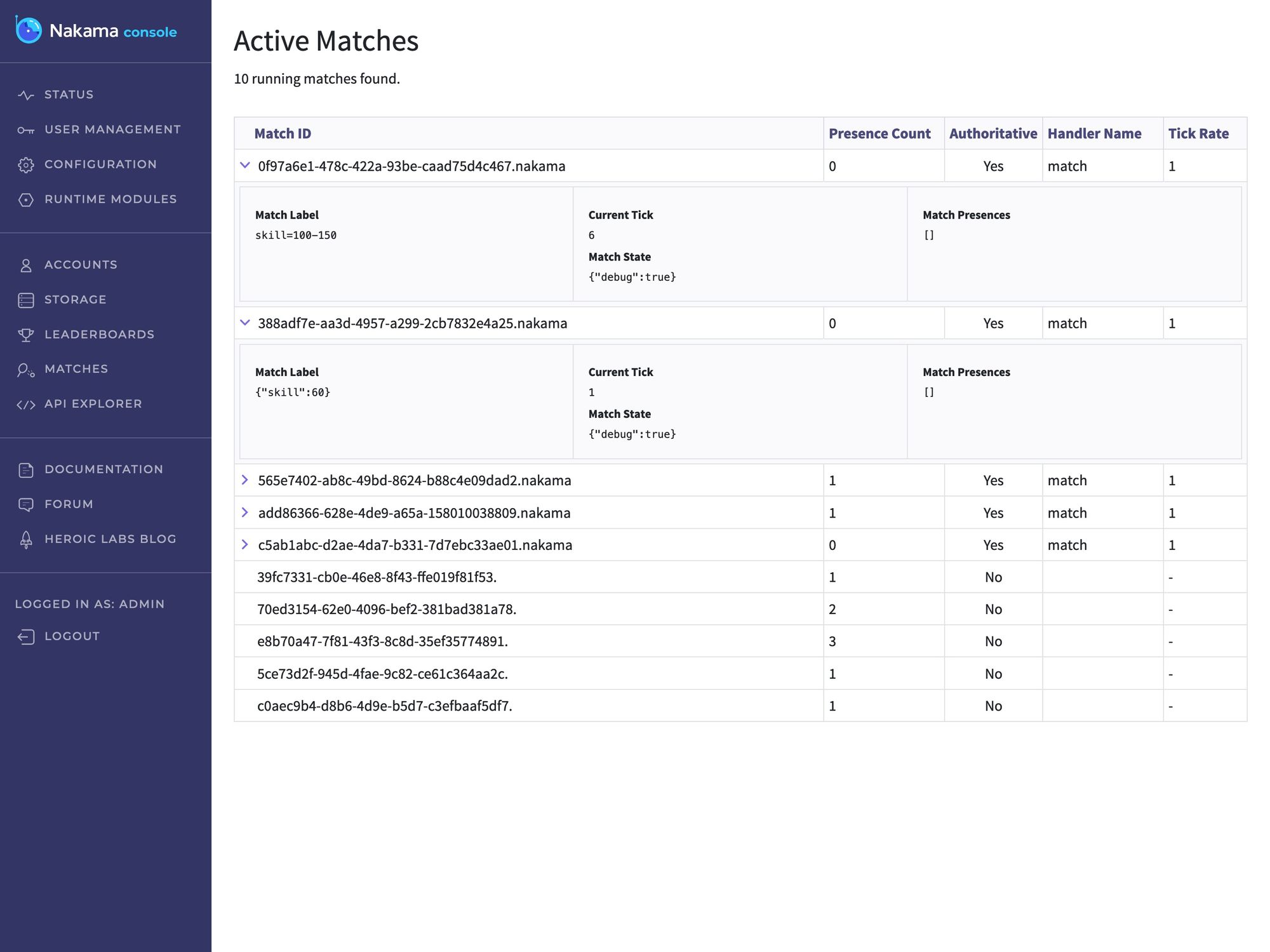
2- Azerothcore-wotlk
AzerothCore is an open-source game server framework built from the ground up to bring the classic World of Warcraft experience, specifically patch 3.3.5a, to life on private servers. It’s not just a server; it’s a full-featured platform for hosting MMORPGs with deep fidelity to the original Blizzard gameplay.
Originally inspired by MaNGOS, TrinityCore, and SunwellCore, AzerothCore has evolved into a modern, stable, and highly maintainable codebase.
AzerothCore is written in C++, it’s been thoroughly refactored over the years to improve performance, reliability, and modularity, making it a solid foundation for any WoW private server project.
3- Kudos
Kudos is a high-performance, microservice-based game framework using rpcx and Pomelo protocol. Easy to use, componentized, and deployable, ideal for scalable, real-time game development with minimal setup.
- Blazing Fast RPC: Powered by rpcx, delivering twice the speed of gRPC, outperforming Dubbo & Thrift.
- Multi-Language Magic: Go, Node.js, and more? No problem. rpcx enables seamless cross-language communication.
- Pomelo Protocol Ready: Built-in support for the industry-standard game protocol, perfect for real-time MMOs & mobile games.
- Componentized Architecture: Load only what you need. Plug in auth, chat, matchmaker, or custom logic like LEGO bricks.
- True Microservices: Deploy across nodes or bundle into one process. Scale horizontally with ease.
- Smart Service Discovery: Works with etcd, Consul, ZooKeeper, auto-registers and finds services instantly.
- Zero-Config Deployment: Each service runs independently. Start, stop, scale, without dependency headaches.
- Game Dev Friendly: Pre-integrated core services. Just call, don’t configure. Perfect if you know Pomelo.
 kudoochui
4- PufferPanel
PufferPanel is a self-hosted web-based Game Server Management System. PufferPanel allows you to manage multiple different game servers all from one central location. You can give other users their own servers or allow them to access to your servers.
 Hazem Abbas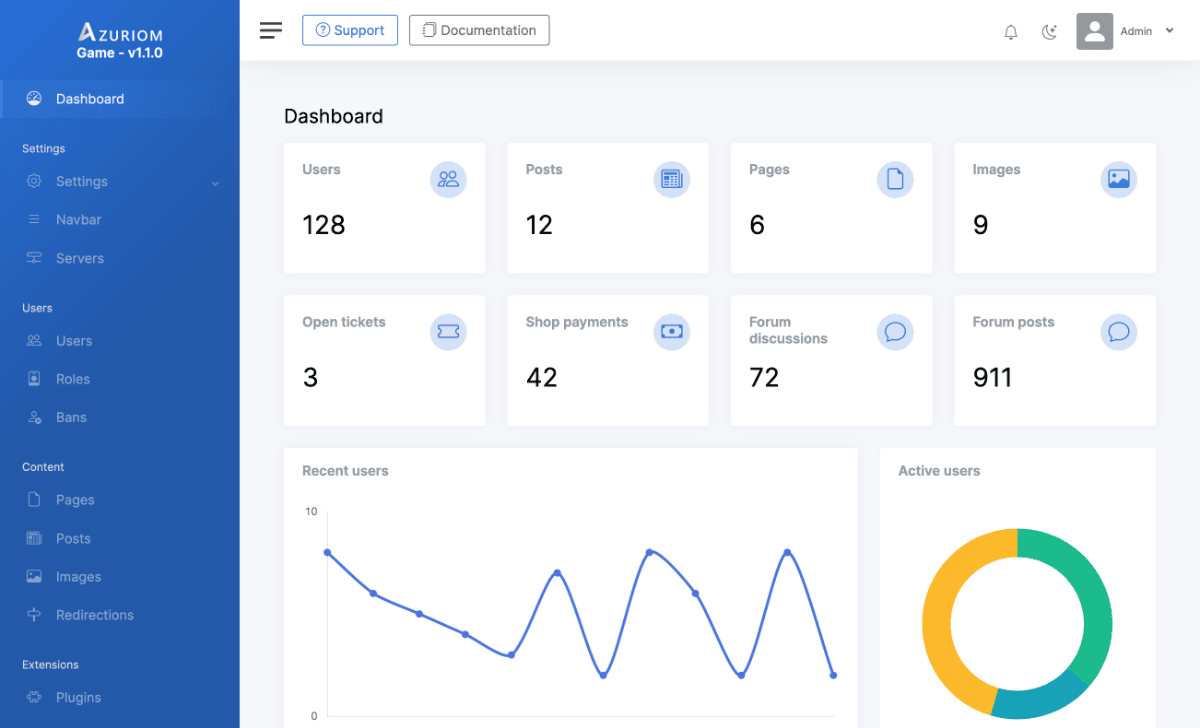
4- Colyseus
Built for speed, simplicity, and scale, Colyseus is the go-to open-source multiplayer game server for indie devs who want to build rich, real-time experiences without the hassle.
With automatic state sync, seamless matchmaking, and authoritative servers that stop cheating, it’s perfect for any genre, from retro shooters to social games.
Zero setup magic: Just run npm create colyseus-app@latest and you’re live. Works across Unity, Godot, Construct 3, Defold, Haxe, Cocos & more, all with JavaScript/TypeScript.
And the Best part, it is totally Free, open-source (MIT), and trusted by studios like Eleven Puzzles, Emolingo Games, and Banger Inc.
With 750K+ downloads, 6.4K GitHub stars, and a thriving community, Colyseus isn’t just popular, it’s the smart choice for indies who want to ship fast, scale easy, and keep full control of their game.
It include amazing features such as:
- Room based system
- State Sync
- Match making API
- Message Serialization
- Supports several databases and authentication systems
- The ability to scale horizontally or vertically
- and a rich JavaScript/ Node.js Ecosystem
 colyseus
5- Agones
Agones turns Kubernetes into a game server powerhouse. Run, scale, and manage dedicated game servers with ease using YAML or API. Built for devs who want auto-scaling fleets, health checks, real-time metrics, and seamless matchmaker integration, all via Kubernetes. Play fair, scale fast, and ship smarter.
 Hazem Abbas
6- kbengine
KBEngine is an open-source MMOG server engine built in C++ that lets you script game logic in Python with hotfix support. Easily integrate with Unity3D, OGRE, Cocos2d-x, HTML5, and more. Scalable across multiple processes for dynamic load balancing, virtually unlimited capacity as hardware grows. Focus on gameplay, not infrastructure.
 kbengine
7- Leaf
Leaf is a high-performance, Go-based game server framework, pragmatic, modular, and multicore-ready. With blazing speed and rock-solid reliability, it’s built for developers who want maximum performance with minimal complexity.
 name5566
8- Lance
Lance is a free and open-source game server, built on Node.js. It delivers real-time multiplayer magic with zero headache. It’s not just a server, it’s a full-featured engine that handles position interpolation, input coordination, physics simulation, shadow objects, and network spike recovery automatically.
What makes Lance stand out?
- Ultra-smooth visuals even on shaky connections
- Simple, modular game logic via JavaScript/ TypeScript
- Built-in debugging & real-time state sync
- Designed for indie devs who want pro-level performance without the complexity
We love Lance because it just works—no black-box networking headaches. Whether you're building a fast-paced arena shooter or a smooth-scrolling top-down RPG, Lance gives you professional-grade multiplayer with minimal setup.
It is Perfect for indie studios and solo devs who want to focus on gameplay, not infrastructure.
Rank higher in SEO, ship faster, scale smarter.
Lance isn’t just a framework, it’s your multiplayer MVP.
Features
- Focus on writing your game. Lance takes care of the netcode
- Can support any type of game or genre
- Optimized networking
- TCP via websockets
- Communication is packed and serialized into binary
- Automatic handling of network spikes with step correction
- Intelligent sync strategies for lag handling
- Extrapolation (client side prediction) with step re-enactment or:
- Interpolation for optimal object motion
- Tools for debugging and tracing
Incoming features:
- UDP via WebRTC
- Full-stack testing suite
- Replay saving
- More physics engines
 lance-gg
9- SEGS
Built in C++ and powered by BSD licensing, SEGS is a cross-platform, object-oriented powerhouse that brings classic superhero MMORPGs to life. From secure authentication and database-backed characters to real-time movement, chat, and persistent worlds, it’s everything you need to run your own epic online universe.
The best thing, it works on Linux, Windows, macOS, and even FreeBSD.
 Segs
Segs
10- Realtime Dedicated Game Server
This is a free and open-source super light game engine that comes with No NAME, yes the developer was so lazy to pic a name for this amazing feature-rich project, but it works, so who cares?
Its feature include:
- ECS Framework: Build game logic with clean, inheritable entities and components for modular, scalable design.
- etcd Service Mesh: Automatic service registration, TTL heartbeats, dynamic discovery, load balancing, and real-time Watch-based event streaming.
- msgpack RPC: Direct IP calls and seamless remote invocation of ECS components or entities — ultra-low latency, high performance.
- asyncio Coroutines: Native
await rpc_call()support with a lightweight decorator-pool for easy async workflow integration. - TCP + RUDP Support: Flexible transport options — choose reliability or speed based on your game’s needs.
- Sanic Microservices: Lightweight, high-performance async HTTP APIs for public services, admin panels, and backend tools.
- JWT Auth: Secure, token-based authentication built-in for user login and session management.
- Redis & MongoDB Persistence: Fast in-memory data storage with Redis and scalable document persistence via MongoDB.
- Umongo ODM: Elegant, Pythonic MongoDB modeling without boilerplate — clean, type-safe, and intuitive.
- Hot Reload: Full-scale updates (stable) and incremental reloads (ideal for rapid development) — code live, deploy fast.
- Smart Logging: Automatically rotated logs by date/time, color-coded levels, stack traces, local variable dumps, and PyCharm file jump support for warnings and above.
- 1:N Timer System: Safely reuse timer keys — cancel all timers under one key at once, no more overwrites or race conditions.
- Enhanced JSON Parser: Supports comments, auto-corrects commas, and allows variable macros — write config files naturally.
- Client Simulation & Auto Testing: Built-in tools to simulate clients and automate testing — validate gameplay logic early and often.
- Pre-Gateway Gate Server: Handles encryption, compression, authentication, and routing — the smart traffic controller for your lobby server.
 no5ix
no5ix
11- Pumpkin (MineCraft Server)
Built from the ground up in Rust, Pumpkin isn’t just another Minecraft server, it’s a high-performance, future-ready engine designed for speed, security, and flexibility. With blazing multi-threaded architecture, Vanilla-compliant mechanics, and a focus on player joy, Pumpkin delivers a smooth, efficient, and deeply customizable experience, all while staying true to the spirit of Minecraft.
Whether you're running a survival server, a creative hub, or experimenting with next-gen gameplay, Pumpkin gives you the power to go faster, scale smarter, and build better, without compromise.
Its features include:
- Rust-powered performance: Multi-threaded, memory-safe, and insanely fast
- Vanilla-compatible: Supports latest Java & Bedrock versions — no breaking changes
- Security-first: Built-in protection against known exploits
- Extensible & modular: Configurable via TOML, ready for plugins
- Chunk loading (Vanilla + Linear): Optimized world streaming for seamless play
- Full feature parity: World generation, redstone (WIP), liquid physics, biomes, structures, and more
- Player & entity systems: Skins, inventory, combat, movement, AI (in progress), and real-time lighting.
If you are looking for a Minecraft open-source server, we got you covered in the following article:
 Hazem Abbas
 Pumpkin-MC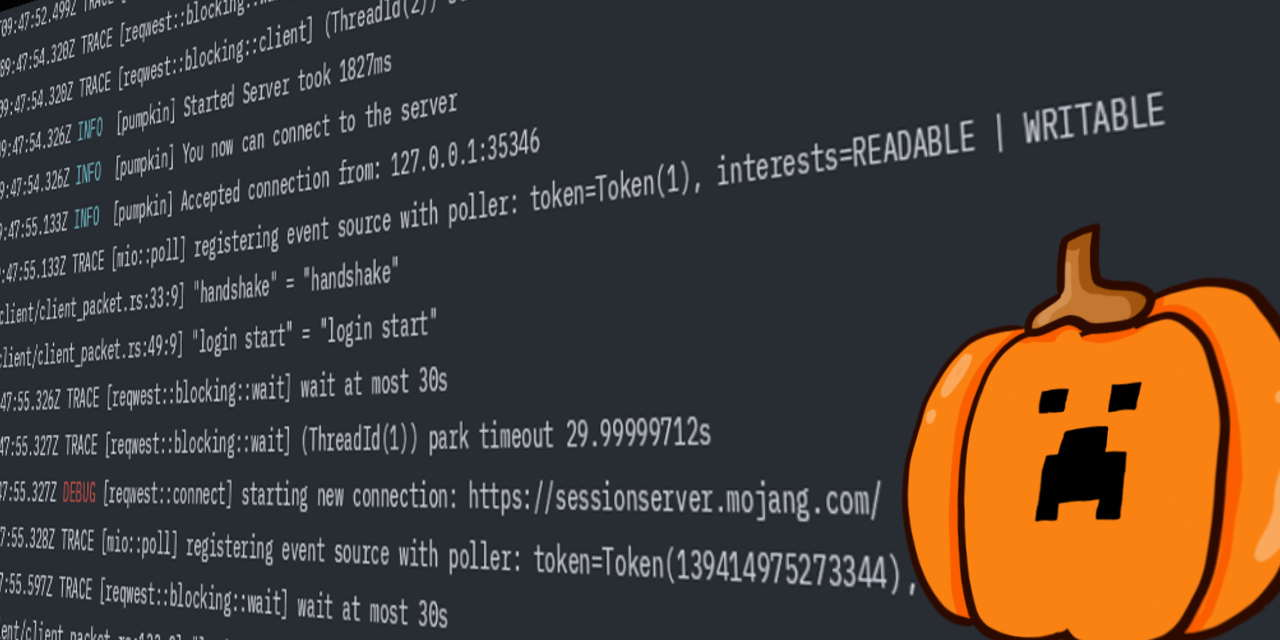
12- NoahGameFrame
NoahGameFrame (NF) is a lightweight, fast, scalable, distributed plugin framework. NF is greatly inspired by OGRE and Bigworld.
Features:
- Easy-to-use, interface-oriented design
- An extensible plugin framework that makes getting your application running quick and easy
- A clean, uncluttered design and stable engine that has been used in several commercial products
- A high performance actor model (by a safe thread pool)
- Event and attribute-driven, making it clear and easy to maintain your business
- Based on standard C++ development, ensuring cross-platform support
- An existing C++ and C# game client for rapid development
- Cross-platform support
 ketoo
ketoo
13- rathena
rAthena is an open-source cross-platform MMORPG server.
 rathena
14- GoWorld
GoWorld is an amazing fast Scalable Distributed Game Server Engine with Hot Reload in Golang.
It adopts entity framework, in which entities represent all players, monsters, NPCs. Entities in the same space can visit each other directly by calling methods or access attributes. Entities in different spaces can call each over using RPC.
Its features include:
- Spaces & Entities: manage multiple spaces and entities with AOI support
- Distributed: increase server capacity by using more machines
- Hot-Swappable: update game logic by restarting server process
- Multiple Communication Protocols: supports TCP, KCP and WebSocket
- Traffic Compression & Encryption: traffic between clients and servers can be compressed and encrypted
 Hazem Abbas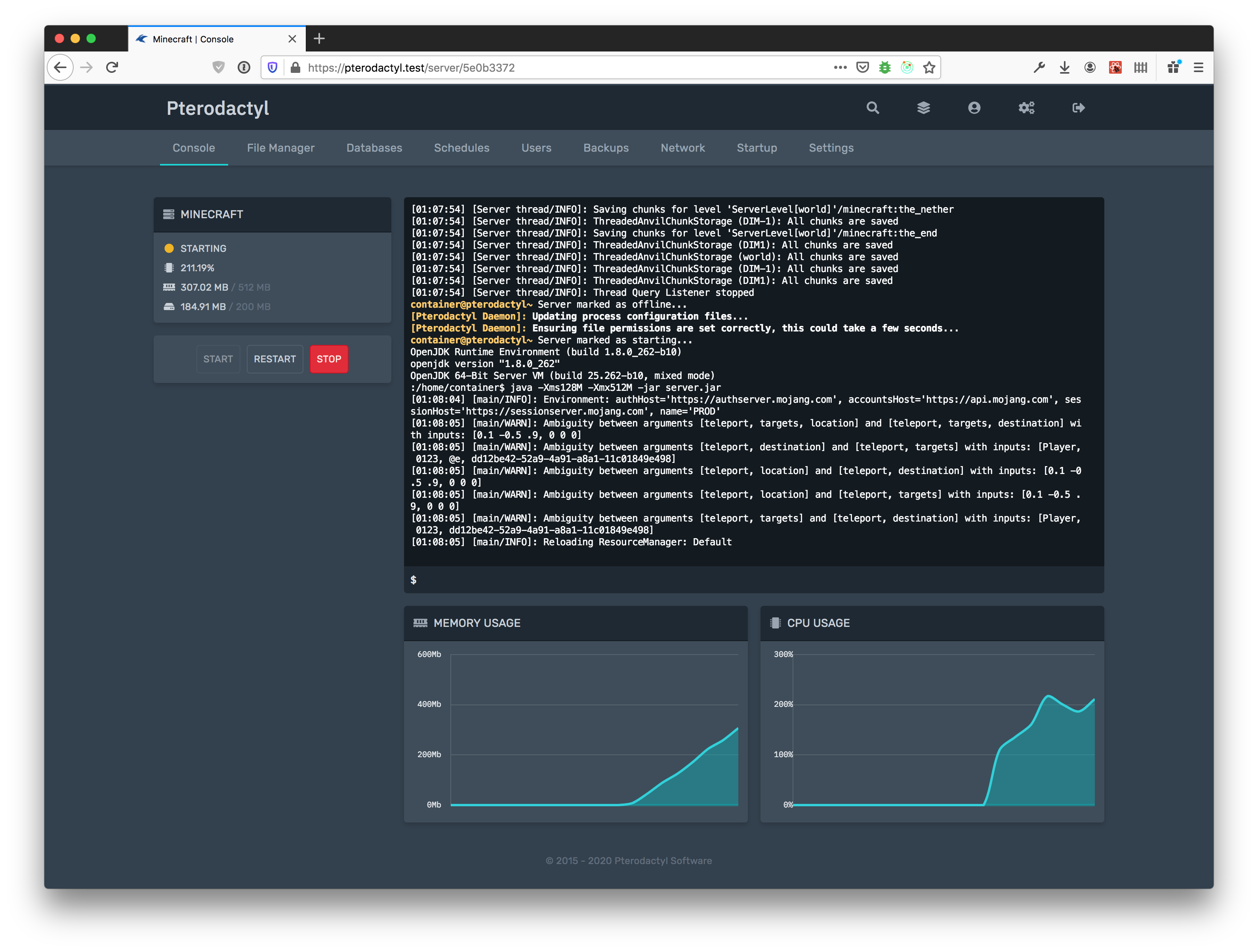
15- Moon
Moon is a lightweight game server framework based on the actor model. One worker thread can have one or more actors (services), which communicate with each other through message queues. There are many features for game server development:
- The architecture is simple, and the source code is concise and easy to understand.
- Cross-platform (Windows, Linux, MacOS)
- Uses ASIO for scheduling
- Uses Lua for logic scripting
- Optimized networking
- Tcp
- Udp/Kcp
- Websockets
- Http
- Asynchronous based on Lua coroutines
- Coroutine-socket
- Timer
- Inter-service communication
- Inter-process communication
- Redis/PostgreSQL/Mongodb/Mysql async client driver
- High performance and optimized Lua Json library
- Lua protobuf library
- Lua filesystem
- Recast Navigation
- Lua zset library for ranklist
 sniper00
16- Pitaya
Pitaya is an simple, fast and lightweight game server framework with clustering support and client libraries for iOS, Android, Unity and others through the C SDK. It provides a basic development framework for distributed multiplayer games and server-side applications.
 topfreegames
17- zfoo
zfoo is a blazing-fast, asynchronous, actor-based, lock-free framework with native GraalVM support, perfect for game servers, microservices, or web backends. It scales from single-server to cluster deployments, supports 15+ languages (C++, Rust, Java, Go, JS, Python, Swift & more), and enables hotswap code & config updates without downtime.
Built-in MongoDB ORM, event bus, task scheduler, and auto-monitoring (CPU, memory, disk, network), no extra tools needed.
We love it because it just works: zero boilerplate, real-time hot reloads, seamless JSON/CSV/XLSX config mapping, and a complete online development lifecycle.
 zfoo-project
18- Ferrumc (Minecraft Server)
FerrumC is a 1.21.5 yet another open-source free Minecraft server implementation written from the ground up in Rust. Leveraging the power of the Rust programming language, it is completely multithreaded and offers high performance as well as amazing memory efficiency!
Built from the ground up with performance at its core, FerrumC doesn’t just run on all your CPU cores, it uses them all. With custom network protocols, optimized NBT/Anvil encoding, and a blazing-fast K/V database, every tick feels buttery smooth. And yes, it supports Vanilla 1.21.5 clients, so no mods, no compromises.
Powered by the Bevy ECS engine, FerrumC delivers lockless concurrency, scalability, and stability that’s rare in game servers. Whether you're hosting a tiny creative world or scaling to thousands, it handles it like a pro.
Features
- Blazing fast – Performance so good it’s almost unfair.
- Low memory usage – Runs lean, even with massive worlds.
- Fully multithreaded – No single-thread bottlenecks.
- Customizable server list – Make your server stand out.
- Import vanilla worlds – Load your old saves in seconds.
- Simple, clean config – Zero setup headaches.
- Bevy ECS + Rust power – Smart, safe, scalable architecture.
- Crazy-fast K/V database – Instant data access.
- 32 render distance chunk loading demo – See the future of world streaming.
 ferrumc-rs
19- Cherry
Cherry is an open-source free actor model game server framework based on Golang. it is a new WIP project, so do not expect much, but wait, I am wrong it is cool except the documentation, you have to know Chinese.
 cherry-game
20- Stendhal
Stendhal is a fun friendly and free multiplayer online adventure game with an old school feel.
Stendhal features a new, rich and expanding world in which you can explore towns, buildings, plains, caves and dungeons. You will meet NPCs and acquire tasks and quests for valuable experience.
Your character will develop and grow and with each new level up become stronger and better. With the money you acquire you can buy new items and improve your armor and weapons. And for the blood thirsty of you; satisfy your killing desires by roaming the world in search of evil monsters!
 arianne
21- Ezyfox
EzyFox is a free, open-source ecosystem built to empower real-time experiences without the bloat or cost. Whether you're crafting multiplayer games, live dashboards, or interactive web apps, EzyFox gives you the full toolkit, all under one roof.
Built for speed, security, and scale, it’s like having a battle-tested backend army at your fingertips.
 youngmonkeys
What Is the Actor Model? (And Why It’s a Game Dev Superpower) 🔥
Let’s make it simple, no jargon, no confusion. Imagine your game world as a team of spies. Each player, NPC, or monster is a spy, totally independent, private, and focused on their mission.
They don’t share files. They don’t argue over who gets to use the data.
Instead, they pass notes, messages like:
“Player moved east.”
“Attack hit!”
“Inventory updated.”
That’s the Actor Model in action.
So What Exactly Is It?
- Each actor (like a player or enemy) has its own private data.
- It only talks by sending messages, never touching shared memory.
- It processes one message at a time, no chaos, no race conditions.
- It can send new messages back when it’s done.
Think of it like texting instead of yelling in a crowded room. No noise. No mistakes. Just smooth, safe communication.
Why This Matters for Game Servers
In most games, you’re juggling:
- Player movement
- Combat
- Chat
- Inventory
- AI
- Physics
If you use old-school threading, you lock shared data all the time. That causes lag, crashes, and debugging nightmares.
But with actors?
- No locks
- No shared state
- No race conditions
- Scales to thousands of players, even across servers
You can run 10,000 actors at once, each doing their thing, safely, without stepping on each other.
Real-World Impact
In a fast-paced game like an MMO or battle royale:
- Player moves → sends message to their character actor
- Actor updates position → sends broadcast to nearby actors
- Everyone sees the change instantly — no delay, no glitches
No global locks. No slowdowns. Just smooth gameplay.
This is why frameworks like Erlang, Akka, zfoo, and FerrumC are built on this model.
It’s not just theory, it’s used in real servers handling millions of players.
Why We Love It (And You Should Too)
Because it lets us:
- Focus on gameplay, not threads
- Debug by tracing messages (not chasing deadlocks)
- Scale easily, add more actors, not rewrite code
- Build faster, ship smoother, sleep better
It’s clean. Safe. Scalable. And honestly, kind of beautiful.
Now What is The Entity Model in a Game Server?
Let’s cut through to the chase here, Let's say your entire game world as a living ecosystem: players, monsters, items, buildings, NPCs, all just things that exist and interact. The Entity Model is how you organize and manage those “things” in your game server.
Simply everything is an entity, deal with it.
In simple terms: An entity is just an object in your game, like a player, a sword, or a zombie.
But here’s the twist:
Instead of tying everything to rigid classes (like “Player” or “Enemy”), the Entity Model treats each object as a flexible container made up of components.
Think of it like LEGO:
- You have a base block (the entity).
- Then you add parts:
Position,Health,Movement,Inventory,AI,Render.
No need to create a new class for every type of enemy. Just mix and match components.
So one entity could be:
Player →Position + Health + Inventory + InputHandler
Zombie →Position + Health + AI + Movement
Sword →Position + Damage + Rarity
Easy. Flexible. Scalable.
Why Entity Model Matters for Multiplayer Game Servers
When you’re building a multiplayer game, things get messy fast:
- 100 players online
- 500 NPCs
- 2000 items flying around
- Real-time updates, collisions, combat, chat…
If you use old-school object-oriented design, you end up with tangled code, duplicated logic, and performance issues.
But with the Entity Model, you get:
- Massive scalability – Add thousands of entities without rewriting core systems
- Efficient memory usage – Only load what’s needed (e.g., only send position updates to nearby players)
- Clean separation of concerns – Physics, AI, rendering, and networking live in their own components
- Easier to sync across clients – Send only relevant data (e.g.,
PositionandHealth) via messages - Perfect for ECS frameworks – Used by top engines like Unity’s ECS, Bevy, zfoo, FerrumC, and more
Final Thought
If you're building a multiplayer game, especially one that needs to handle lots of players, the Actor Model isn’t just smart. It’s essential.
It turns chaos into calm.
It turns “this will crash” into “this runs forever.”
Build smarter. Scale easier. Ship faster.
Use the Actor Model, because great games deserve great architecture.
 Hazem Abbas