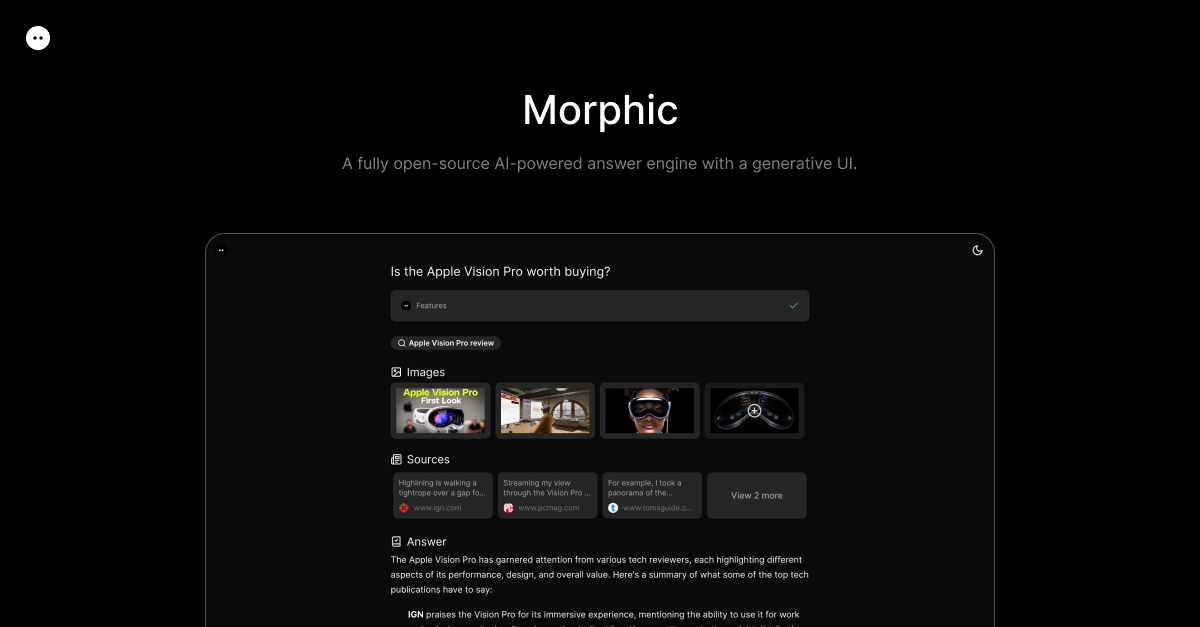
Meet Morphic: The AI Search Engine That Builds Its Own Interface!

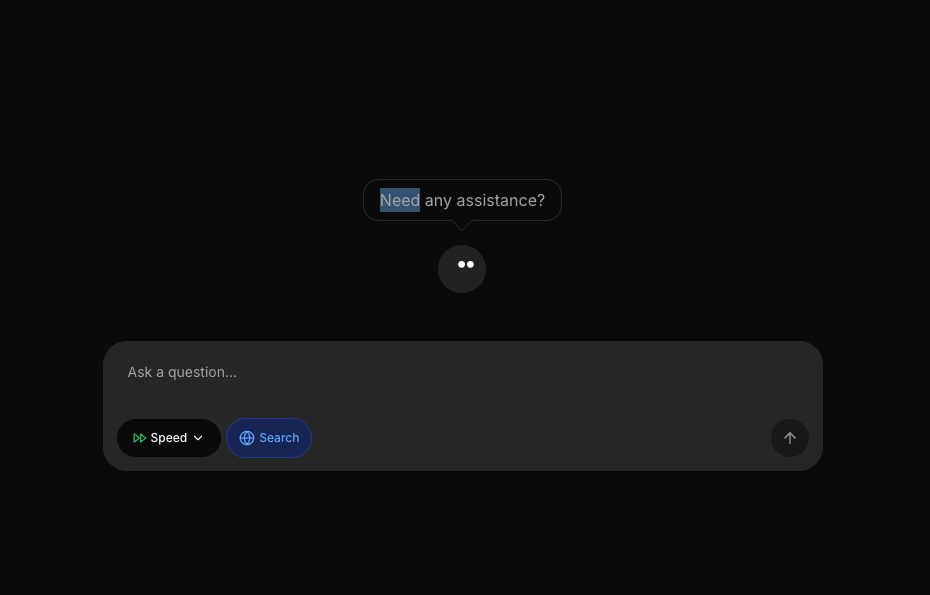
Imagine a search engine that doesn’t just find answers, it understands your questions, thinks through them step by step, and even designs its own user interface on the fly to give you the best possible experience. That’s Morphic,
So, What is Morphic?
In the nutshell, Morphic is an open-source, AI-powered search engine built with a generative UI that adapts in real time. Whether you're a developer, researcher, or just curious, Morphic turns natural language queries into intelligent, interactive responses, no rigid forms or outdated result lists required.
At its core, Morphic blends cutting-edge AI with thoughtful engineering. It supports multiple AI models, from OpenAI and Anthropic to Groq, Ollama, and Google AI, so you can pick the one that fits your needs or privacy requirements.
The search layer is equally flexible, offering built-in integrations with Tavily AI (the default), SearXNG for self-hosted privacy, Exa for neural-powered precision, and Firecrawl for deep web crawling and structured data extraction. This modularity means Morphic isn’t just smart, it’s adaptable to your workflow, infrastructure, and values.
Built on a modern, type-safe stack, Morphic leverages Next.js App Router and React Server Components for speed and efficiency, while the Vercel AI SDK enables smooth streaming responses and dynamic UI generation.
User authentication is handled securely via Supabase Auth, making it easy to add personalized experiences or team-based features down the line. Everything is written in TypeScript, ensuring reliability and developer joy, whether you’re running it locally or scaling to production.
 Hazem Abbas
Getting started is a breeze. With a clean Quickstart guide and one-click deploy options to Vercel, you can have your own instance of Morphic up and running in minutes. Want to self-host? The project includes clear deployment instructions and supports open-source search backends like SearXNG, giving you full control over your data and dependencies.
It’s designed for tinkerers, teams, and builders who want transparency without sacrificing power.
Morphic isn’t just another search tool, it’s a glimpse into the future of human-AI interaction. By combining reasoning-aware models, multi-provider flexibility, and a UI that generates itself, it empowers users to explore information more naturally and developers to extend it freely.
 Hazem Abbas
Best of all? It’s open source, community-driven, and built to evolve. Ready to search smarter?
Dive into Morphic and see what generative intelligence feels like in your hands.
Features
Core Search & AI
- AI-powered search with Generative UI (UI builds itself based on context)
- Natural language question understanding
- Reasoning models with visible thought process (show your work!)
- URL-specific search for targeted results
- Video search support (optional)
- Shareable search results (optional)
- Chat history functionality (optional)
Search Providers
- Tavily AI (default)
- SearXNG (self-hosted, with advanced controls):
- Customizable search depth (basic/advanced)
- Configurable engines
- Adjustable result limits
- Safe search toggle
- Time-range filtering
- Exa, neural, semantic search
- Firecrawl, intelligent web crawling, scraping & LLM-ready extraction
AI Model Flexibility
Supports 10+ AI providers (switchable from the UI):
- OpenAI (default)
- Google Generative AI
- Azure OpenAI
- Anthropic
- Ollama (local models!)
- Groq
- DeepSeek
- Fireworks
- xAI (Grok)
- Any OpenAI-compatible API
→ Models configured inpublic/config/models.json
→ API keys managed via environment variables
Authentication
- Supabase Auth powered
- Email/password sign-up & login
- Google social login
Tech Stack
- Framework: Next.js (App Router + React Server Components)
- Language: TypeScript (full type safety)
- AI SDK: Vercel AI SDK (streaming + dynamic UI)
- Styling: Tailwind CSS + shadcn/ui + Radix UI + Lucide Icons
- Data: Upstash (serverless Redis) or local Redis
Deployment & Dev Experience
- Docker-ready for easy self-hosting
- One-click deploy to Vercel (or any cloud)
- Browser search engine integration (add to Chrome, Firefox, etc.)
- Fully open source & community-friendly
 Hazem Abbas
License
Morphic is a free and open-source project that is released under the Apache-2.0 License.
Final Note
Morphic isn’t just a search engine, it’s your personal AI research assistant that thinks, adapts, and evolves with you.
 miurla