
RAGFlow - Open-source RAG (Retrieval-Augmented Generation) engine

RAGFlow is an open-source RAG (Retrieval-Augmented Generation) engine based on deep document understanding.
It offers a streamlined RAG workflow for businesses of any scale, combining LLM (Large Language Models) to provide truthful question-answering capabilities, backed by well-founded citations from various complex formatted data.
Features
🍭 "Quality in, quality out"
- Deep document understanding-based knowledge extraction from unstructured data with complicated formats.
- Finds "needle in a data haystack" of literally unlimited tokens.
🍱 Template-based chunking
- Intelligent and explainable.
- Plenty of template options to choose from.
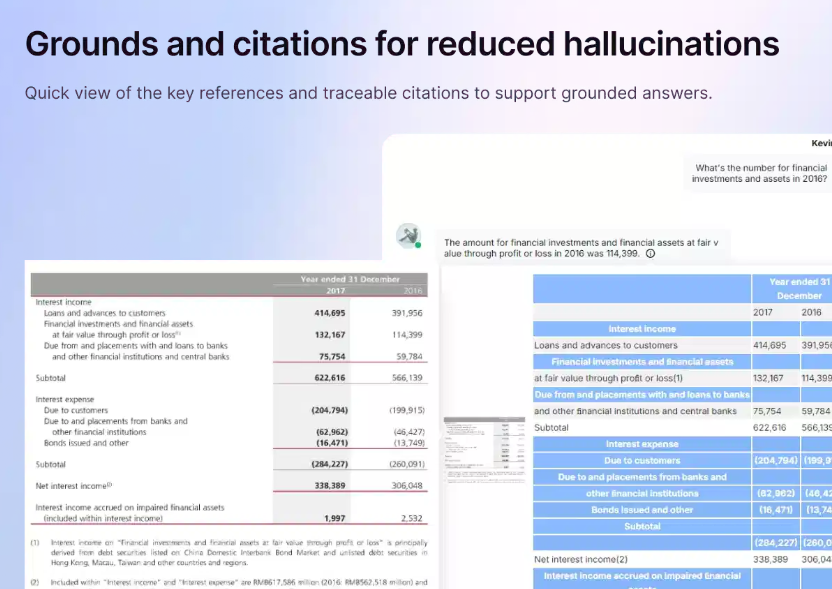
🌱 Grounded citations with reduced hallucinations
- Visualization of text chunking to allow human intervention.
- Quick view of the key references and traceable citations to support grounded answers.
🍔 Compatibility with heterogeneous data sources
- Supports Word, slides, excel, txt, images, scanned copies, structured data, web pages, and more.
🛀 Automated and effortless RAG workflow
- Streamlined RAG orchestration catered to both personal and large businesses.
- Configurable LLMs as well as embedding models.
- Multiple recall paired with fused re-ranking.
- Intuitive APIs for seamless integration with business.
Requirements
- CPU >= 4 cores
- RAM >= 16 GB
- Disk >= 50 GB
Resources
GitHub - infiniflow/ragflow: RAGFlow is an open-source RAG (Retrieval-Augmented Generation) engine based on deep document understanding.
RAGFlow is an open-source RAG (Retrieval-Augmented Generation) engine based on deep document understanding. - infiniflow/ragflow
 infiniflow
RAGFlow | RAGFlow
Description will go into a meta tag in <head />