
The Robot That Lives in Your Home Is No Longer Science Fiction, Here’s What You Need to Know

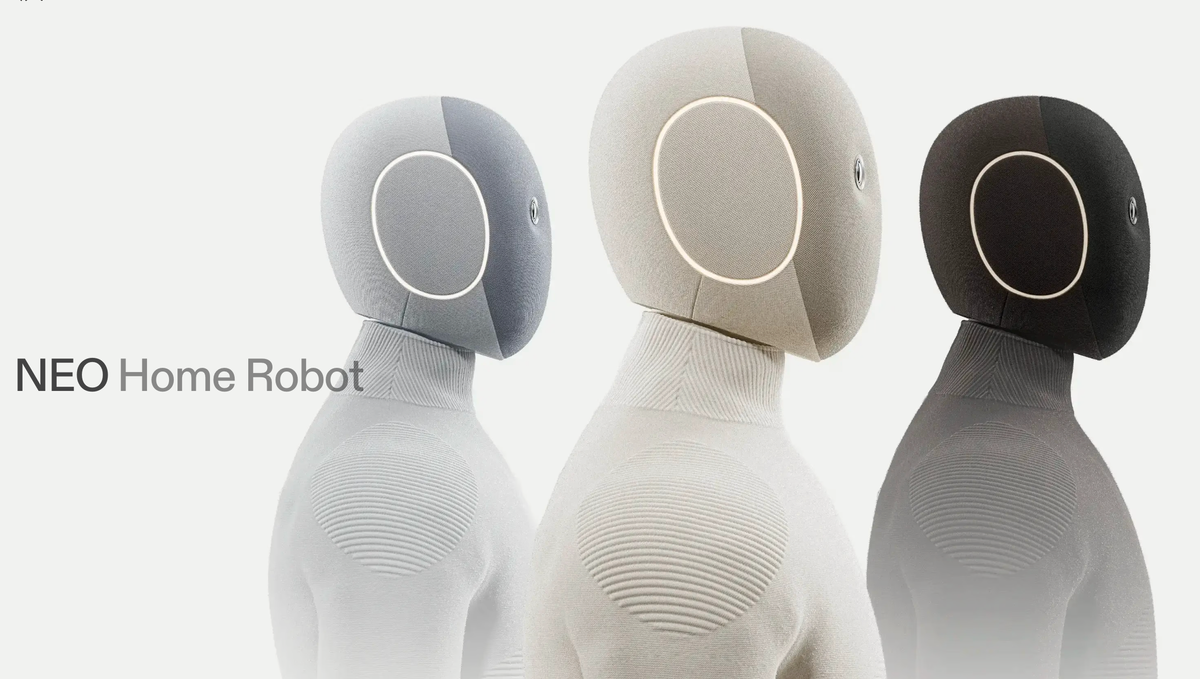
A new era of robotics has officially arrived. The humanoid robot known as Neo, developed by 1X, is no longer a concept or prototype, it’s a real, functional machine designed for everyday life inside homes. With a pre-order price of $20,000 and delivery expected in 2026, Neo marks a pivotal moment in the evolution of artificial intelligence and physical automation.
Unlike traditional robots built for factories or warehouses, Neo is engineered specifically for domestic environments. Standing at 165 cm and weighing just under 30 kilograms, it moves with a fluidity that mimics human motion.
Its tendon-driven actuation system, inspired by biological muscles, allows for quiet, smooth movement, avoiding the stiff, mechanical motions typical of older robotic designs.
It can travel at speeds up to 12 km/h and lift up to 70 kilograms, making it capable of handling everyday household tasks.
At its core is Redwood AI, a neural network trained not on static code, but on real-world interactions. Every time a remote operator guides Neo through a task, whether opening a door, fetching water, or loading a dishwasher, that experience becomes part of its learning database. This approach enables continuous improvement without requiring explicit programming for every possible scenario.
The company refers to this process as “robotic slop”, a term that captures the essence of practical utility over perfection. The goal isn’t flawless execution.

It’s useful performance. A robot that doesn’t fold your shirt perfectly but still gets the job done? That’s considered a success.
Real-World Applications: Beyond the Kitchen
While Neo may appear as a futuristic novelty, its potential applications extend far beyond convenience. In healthcare settings, similar models could assist elderly individuals with medication reminders, fetch essential items, and monitor daily routines. For people with disabilities, such robots offer a path toward greater independence by helping with dressing, reaching high shelves, or navigating living spaces.
Hospitals and medical centers are also poised to benefit. Robots like Neo could take on non-clinical duties, transporting supplies, delivering lab samples, or managing inventory, freeing up nurses and staff to focus on patient care. As healthcare systems face rising demands and staffing shortages, automation tools like this represent a promising solution.
For busy families, the appeal is clear: automated help with chores, from organizing clutter to loading dishwashers, could reduce daily stress and reclaim valuable time.
Design Similarity to Murdurbot
I did not help but to notice similarity in design with Murderbot, which is a sci-fi thriller series following a humanoid robot designed to assist in a high-security job. Blending suspense and ethical dilemmas, it explores the blurred line between human and self-questioning bio-machine.
Like Neo, Murderbot raises questions about AI autonomy, privacy, and emotional intelligence. Both series depict robots that learn from real-life interactions, challenging viewers to confront the consequences of creating machines that mimic humanity, not just in function, but in behavior and connection.
Privacy and Security: The Unavoidable Trade-Off
One of the most pressing concerns surrounding home-based humanoid robots is privacy. Neo is equipped with cameras and sensors that allow it to perceive its environment, which means it can see everything in the home it inhabits.
To address these concerns, 1X emphasizes strict safeguards. Operators who remotely guide the robot do so only after user approval via an app. Camera feeds automatically blur human faces, and users can designate “no-go zones”, areas like bathrooms or bedrooms, where the robot cannot enter even if commanded. Access is never granted without consent, and data collected is anonymized.
Still, the fact remains: for Neo to become truly intelligent and autonomous, it must learn from real-life experiences. That requires gathering vast amounts of behavioral data, raising important questions about long-term security, data ownership, and the boundaries between personal space and digital oversight.
As one expert noted, “We’re not just buying a robot. We’re entering into a new kind of digital intimacy with a machine that learns from our lives.”
The Road Ahead: From Teleoperation to Autonomy
Currently, Neo operates primarily through teleoperation, meaning a human is actively guiding it in real time. Full autonomy is still years away.
However, the company believes that with enough training data, the robot will eventually perform many tasks independently, with accuracy improving rapidly.
This transition won’t happen overnight. Early adopters will likely continue to use the robot in tandem with remote assistance. But over time, the reliance on human operators is expected to decline as the AI adapts to diverse home environments.
Final Takeaway: A New Chapter in Human-Machine Interaction
Neo isn’t just another gadget. It represents a fundamental shift in how we interact with technology. It’s not just a tool. It’s a presence, one that sees, learns, and adapts. It’s not here to replace humans, but to support them.
While concerns around privacy, ethics, and safety remain valid, the potential benefits, especially in healthcare, eldercare, and accessibility, are too significant to ignore.
As physical AI becomes more integrated into daily life, society will need to establish clear standards for transparency, consent, and accountability. The future of robotics isn’t just about smarter machines. It’s about building trust between humans and the machines they live alongside.
The age of the home robot is no longer coming. It’s already here.
Resources:
 1X Technologies