
What Injury Victims Can Recover Beyond Medical Bills


When someone gets hurt because of another person's negligence, the first thing that comes to mind is the hospital bill. That makes sense, mainly because medical costs are immediate in most situations.
But medical bills are only one piece of what you may actually be entitled to recover. Injury victims can also seek compensation for lost wages, future medical care, property damage, and non-economic damages like pain and suffering. The law recognizes that an injury touches more than just your body, and your claim should reflect that.
If you've been injured and are trying to understand the full picture of what compensation looks like, non-economic damages are a big part of that conversation.
What Can Injury Victims Actually Recover?
Pain, Suffering, and Emotional Fallout
This is where a lot of people underestimate what they're owed. Physical pain is real. So is the anxiety that follows a serious accident, the sleep you've lost, the depression that creeps in during a long recovery, and the PTSD symptoms that don't just disappear when the cast comes off.
These are recognized losses. They don't come with a receipt, which is exactly why insurance companies try to minimize them, but that doesn't make them any less real or any less compensable.
In many cases, pain and suffering damages represent a significant portion of what a victim ultimately recovers.
Loss of Consortium
An injury doesn't just affect the person who got hurt. It affects their spouse or domestic partner, too. The companionship, the affection, the day-to-day partnership that gets disrupted or lost because of someone else's negligence - that's a recognized category of damages called loss of consortium, and it's one that families often don't know they can pursue.
Lost Wages and What the Injury Costs Your Career
If your injury kept you out of work, those lost wages are recoverable. That's not just your base salary, either. It includes the time you would have worked, bonuses you were on track to receive, and benefits tied to your employment; all of that factors in.
What your injury costs your career over the long term, that is, your reduced earning potential, is something a claim can and should address.
Property That Was Damaged or Destroyed
If your car, phone, clothing, or any other personal property was damaged as part of the incident, you're entitled to reimbursement for repair or replacement. This one often gets overlooked because people are focused on their injuries, but it belongs in your claim.
Future Medical Care
Some injuries don’t heal after one surgery or one round of physical therapy. If your doctors expect you to need ongoing treatment, those future costs can be included in what you recover today. You shouldn't have to wait until the bills arrive to account for them.
Punitive Damages
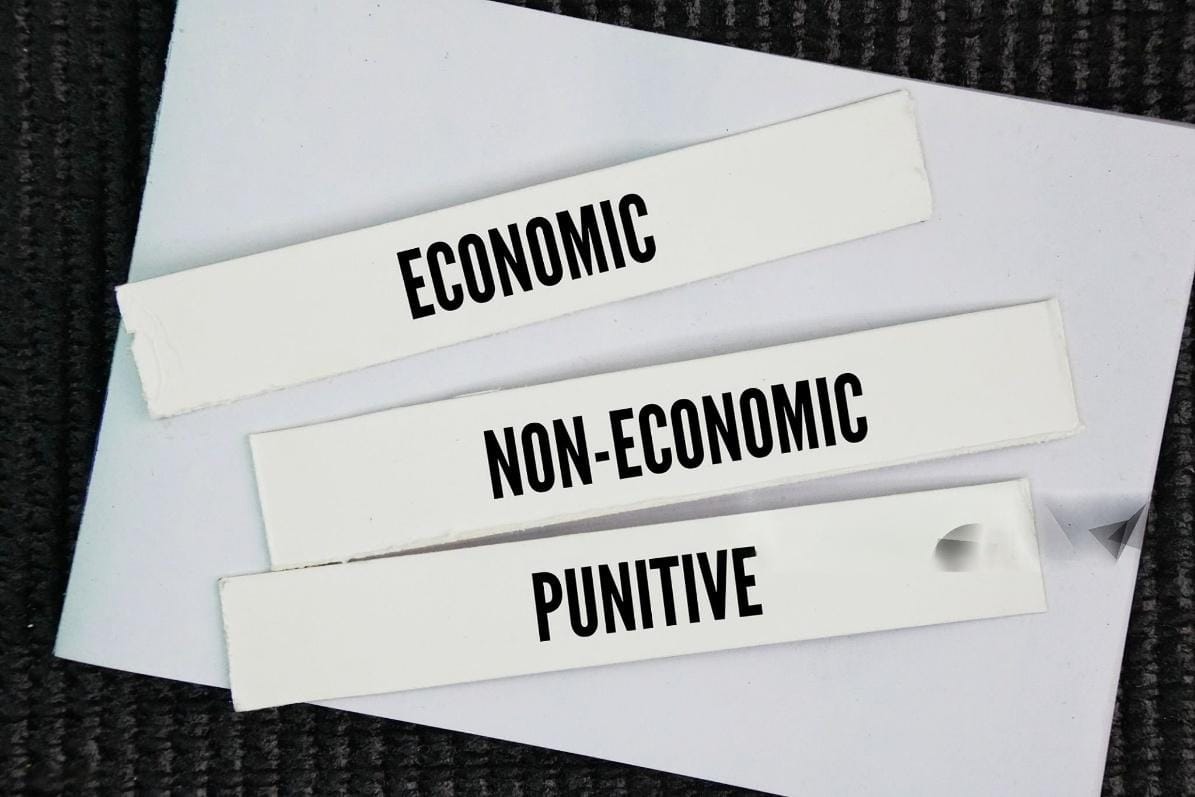
Most injury claims involve compensatory damages - money that puts the victim back in the position they were in before the injury, or as close to it as money can get.
Punitive damages are different. They're not about compensating the victim. They're about punishing the person or company responsible for conduct that went beyond ordinary negligence into something far more reckless or intentional.
Punitive damages are awarded far less frequently than compensatory damages, and the bar for proving them is high.
Key Takeaways
- Aside from medical bills, a personal injury claim can cover lost wages, future treatment, property damage, emotional suffering, and more.
- If your injury affected your ability to work long-term, your reduced earning capacity is part of what you can recover.
- The law recognizes that pain, anxiety, depression, PTSD, and loss of enjoyment of life are real losses, even if they don't come with a price tag attached.
- Punitive damages exist for cases involving extreme recklessness or intentional misconduct.
- Insurance companies focus on your immediate bills because it costs them less. A personal injury attorney looks at the full picture.