Why I Chose Linux as a Medical Student in the Early 2000s, And What It Gave Me Back (My Linux Story)

As I began my medical studies, the need for a reliable PC became unavoidable. Anatomy atlases, histology slides, parasitology references, all required digital access.
One of my passions was creating interactive learning tools: I built two versions of a parasitology atlas backend to organize, view and search, both well-received by classmates and teachers.
Unlike my father, a doctor who relied on libraries, textbooks, and study groups, my generation of medical students had something far more powerful: computers and the internet. But with that power came distraction, endless, alluring, and hard to resist.
Some of my fellow medical student choose Windows and gaming, and utilize their PCs as a simple study too, gaming was some sort of escaping reality activity and some mental sport to reset their minds from our extensive medical studies.
However, I had other plans in minds, I wanted to learn coding, and materialize my ideas into apps.
The Primary Reason Why Did I choose Linux?
Despite being surrounded by peers who spent hours playing games, I rarely joined them. While I didn’t disdain gaming entirely, I saw it as mental training, problem-solving practice, and even a form of simulation, I noticed a troubling pattern: the more time I spent playing strategy games like StarCraft or Age of Empires, the less time I had for real learning, creativity, and self-reflection.
It started to drain my energy, disrupt my focus, and alter my mood, an imbalance I never wanted.
That’s when I chose Linux, not because I disliked games, but because I knew they were no longer a priority. I’d already wasted too much time on addictive loops that offered little return. I wanted stability, security, and freedom from viruses, crashes, and system resets.
How did I know about Linux?
I first learned about Linux through PC Magazine, which my father used to buy for me and my brothers in the 1990s. That was my introduction, a quiet spark.
Then, during my first year of medical school, when I was still wrestling with my decision to follow my father’s path into medicine, I began sneaking into the computer science faculty. I attended lectures in secret, drawn by a curiosity I couldn’t ignore. It was there that I met a friend who introduced me to Slackware 1999.
That moment changed everything.
I was hooked, not just by the system, but by the idea: a world where you could understand, build, and shape your own computer. No black boxes. No forced updates. Just control.
From that day on, Linux wasn’t just an OS, it became a mindset and a lifestyle.
Linux became my sanctuary: a stable, secure, and distraction-free environment where I could focus on what truly mattered, medicine, code, and growth.
My classmate and dear friend, Dr. Moaz D. (Who is also a primary author at Medevel.com), a pathologist, shared this vision. He explored Linux himself, and soon others followed, fellow students who are now respected physicians. I remember one of them saying, “Oh, you don’t need to reset Windows every time a virus hits.”
I replied with a smile: “What is a virus?”
The next day, he brought me his laptop and said, “Install Linux for me.”
Every time I boot up my machine, I’m reminded: this isn’t just a computer, it’s an adventure. When something breaks, I don’t panic. I see it as a challenge: How do I fix this? How do I learn? That mindset, curiosity over frustration, has become part of who I am.
About this article
This article is my story, one I’ve carried for years, finally ready to share. Paul Arnot, Chief Editor of PCLinuxOS Magazine, expressed a genuine curiosity about my journey as a medical student using Linux. I believe, he didn’t just want a technical overview, he wanted to understand how a system like Linux could shape not only a developer, but a doctor.
So I wrote it, not for praise, but because I believe in what Linux taught me: that control, curiosity, and creation are not just skills, they’re values.
And now, through this piece, I’m sharing how that mindset helped me become more disciplined, more focused, and more human, both in code and in care.
Before I begin, I must say: I owe Linux, and its community, everything. They didn’t just give me an OS. They gave me a way of thinking. And I believe as for my little brothers and sisters who also used and use it, daily.
How Linux Helped Me: The Return on Investment!
1. Less Gaming, More Focus
Gaming isn’t inherently wasteful. For many, it’s mental gym, a space to train decision-making, resource management, and strategic thinking. I’ve always admired players not for their scores, but for their approach: how they analyze situations, adapt, and solve problems under pressure.
But as a medical student and a creator at heart, I needed to build, not consume. I preferred watching gameplay, reverse-engineering strategies, and designing text-based logic puzzles for my younger brother, never actively playing myself.
In the early 2000s, Linux offered little in terms of advanced gaming. I never dual-booted. My world was Linux-only, and that lack of games became a blessing.
It saved me from distractions and helped me stay focused on what I valued: learning, building, and polishing my problem solving skills.
2. Linux as a Framework for Growth
Using Linux from the start meant embracing challenges: broken packages, misconfigured systems, compiling software from source. These weren’t setbacks, they were lessons.
You learn:
- How to navigate the filesystem
- How to write shell scripts
- How to manage databases
- How to build apps from C/C++ sources
And yes, customization. The freedom to choose your desktop environment, tweak window managers, share configs with others, this wasn’t just about aesthetics. It was about identity. Your desktop reflects your inner world. Linux gives you the power to shape it, to turn chaos into order, clutter into clarity.
I’ve seen friends with macOS or Windows struggle with rigid interfaces, unable to personalize or understand what’s happening beneath the surface. With Linux, you’re not just a user, you’re a participant.
The community is alive, active, and welcoming. Even when you feel lost, someone’s already been there, and left a guide.
3. Humility and Confidence
There’s a quiet wisdom in Linux: it teaches humility. You realize that no matter how skilled you become, there’s always more to learn. But it also builds confidence. Every small win, setting up a virtual host, fixing a dependency, writing a script, adds to your resilience.
I once built a simple app with friends. One said, “Your structure looks like a Linux system, is that intentional?” I hadn’t realized it, but the pattern was there. Clean, modular, layered, predictable. That’s the mark of good design, and Linux taught me to think that way, may be because I am using it everyday.
As an old developer once told me: “Linux and Unix will shape you as a good developer, because you look from above, not from the side.”
He was right, (RIP A. Y 2008).
4- Linux is Problem Solving Framework and Learning from Others
Linux taught me more than how to fix a broken system, it taught me how to think.
It trained me to navigate problems with curiosity: to diagnose, analyze, and build logical solutions. But more importantly, it taught me how to find the problem in the first place.
For me, that starts with asking questions, not just “What’s wrong?” but “Why is this happening? What’s the root cause?”
And that’s exactly what Linux taught me: to look beneath the surface.
But I didn’t learn this alone.
My father once told me: “To solve a problem, first ask: Who else has faced this before?” He added: “Reach out, listen, understand their solution, then adapt it to your current version of the problem.”
That became my method, not to search for answers, but to find people who’ve already been there, as the shortest way to solve a problem.
I applied this in Linux, where the community thrives on shared knowledge. When I hit a wall, I didn’t just Google it. I searched forums, read mailing lists, studied patches, and learned from others’ struggles.
Over time, I became skilled at searching, not just with Google, but with meta-search tools, custom scripts, even building my own search spiders.
Years ago, I co-founded an unfinished experiment with my friend Hussam A.: Medbold, a medical search engine built on the same principle, find those who have the same problem, learn from them, adapt.
I believe Medbold was a reflection of the Linux community, not in code, but in spirit. Because when we help patients, we’re not just treating symptoms, we’re helping them find someone who’s been there, too.
A Moment That Changed Everything
While writing this, I remembered a moment that still brings a smile to my face. One of my professors handed me dozens of messy folders, hundreds of slides and photos, unsorted, names without standard or a system, disorganized. “Could you organize these?” he asked.
“I’ll get it done,” I said.
Within an hour, I wrote a few bash scripts to rename, categorize, and move files based on metadata and naming patterns.
He stared. “I have been doing this manually for weeks,” he said. “I can’t believe how fast you did it.” I ran them again in front of him, on the same chaotic folder, and delivered a clean, structured archive.
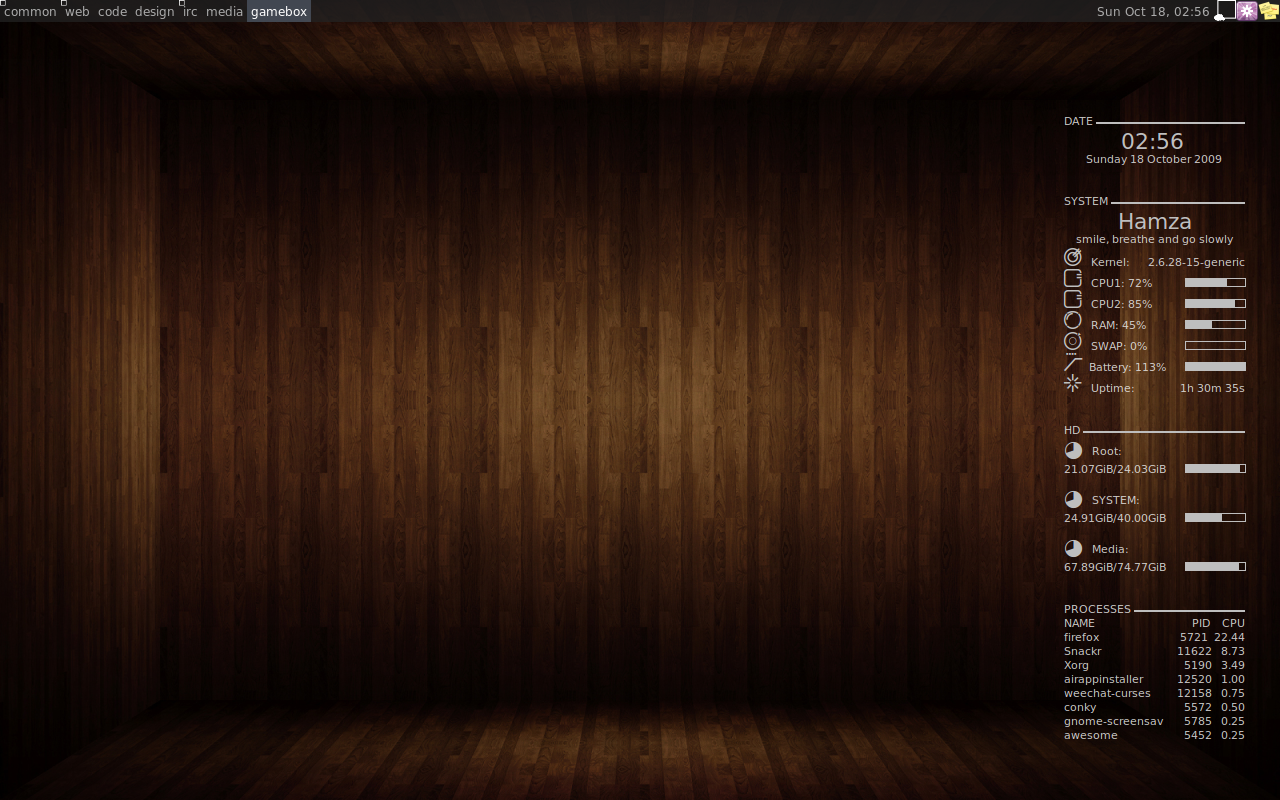
He called me a “computer magician”, not because I did magic, but because he saw the power of systems thinking. And perhaps, he was impressed by my Enlightenment Desktop setup, a minimalist, functional interface that felt like a a space command center, may be he believed it is Linux, and I think he is right.
But to me, it was just another tool, one that made work easier, faster, and more meaningful, another day or using Linux.
Final Reflection: What If I’d Chosen Windows or macOS?
Days ago, my friend helped me understand Piano, and gave me the first lesson to understand the notes, I asked him suddenly: "Mirac, do you believe I can learn piano and music at this age", he replied with a smile: "Hamza abi, I know you, you can learn anything you put your mind to it"!
Well, I believe that is because of the path i choose, the way of the GNU, and my father's help, support and guidance.
I often ask myself: What if I’d stayed on Windows or Mac?
Would I have learned the same depth of system understanding?
Would I have developed the same resilience?
Would I have discovered the joy of building things from scratch?
Probably not.
Linux didn’t just give me a computer system. It gave me a philosophy:
- Curiosity over convenience
- Control over control
- Learning over consumption
It shaped me as a developer, and as a doctor. Because healing, like coding, is about structure, precision, empathy, and continuous improvement.
Sidenote: I didn’t switch schools. As a great friend and mentor once said: “Stick with medicine, you don’t need to study computer science to be a good developer. You’re already one.”, and that the same as my father said later: "Study medicine and utilize with your skills"
And that truth stayed with me, as they both were right.
To the Next Generation
If you’re a student, a creator, or someone searching for meaning in technology, try Linux. Not because it’s better than other systems. But because it teaches you how to think. How to solve. How to grow.
You don’t need to be a genius. Just willing to try, fail, learn, and keep going.
And when something breaks, don’t fear it. Welcome it. Because that’s where the adventure begins.
This article is dedicated to my father.
Linux Systems That I have over the years
- Slackware Linux
- Debian
- PCLinux
- Slax (I liked to carry it around in a small CD)
- Solus (Which I have used for years)
- DreamLinux (Discontinued)
- Ubuntu
- Fedora
- LinuxMint
- Arch Linux
- Manjaro
- CrunchBang Linux (Discontinued)
- Mandrake Linux (Now Mandriva Linux)
- ParrotOS
- Kali Linux
and Not Linux
- FreeBSD
- DragonFly BSD
Now, I use Manjaro, alongside LinuxMint.