19 Rust Game Engines? Is Rust Becoming the Favorite Language for New Indie Games
The Rise of Rust in Gaming: A Dive Into 19 Powerful Game Engines


In the last years, a quiet revolution has been brewing in the world of systems programming, and it’s written in Rust. Originally developed by Mozilla, the Rust programming language has rapidly gained momentum, not just for building operating systems or web backends, but as a powerful contender in the realm of game development.
With its uncompromising focus on performance, memory safety, and concurrency, Rust offers a rare combination: the speed and control of C++ without the pitfalls of undefined behavior, buffer overflows, or dangling pointers, all without relying on a garbage collector.
What makes Rust particularly compelling for game development is its ownership model and fearless concurrency.
These features eliminate entire classes of bugs at compile time, such as data races and null pointer dereferences, leading to more stable, secure, and maintainable code. Combined with modern syntax, powerful type inference, pattern matching, and a thriving ecosystem, Rust strikes a balance between low-level control and high-level developer ergonomics.
For indie developers and small teams building games in just 2–3 day, whether for game jams or rapid prototypingRust offers a robust foundation. Its compile-time guarantees reduce debugging time, while tools like cargo, wasm-pack, and excellent IDE support streamline development. And with WebAssembly (WASM) compatibility, Rust-built games can run seamlessly in the browser, making deployment fast and frictionless..
 Hazem Abbas
Now, with over 20 active Rust game engines emerging, from lightweight frameworks like macroquad and ggez to full-featured engines like Bevy and Piston,it’s clear that Rust is no longer just a systems language. It’s becoming a serious choice for game creators who want speed, safety, and scalability without sacrificing productivity.
So, is Rust poised to become the favorite language for the next generation of games? Let’s dive into the growing landscape of Rust game engines and find out.
But before we start, lets talk about an amazing game that is built entirlry by Rust, Volren and my favorite.
Volren is a stunning, fast-paced roguelike RPG built in Rust that blends pixel art charm with deep, procedural worlds.
 Hazem Abbas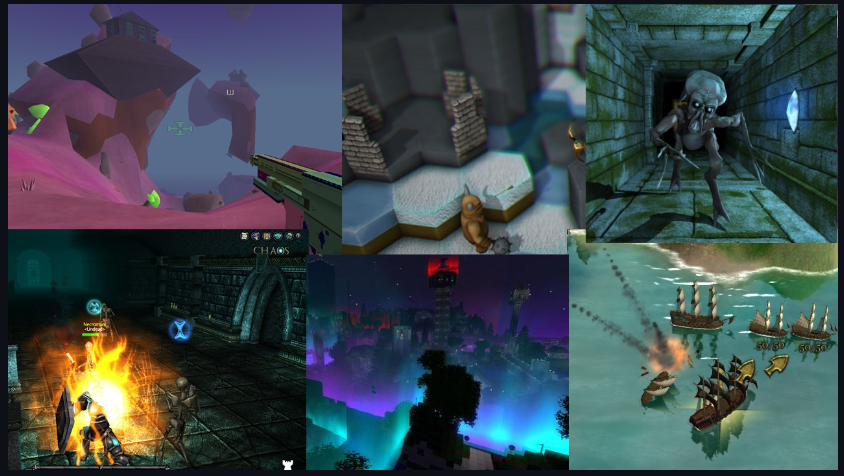
It is powered by efficient Rust code and modern rendering, it delivers smooth combat, evolving dungeons, and rich lore, all in a lightweight, cross-platform package.
With tight mechanics, real-time action, and an addictive loop, Volren proves Rust isn’t just for speed, it’s for magic. A true indie gem.
Here is some other games are made by Rust
- Hydrofoil Generation: A sleek, fast-paced racing game that runs flawlessly across platforms. Rust’s zero-cost abstractions and memory safety let developers push graphics and gameplay to the limit, all while avoiding dreaded bugs.
- Tiny Glade, A minimalist, atmospheric adventure that proves Rust isn’t just for big engines. With elegant code, instant compile times, and no bloat, it highlights how Rust empowers small teams to create beautiful, stable experiences.
Now, which Rust Game Engine you can use to build your next game?
1- Comfy 2D
Built for speed, simplicity, and joy, Comfy is a lightweight, opinionated 2D game engine in Rust that just works. Inspired by the best of macroquad, raylib, and Love2D, it cuts through complexity to deliver what you need: fast rendering (via wgpu), smooth gameplay, and zero boilerplate.
Perfect for indie devs, hobbyists, and prototypers who want to focus on creativity, not setup. From sprites to physics, input to audio, Comfy handles the common stuff so you can build your game, not fight the tool.


2- Bevy 2D/ 3D
Bevy is a refreshingly simple, fast, and data-driven game engine in Rust. Built on ECS, it’s blazingly fast, cross-platform, and endlessly extensible. From 2D sprites to 3D worlds, UIs to animations, all in one elegant, open-source package.
It also supports hot reloading, zero boilerplate, and compile times under 3 seconds. Just create.


3- ggez
ggez. is a simple yet powerful engine that enables you to make games easily in Rust. Lightweight, cross-platform, and built on wgpu for fast 2D/3D rendering. Load assets from folders or ZIPs, play OGG, WAV, FLAC via rodio.
It is inspired by LÖVE, it’s minimal yet powerful — no forced systems, just a clean foundation to build your game your way. Fast, flexible, fun.
ggez features include:
- Filesystem abstraction that lets you load resources from folders or zip files
- Hardware-accelerated 2D and 3D rendering built on the
wgpugraphics API - Loading and playing .ogg, .wav and .flac files via the
rodiocrate - TTF font rendering with
glyph_brush. - Interface for handling keyboard and mouse events easily through callbacks
- Config file for defining engine and game settings
- Easy timing and FPS measurement functions.
- Math library integration with
mint. - Some more advanced graphics options: shaders, instanced draws and render targets
 ggez
ggez
4- Fyrox Game Engine
With this amazing engine you can build stunning 2D/3D games with a full-featured editor, hot reloading, and lightning-fast iteration.
It is powered by a flexible PBR renderer, advanced physics, rich audio, and a powerful UI system, all cross-platform (PC, Web, Mobile). Extend it with plugins, script in Rust, and craft immersive worlds, no compromises.


5- Piston
Piston is not just an engine, it is a movement. Born in 2014 to rethink 2D graphics in Rust, Piston grew into a vibrant ecosystem of modular, high-performance libraries for games, interactive art, and real-world apps.
From 2D/3D rendering and UI to sprite animation, AI, image processing, Minecraft clones, and even a VS Code plugin, the bricks are already here. Cross-platform. Back-end agnostic. Built for speed, simplicity, and collaboration.
 Hazem Abbas
6- nannou
nannou is a collection of code aimed at making it easy for artists to express themselves with simple, fast, reliable, portable code. Whether working on a 12-month installation or a 5 minute sketch, this framework aims to give artists easy access to the tools they need.
7- RG3D
RG3D is a feature-rich, production-ready, general purpose 2D/3D game engine written in Rust with a scene editor.
RG3D Features
- Cross-Platform: Windows, Linux, macOS, Web (WASM)
- 2D & 3D Support: Full scene graph, LOD, multi-layer terrain
- Modern Rendering Pipeline: PBR, HDR, tone mapping, auto-exposure, SSAO, soft shadows, volumetric lighting, deferred & forward rendering
- Advanced Visuals: Custom shaders, normal/parallax mapping, batching, instancing, FXAA, skyboxes, decals, lightmapping, soft particles
- Pro Audio: Binaural sound (HRTF), spatial audio, reverb, streaming, WAV/Ogg support
- AI & Pathfinding: A* pathfinder, navmesh, behavior trees
- Scene Editor & UI: Node-based UI with 30+ widgets, docking, TTF/OTF fonts, message-passing, fully customizable
- Asset Management: Async loading, PNG/JPG/TGA/DDS, FBX models, compressed textures (DXT), OGG/WAV
- Serialization: Auto-serialize almost any entity — no boilerplate
- Animation: Blending state machine, retargeting (Mecanim-style)
- Physics: Rapier-powered, rigid bodies, joints, raycasts, colliders
- Developer-Friendly: Fast compilation, comprehensive docs, tons of examples, OO design, GAPI-agnostic
 sierra-zero
8- Rusty Engine
Perfect for beginners learning Rust, Rusty Engine makes creating 2D game prototypes fun, fast, and frustration-free. Built as a lightweight wrapper over Bevy, it simplifies game development with clean, beginner-friendly Rust code, no complex concepts, just instant gameplay. Works seamlessly on macOS, Linux, and Windows.
Start small. Learn fast. Build your first game in minutes. It is ideal for coders diving into Rust, then level up to Bevy for pro-grade games.
Features
- Asset pack included (sprites, music, sound effects, and fonts)
- Sprites (2D images)
- Use sprites from the included asset pack, or bring your own
- Collision detection with custom colliders
- Audio (music & sound effects)
- Looping music
- Multi-channel sound effects
- Text
- 2 fonts included, or bring your own
- Input handling (keyboard, mouse)
- Timers
- Custom game state
- Window customization
 CleanCut
9- Blue Engine
Blue Engine is a general-purpose, easy-to-use, extendable, and portable graphics engine written in rust. The engine can run on many popular back-end APIs including Vulkan, D3D-12, GL-ES, and Metal as well as Windows, Linux, Mobile, and OSX to ensure cross-platform compatibility.
 AryanpurTech
10- ZENgine
ZENgine is a very simple 2D data-driven game engine for didactic purposes written in Rust using an ECS architecture. It is heavily inspired by Bevy, Amethyst, and Kudo.
 MalpenZibo
11- macroquad
macroquad is a simple and easy to use game library for Rust programming language, heavily inspired by raylib.
Its features include:
- Same code for all supported platforms, no platform dependent defines required.
- Efficient 2D rendering with automatic geometry batching.
- Minimal amount of dependencies: build after
cargo cleantakes only 16s on x230(~6 years old laptop). - Immediate mode UI library included.
- Single command deploy for both WASM and Android.
 not-fl3
12- Tetra
Tetra is a simple 2D game framework written in Rust. It uses SDL2 for event handling and OpenGL 3.2+ for rendering.
 17cupsofcoffee
13- Hotham (VR)
Hotham is a lean, high-performance game engine built for mobile VR, designed with small teams (1–5 devs) in mind. If you're crafting immersive experiences for headsets like the Oculus Quest and tired of bloated, complex tools, Hotham is your shortcut. Fast, focused, and built for technical creators who value speed and simplicity over bells and whistles.

14- koi
koi is a passion project, a work-in-progress, and a glimpse into the future of game dev. Built in the open (mostly), running on Mac, Windows, and Web, it powers wild experiments like Bloom3D and Last of the Sky Folk. Not ready for prime time, but full of potential. Expect bugs, build breaks, and bold ideas.
 kettle11
15- Oxygengine
Oxygengine is the lightning-fast HTML5 + WASM game engine for Rust devs, powered by hecs-ECS for insane performance and clean, decoupled code, where web games meet raw power.
 PsichiX
16- rend3
rend3 is a blazing-fast, pure-Rust 3D renderer built on wgpu. It is easy to use, deeply customizable, and made for efficiency. With PBR, shadows, skyboxes, GLTF support, and seamless GUI integration, it’s the ultimate toolkit for devs who want power without complexity.
Lightweight, modular, and future-proof. Build stunning visuals, effortlessly.
17- Ambient

Ambient is a collaborative, web-based game engine built with Rust, WASM, and WebGPU, letting you build, deploy, and play multiplayer games in minutes, no backend needed. Code once, run everywhere: web, desktop, and beyond. Share your game instantly, invite friends to play, and co-create in real time.
It is is a lightweight, open-source, and blazing fast, Ambient makes high-performance multiplayer gaming fun, accessible, and truly collaborative, perfect for indie devs, studios, and dreamers alike.


18- srs2dge
This is a free and open-source Rust-based Simple 2D Game Engine.
19- Amethyst (Not Maintained)
Amethyst is a fast, data-driven game engine built on a massively parallel ECS for maximum performance. It promotes clean, reusable code, rapid prototyping with RON files, and seamless multithreading. Designed for efficiency and configurability, it empowers developers to build scalable, maintainable games with clear separation of data and behavior.
Resources




 39george
 Uriopass
 dasifefe