20+ "Power Prompts" to Turn AI into Your Ultimate Study Partner, Try with Gemini, ChatGPT, & Qwen


As a doctor and a developer, I’ve spent half my life studying. First, it was anatomy and pathology; now, it’s algorithms, Linux kernels, and system architecture.
If I had tools like Gemini, Qwen, or ChatGPT back in medical school, my workflow would have been drastically different. But here is the trap: most students use AI to do the work for them. That’s a mistake. You want to use AI to help you understand the work.
Whether you are using Gemini (great for large documents), Qwen (amazing open-source logic), or ChatGPT, the magic lies in the prompt.
Here are 20+ prompts engineered to turn these AIs into active study partners, covering everything from flashcards to the Feynman technique.
 Hamza Emadeed Mousa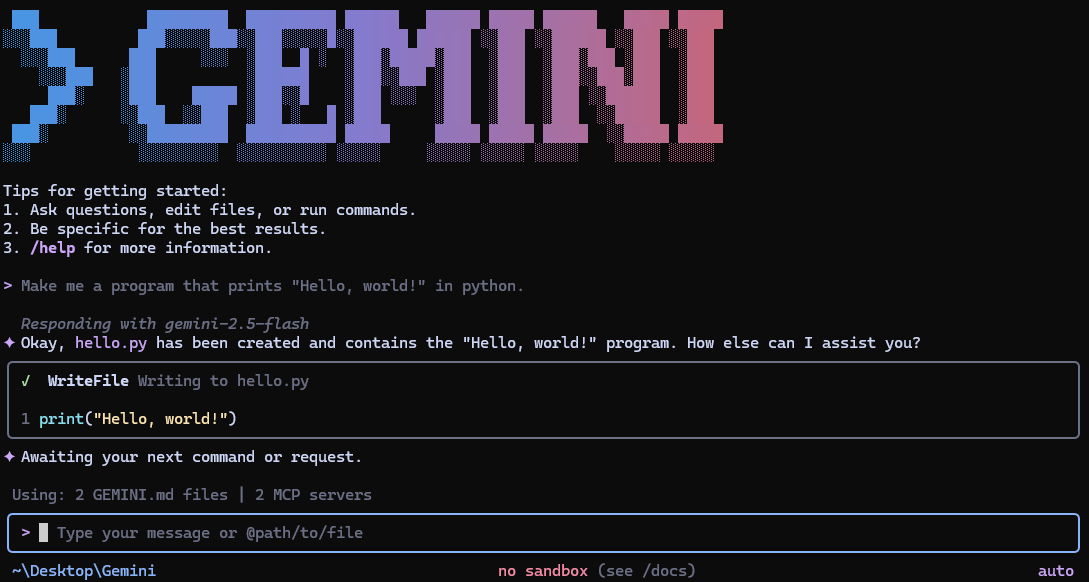
Phase 1: Deep Understanding (The "Feynman Technique")
Don't just memorize. If you can't explain it simply, you don't understand it.
1. The "Explain Like I’m 5" (ELI5)
Prompt: "Explain the concept of [Quantum Entanglement / The Krebs Cycle] to me as if I were a 12-year-old. Use simple analogies and avoid jargon."
- Why it works: It strips away complexity and forces the AI to give you the core logic of the concept.
2. The Real-World Analogy
Prompt: "I am struggling to understand [Object Oriented Programming]. Can you explain it using an analogy related to [Cooking / Cars / LEGOs]?"
- Why it works: It connects new information to something your brain already understands.
3. The Socratic Tutor (My Favorite)
Prompt: "I want to learn about [The French Revolution]. I want you to test my knowledge. Ask me a question, wait for my answer, and then give me feedback. Do not lecture me; guide me."
- Why it works: It stops the AI from dumping text and forces you to think actively.
4. The "Pareto Principle" (80/20 Rule)
Prompt: "I have an exam on [Linear Algebra] in 2 days. What are the 20% of concepts that will likely make up 80% of the exam questions? Focus on high-yield topics."
- Why it works: Perfect for cramming when you need to prioritize efficiency.
5. The Connection Maker
Prompt: "How does [Concept A] directly affect [Concept B]? Explain the relationship and causality between them."
- Why it works: Knowledge isn't isolated facts; it's a web. This builds the web.
 Hamza Emadeed Mousa
Phase 2: Active Recall & Testing
This is the single most effective way to study. Stop re-reading highlights.
6. The Anki Flashcard Generator
Prompt: "Create a table with two columns: 'Front' (Question/Concept) and 'Back' (Answer/Definition) for the topic of [Pharmacology of Beta Blockers]. Make it suitable for export to Anki (CSV format)."
- Why it works: As a dev, you know the value of structured data. Import this directly into Anki and start memorizing.
7. The "Hard Mode" Quiz
Prompt: "Generate 10 multiple-choice questions about [The History of the Ottoman Empire]. Make them difficult. Provide the correct answer and a detailed explanation of why the other options are wrong at the end."
- Why it works: Understanding why an answer is wrong is just as important as knowing which one is right.
8. The "Fill in the Blanks"
Prompt: "Take this text about [Cell Division] and remove the key keywords, replacing them with blanks (_____). List the missing words at the bottom."
- Why it works: Excellent for testing your memory of specific terminology.
9. The Counter-Argument (Roast My Essay)
Prompt: "Here is an argument I wrote about [Climate Change Policies]. Play the role of a skeptic/debater. Find the logical fallacies and weak points in my argument."
- Why it works: It toughens your critical thinking and prepares you for defense.
10. The Pre-Mortem
Prompt: "I am about to study [Calculus II]. What are the most common mistakes students make in this subject? What concepts usually trip people up?"
- Why it works: It warns you about "traps" before you fall into them.
 Er Nur Uresin
Phase 3: Organization & Checklists
Overwhelm is the enemy of progress. Structure is the antidote.
11. The Essay Checklist
Prompt: "I am writing a research paper on [The Impact of AI on Healthcare]. Create a step-by-step checklist for me, from the initial research phase to the final proofreading, ensuring I cover all academic standards."
- Why it works: Breaks a mountain down into climbable rocks.
12. The Study Schedule Architect
Prompt: "I have 3 weeks until my final exam on [Anatomy]. I can study for 2 hours a day. Create a study schedule for me that covers [List of Topics], including rest days and review sessions."
- Why it works: Outsourcing the planning lets you focus on the execution.
13. The "Podcast" Summary
Prompt: "I pasted a transcript of a lecture below. Summarize the key takeaways into bullet points and give me a 'tl;dr' summary at the top."
- Why it works: Great for when you have messy notes or long transcripts (Gemini is great for this due to its large context window).
14. The Rubric Creator
Prompt: "Act as a strict professor. Create a grading rubric for an essay on [Topic]. Then, grade the following text based on that rubric."
- Why it works: Gives you an objective look at your own work.
 Hamza Emadeed Mousa
💻 Phase 4: For the Coders & Builders (The "Dev" Angle)
Since many of you are like me, interested in code:
15. The "Rubber Duck" Debugger
Prompt: "Here is a snippet of Python code that is throwing an error. Don't just fix it; explain to me why it is broken and how I can prevent this logic error in the future."
16. The Code Translatator
Prompt: "I know Java, but I'm trying to learn Python. Rewrite this Java code in Python and explain the syntax differences."
17. The Documentation Writer
Prompt: "I wrote this function. Generate clear, standard documentation (docstrings) for it, and explain the inputs and outputs."
🗣️ Phase 5: Language & Soft Skills
18. The Roleplay Partner
Prompt: "Act as a native Spanish speaker at a coffee shop. I will order a drink, and you respond. Correct my grammar only if I make a major mistake."
19. The Vocabulary Contextualizer
Prompt: "I want to learn the word 'Ubiquitous'. Use it in 3 different sentences: one casual, one academic, and one in a business context."
20. The Interview Prep
Prompt: "I am interviewing for a [Junior Developer] role. Ask me the 5 most common behavioral questions and critique my answers."
A Final "Doctor's Note"
Remember: These models are Large Language Models, not truth engines. They can hallucinate (make things up).
- Trust but verify: If the AI gives you a medical fact or a citation, check it.
- Privacy first: Do not upload sensitive personal data or patient information into public chatbots.
- Use the right tool: Use Gemini for large document analysis, Qwen for coding/logic, and ChatGPT for creative reasoning.
Study smart, not just hard. Good luck!
 Hamza Emadeed Mousa
 Hamza Emadeed Mousa