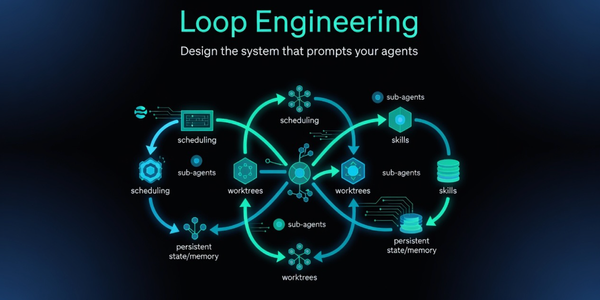
From "Vibe Care" to Precision Ops: 6 Ways AI Agents Scale Quality of Service; Agentic Healthcare


The era of "Vibe Medicine" is officially ending. As a physician who has spent as much time in front of a terminal as I have in front of a patient, I’ve seen the healthcare system buckle under the weight of its own inefficiency.
We’ve spent decades throwing more "administrative staff" and "compliance checklists" at the problem, but the quality of service hasn't scaled. It’s just become more expensive and more brittle.
We are now entering the phase of Agentic Healthcare. This isn’t about chatbots that hallucinate symptoms or simple automation scripts that move a PDF from one folder to another. We are talking about autonomous, task-oriented software agents that understand the Standard of Care and possess the "reasoning" capabilities to execute complex workflows.
For healthcare executives, this is the pivot point. It is the transition from being a "billing factory" to becoming a high-precision service engine. Here are six ways agentic systems are fundamentally rewriting the playbook for modern healthcare.
 Hazem Abbas
1. The Frictionless Onboarding Engine
Patient onboarding has traditionally been a data-entry nightmare that kills the "Subjective" (S) connection between a doctor and a patient before they even meet. We ask patients to fill out the same paper forms three times, then a human clerk manually types that into an EHR, usually introducing at least two errors in the process.
Agentic onboarding flips this. Instead of a form, a patient interacts with an onboarding agent that doesn't just collect data, it validates it in real-time. If a patient mentions a "heart condition," the agent autonomously queries the local hospital network to pull the relevant cardiology reports. It doesn't wait for a human to request the fax; it identifies the gap in the medical record and fills it.
By the time the patient sits in the exam room, the doctor isn't looking at a blank screen; they are looking at a curated, verified, and risk-stratified history.
 Hazem Abbas
2. Ambient Listening as a Clinical Co-Pilot
The greatest "Medical Error" of the last twenty years is the "Computer between the Doctor and the Patient." We spend 40% of our day looking at a screen instead of the human being in front of us.
Ambient listening agents change the physics of the exam room. These aren't just transcription tools. An agentic ambient system listens to the conversation, recognizes the "Assessment" and "Plan," and autonomously prepares the orders.
If I tell a patient, "We’re going to start you on 10mg of Lisinopril and I want a follow-up blood panel in two weeks," the agent doesn't just write it down. It checks the patient's insurance for the preferred pharmacy, cues up the lab order in the system, and flags a potential interaction with the patient's existing supplements, all before I’ve even finished the sentence. It removes the "clerical tax" from the practice of medicine.
 Hazem Abbas
 Hazem Abbas
3. Continuous, Autonomous Clinical Auditing
In the current system, "Auditing" is a reactive, post-mortem process. A compliance officer looks at a chart three months after a patient was discharged to see if we missed a box. By then, the "Malpractice" has already occurred, and the patient has already suffered.
Agentic Healthcare introduces Live Auditing. These agents live inside the EHR "bloodstream." They are constantly comparing the "Objective" (O) data coming from the lab with the "Plan" (P) documented by the resident. If a patient’s potassium levels are dropping and the system doesn't see a corrective order within a certain window, the agent doesn't just send a generic notification (which causes alert fatigue); it presents the specific evidence and a drafted order for the physician to sign.
It moves auditing from a "legal defense" mechanism to a "patient safety" mechanism.
 Hazem Abbas
4. Precision Resource Orchestration
Healthcare logistics is a game of "hurry up and wait." We have expensive MRI machines sitting idle for twenty minutes because a patient was delayed in transport, or an OR sitting empty because the surgical prep team didn't get the "Assessment" update.
Agentic systems act as the "Air Traffic Control" of the hospital. Unlike traditional scheduling software, these agents can reason through disruptions.
If a surgery runs long in Room 4, the agent autonomously communicates with the transport team, the anesthesia recovery unit, and the next patient’s family, shifting the entire "value chain" in real-time to minimize downtime. It treats hospital resources like a high-performance compute cluster, optimizing for throughput without burning out the human staff.
5. Closing the "Referral Black Hole"
Every executive knows the "Referral Leakage" problem. A primary care doctor sends a patient to a specialist, and the patient simply vanishes into the "black hole" of the healthcare system. The loop is never closed, the data is never shared, and the patient’s quality of care plummets.
An agentic referral system takes "ownership" of the patient’s journey. The agent follows the patient to the specialist, ensures the consultation note is sent back to the primary, and verifies that the patient actually picked up the new medication. It’s a "digital concierge" that ensures the Continuity of Care. This reduces "Causation" risks in legal claims and significantly improves the service quality for the patient, who finally feels like the system actually knows who they are.
6. Dynamic Patient Education and Post-Discharge Agents
The most dangerous time for a patient is the 48 hours after they leave the hospital. They are overwhelmed, medicated, and usually have no idea how to execute the "Plan" (P) we gave them.
Post-discharge agents act as a bridge. They don't just send "reminders"; they engage in "reasoning-based" follow-ups. If a patient reports they are "feeling dizzy" via a home monitoring device, the agent doesn't just tell them to call 911. It looks at the medication they took an hour ago, checks their recorded blood pressure, and determines if this is a common side effect or a critical emergency.
It provides the "Subjective" support patients need, reducing unnecessary readmissions and preventing the "Failure to Warn" lawsuits that plague hospital systems.
 Hazem Abbas
The Executive Mandate: Build for Agents, Not for Humans
As we transition into this "Agentic" world, the goal for healthcare leadership is clear: Stop building systems for human data entry. We need to build "Agent-First" architectures. This means moving away from the "Vibe Coding" of healthcare management, where we make decisions based on quarterly "vibes", and moving toward a model where our data is structured, accessible, and ready for autonomous agents to act upon.
I wrote this because I believe the future of medicine isn't more doctors; it’s more "Leveraged Doctors." By deploying these six agentic strategies, we can finally stop treating patients like "ticket numbers" and start treating them like the human beings they are. We are moving from a system of "Medical Negligence" by omission to a system of "Precision Care" by design.
The technology is ready. The question is: Is your leadership?
 Hazem Abbas
Read More
 Hazem Abbas
 Hazem Abbas
 Hazem Abbas
 Hazem Abbas