
How 3D Technologies Are Reshaping Modern Healthcare

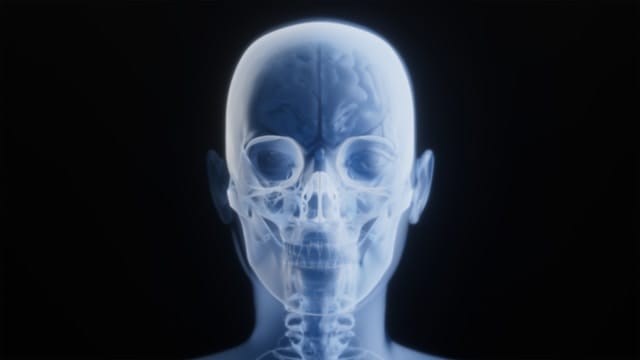
Healthcare has long relied on imaging to support diagnosis and treatment, but expectations around what those images should deliver are changing. Patients increasingly want more than static scans and technical explanations.
Whether someone is preparing for cancer treatment, reconstructive surgery, or ethnic rhinoplasty, they increasingly expect more than verbal explanations. Visual tools can help them better understand procedures and potential outcomes before making decisions.
Clinicians are looking for the same clarity, seeking technologies that improve precision, reduce uncertainty, and support individualized care. As a result, 3D imaging, advanced visualization platforms, and patient-specific medical technologies are gaining momentum. Together, they are reshaping how healthcare is planned, delivered, monitored, and experienced.
Why Healthcare Is Moving Beyond Traditional Imaging
Traditional imaging technologies remain essential, but each comes with limitations. MRI systems provide excellent anatomical detail but can be costly and time-intensive. CT scans offer valuable diagnostic information but expose patients to ionizing radiation. Ultrasound is relatively affordable and accessible, yet it may not always provide the depth and detail required for complex assessments.
Researchers at the University of Southern California and Caltech are exploring ways to overcome these trade-offs. Their Rotational Ultrasound and Photoacoustic Tomography (RUS-PAT) system combines ultrasound imaging with photoacoustic tomography. This allows it to capture both anatomical structures and vascular information in a single 3D scan.
The technology can image regions up to 10 centimeters wide in approximately 10 seconds while remaining noninvasive. Co-senior author Lihong Wang described the approach as a significant step toward more comprehensive imaging at meaningful depths without relying on ionizing radiation.
Instead of relying on separate imaging systems to gather different types of information, future platforms may combine multiple imaging modalities into a unified view. This could give clinicians a more complete understanding of the patient.
Turning Medical Images Into Actionable Insights
The value of 3D imaging extends well beyond diagnosis. Today, these technologies are helping clinicians monitor conditions more accurately, evaluate treatment effectiveness, and improve communication with patients.
A review published in Frontiers in Photonics highlights how advanced 3D imaging systems are improving the assessment and monitoring of dermatological conditions. Unlike conventional 2D photographs, these systems can capture depth, volume, surface texture, pigmentation patterns, lesion thickness, scar volume, and wrinkle depth with greater precision.
This provides a more detailed view of a patient's condition and helps identify changes that might otherwise be missed.
The ability to generate objective measurements is particularly valuable. Clinicians can track treatment progress over time using quantifiable data rather than relying solely on visual observations. This supports more informed decision-making and allows treatments to be adjusted when needed.
Three-dimensional visualization also improves patient understanding. Detailed models make complex conditions easier to explain and help set realistic expectations. As healthcare becomes increasingly data-driven, these measurable insights are becoming just as valuable as the images themselves.
Personalization Is Becoming the New Standard
One of the most significant impacts of 3D technologies is their ability to support individualized care. Clinicians can now gather detailed patient data and use it to guide treatment decisions. This reduces reliance on generalized approaches.
The trend extends beyond diagnosis. Three-dimensional technologies are increasingly helping clinicians design treatments around a patient's unique anatomy. Researchers are even developing 3D-printable biomaterials that can be customized for individual patients and used in reconstructive procedures.
Ethnic rhinoplasty offers another example of this shift. According to Shah Aesthetic Surgery, it is a type of nose surgery that aims to enhance appearance while preserving ethnic identity.
Advanced visualization tools allow surgeons to study facial proportions, symmetry, and structural differences before surgery. This helps create treatment plans that align with each patient's anatomy and goals.
The same patient-specific mindset is influencing oncology, orthopedics, reconstructive medicine, and dermatology. As imaging, modeling, and 3D printing technologies advance, personalized care is becoming increasingly practical across healthcare.
The Future of Healthcare Is Becoming More Personalized
The rapid growth of 3D healthcare technologies shows that personalized medicine is becoming a larger part of modern healthcare.
According to Grand View Research, the global 3D medical imaging devices market was valued at $12.74 billion in 2024. It is projected to reach $20.31 billion by 2030. Growth is being fueled by aging populations, rising rates of chronic disease, and increasing demand for minimally invasive procedures.
What makes this trend especially notable is its broad impact across healthcare. Three-dimensional technologies are helping clinicians visualize anatomy more accurately, plan treatments with greater precision, and monitor patient progress more effectively. They are also supporting the development of patient-specific solutions in areas such as reconstructive medicine and surgery.
At the same time, advances in artificial intelligence, computer vision, and predictive analytics are making it easier to interpret complex medical data. Together, these innovations are helping healthcare become more connected and personalized. Diagnosis, treatment planning, intervention, and follow-up are increasingly guided by detailed patient-specific information.
FAQs
What are the benefits of 3D imaging?
3D imaging provides detailed views of anatomy from multiple angles. It helps clinicians assess structures more accurately and measure changes over time. This can improve diagnosis, treatment planning, patient communication, and the monitoring of treatment outcomes across various medical specialties.
Can a CT confirm cancer?
A CT scan can reveal tumors, abnormal growths, and suspicious tissue changes within the body. However, it usually cannot confirm whether a mass is cancerous. Doctors often require a biopsy or additional tests to establish a definitive cancer diagnosis.
Is an MRI a 3D image?
An MRI creates a series of highly detailed cross-sectional images of internal structures. These images can be processed into three-dimensional models using specialized software. This capability helps clinicians visualize anatomy more clearly for diagnosis, treatment planning, surgical preparation, and more personalized care.
Key Statistics Shaping the Future of 3D Healthcare
The future of healthcare will likely be defined not only by better treatments but also by a better understanding. Technologies such as 3D imaging, AI-assisted analysis, and 3D printing are helping clinicians move beyond generalized approaches toward more personalized care.
Detailed visualization improves diagnosis, supports communication, enables personalized treatment planning, and even contributes to the creation of patient-specific medical solutions.
As these technologies continue to evolve, the line between diagnosis, planning, treatment, and monitoring will become increasingly connected. Healthcare is moving toward a model where every decision is informed by richer data, deeper insight, and a more complete picture of the individual patient.