Stop Feeding Your Private Data to the Cloud: Use DocMind AI
DocMind AI: Free Local LLM for AI-Powered Document Analysis


Let’s be honest: there is a specific kind of anxiety that comes with uploading a sensitive financial report, a legal contract, or strictly internal research to a public AI chatbot. You hover over the "Upload" button and think, "Who else is going to read this?"
For a long time, we had to choose between privacy (dumb keyword search like Ctrl+F) and intelligence (smart analysis, but on someone else’s server).
I’m done with that trade-off. And it looks like the team behind DocMind AI is too.
 Hamza Emadeed Mousa
The "Local-First" Brain
DocMind AI isn't just another wrapper for GPT-4. It is a completely self-contained, local intelligence system designed to tear through your documents without a single byte leaving your machine.
If you are a privacy absolutist (like me), this is the dream. By default, it blocks all remote endpoints. It doesn't ask for permission to track you; it assumes you want to be left alone.
 Hamza Emadeed Mousa
Why This is Different (The "5-Agent" Secret)
Most local RAG (Retrieval-Augmented Generation) tools are simple: they find a paragraph and summarize it.
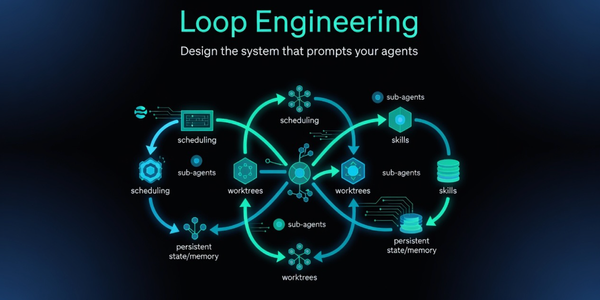
DocMind AI is different because it uses a 5-agent coordinator system. Think of it less like a chatbot and more like a digital research team living on your GPU.
- One agent might handle the retrieval.
- Another handles the "GraphRAG" (building a web of relationships between entities in your docs).
- A "Supervisor" agent orchestrates the whole thing to give you a coherent answer.
It does this using LlamaIndex and LangGraph, targeting the Qwen 4B model. That means you get a massive 128k context window that runs efficiently on consumer hardware.
 Hamza Emadeed Mousa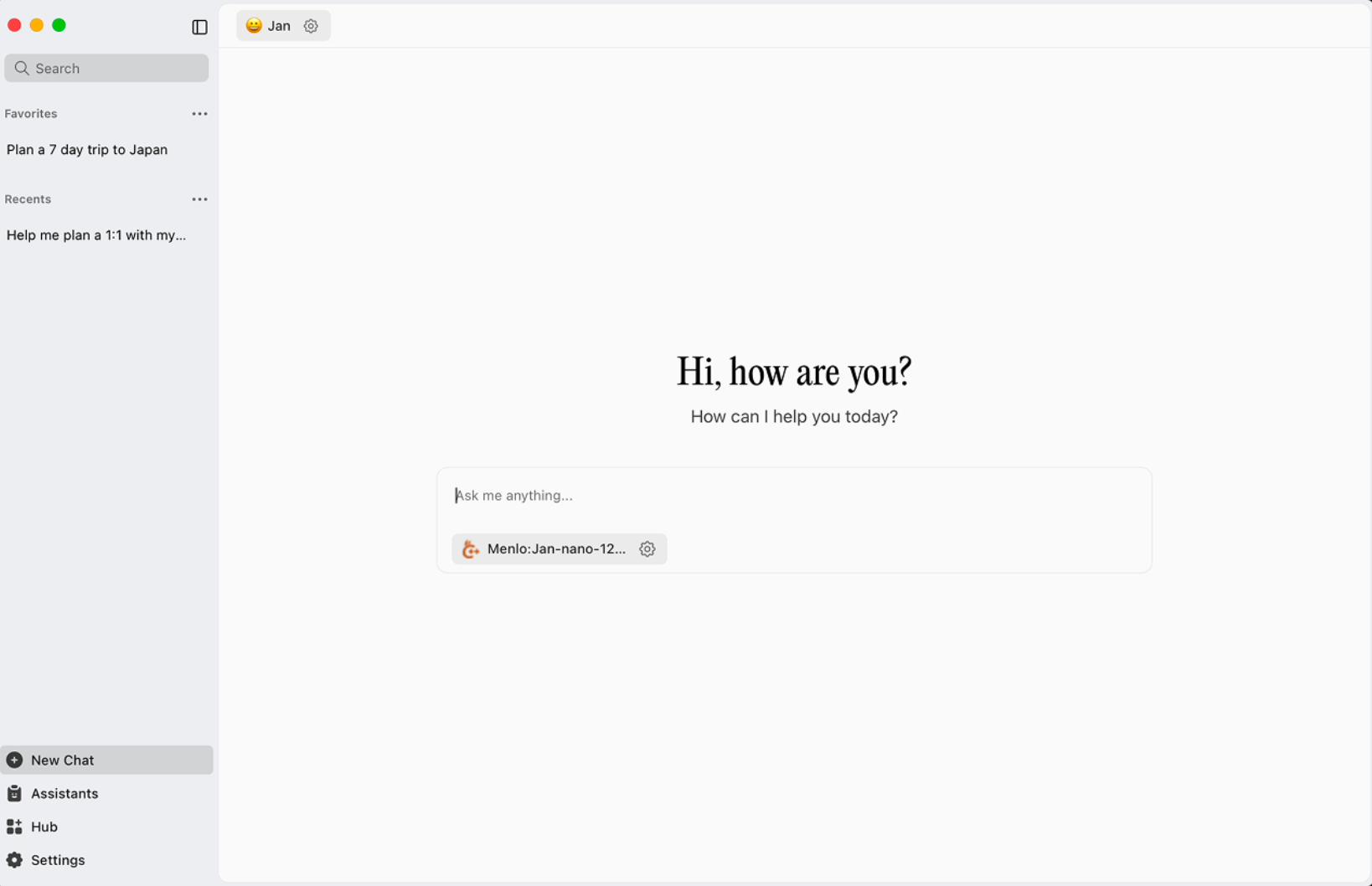
No More "Cloud Envy"
The best part? It actually works with the messy files we all have. It uses an "ingestion pipeline" that eats PDFs, DOCX, HTML, and Markdown, caching everything locally so you don't have to re-process files every time you ask a question.
If you have an unused GPU (or even just a decent CPU) and a pile of documents you want to interrogate without doxxing yourself to a tech giant, DocMind AI is the tool to beat right now.
Privacy is no longer a feature. It’s the architecture.
 Hamza Emadeed Mousa
Features
- 🔒 Local-First Privacy: Zero cloud dependency by default; all remote endpoints are blocked unless explicitly enabled.
- 🤖 5-Agent Architecture: Advanced orchestration via LangGraph (Router, Planner, Retrieval, Synthesis, Validation) for complex queries.
- 🧠 Hybrid & Graph Retrieval: Combines semantic (dense) and keyword (sparse/BM42) search with optional Knowledge Graph extraction (GraphRAG).
- ⚡ Hardware Optimized: Built on vLLM with optional GPU acceleration (FlashInfer), targeting efficient 4B models with 128K context windows.
- 📄 Universal Ingestion: Supports PDF, Office (DOCX/PPTX/XLSX), HTML, Markdown, and EPUB via
UnstructuredReader. - 👁️ Multimodal & Reranking: Includes text reranking (BGE) and visual reranking (SigLIP/ColPali) for image-rich documents.
- 💾 Deterministic & Reproducible: Features DuckDB caching, snapshot manifests, and secure AES-GCM image storage.
- 🛠️ Ops-Ready: Comes with Docker support, OTLP tracing/metrics, and structured logging (Loguru).
Resources & Downloads
 BjornMelin
Are you ready to cut the cord? Let me know in the comments if you're trying this out.