The AI Scribe: Your Silent Assistant That’s Fixing Healthcare’s Documentation Crisis


I remember the exact moment I realized something had to change. I was sitting in an exam room, trying to explain a strange pain to a specialist. He was nodding, making eye contact, but his fingers were flying across a keyboard, his back half-turned to me. Every few seconds, he’d glance at the screen, then back at me, then back at the screen.
I wasn’t talking to a doctor. I was talking to the back of a laptop.
We’ve all been there. The awkward silence while a physician plays “catch up” on the electronic health record. You leave wondering if they actually heard you. And here’s the dirty secret: the doctor feels the same way. They went into medicine to heal people, not to become data entry clerks.
But over the last few years, a technology has emerged that is silently, literally, fixing this fractured relationship. It’s called an AI scribe, and it’s the most significant shift in clinical practice since the adoption of the stethoscope.
What Is an AI Scribe?
Let’s cut through the jargon. An AI scribe is specialized software that uses artificial intelligence, natural language processing, and automatic speech recognition to listen to patient-clinician conversations and automatically generate medical documentation .
Think of it as a virtual medical scribe. Unlike a human scribe who sits in the corner of the exam room typing furiously, an AI scribe lives on a smartphone, a tablet, or a laptop. It doesn’t get tired. It doesn’t need a lunch break. And most importantly for patient comfort, it doesn’t add another warm body to an already crowded exam room.
Here’s how it works in a real clinical setting:
- The Conversation: The doctor walks into the exam room. No typing. No iPad. Just a smartphone or a small microphone on the counter.
- The Capture: As the doctor and patient talk, discussing symptoms, history, treatment plans—the AI listens in the background. It doesn’t just record; it analyzes.
- The Processing: The AI distinguishes between the patient’s voice, the doctor’s voice, and irrelevant background noise. It understands medical terminology, context, and nuance.
- The Output: Within seconds of the doctor saying, “Alright, let’s get you that prescription,” the AI generates a draft clinical note. It structures the conversation into the required medical format: HPI (History of Present Illness), Assessment, Plan, and Medical Decision Making .
The doctor reviews the note for accuracy, clicks “approve,” and walks out of the room. No typing. No pajama time. Just patient care.
 Hazem Abbas
Why AI Scribes Matter for Doctors
To understand why AI scribes are exploding in popularity, you have to understand the sheer misery of the status quo.
The average physician spends 4.5 hours of their workday on the electronic health record. That’s half the day. Of that time, roughly 1.5 hours happens after clinic hours—unpaid, alone, at home . Doctors call this “pajama time.” It’s unpaid, unrelenting, and it’s driving talented clinicians out of medicine.
The numbers are staggering. A 2025 multicenter study in JAMA Network Open found that ambient AI scribes reduced burnout from 51.9% to 38.8% in just 30 days . That’s not just a workflow improvement—that’s a life.
When a doctor uses an AI scribe, that post-clinic work doesn’t disappear; it gets done in the room in real time. I’ve spoken to physicians who went from leaving the clinic at 8:00 PM to walking out at 5:00 PM.
 Hazem Abbas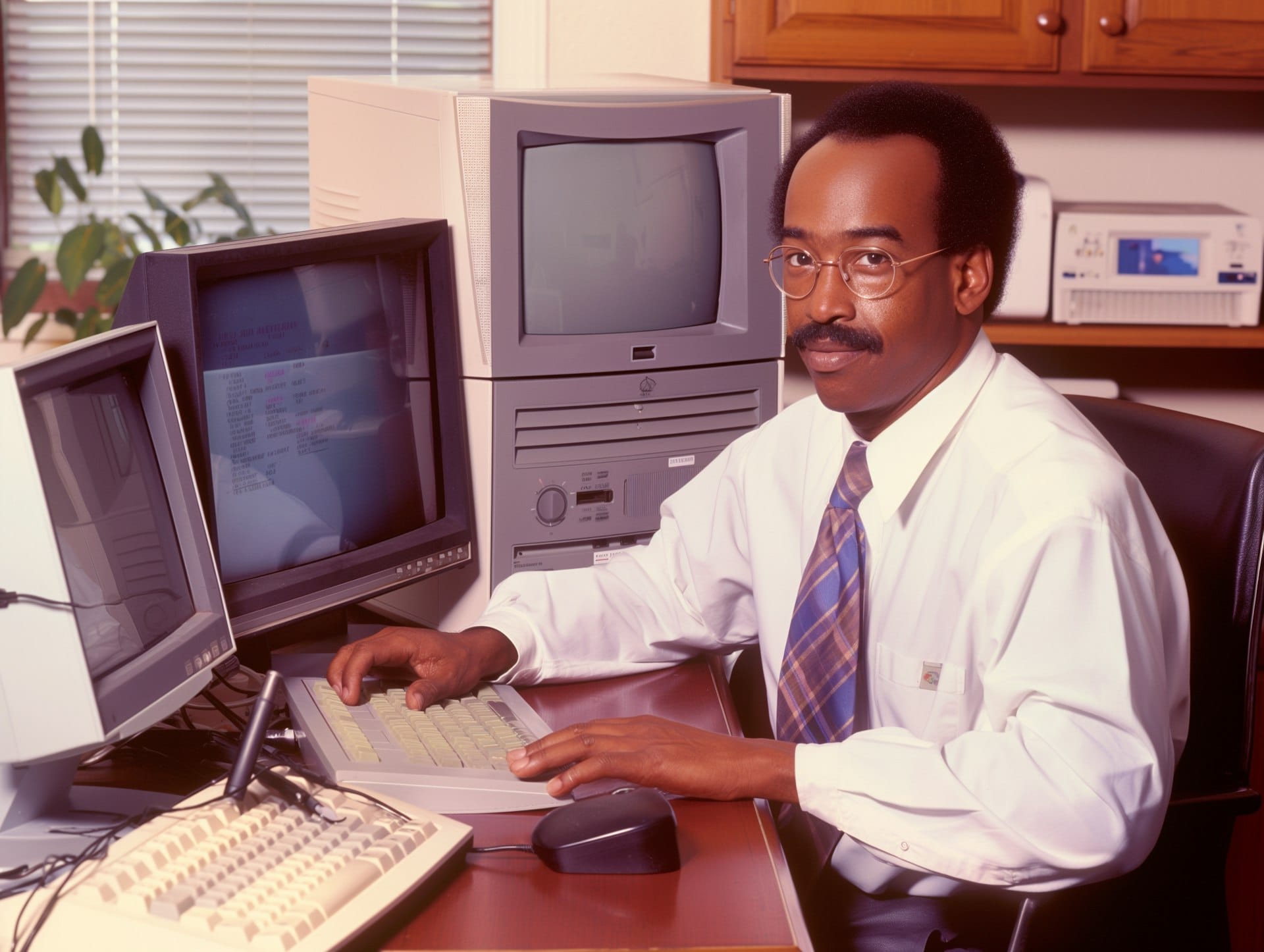
The Benefits of Using an AI Scribe
1. It Reclaims the Patient Relationship
When a clinician uses a human scribe, they still have a third party in the room. It’s better than typing themselves, but it still changes the dynamic. There’s a stranger listening to your most private health concerns.
With an AI scribe, it’s just the doctor and the patient. No laptop screen creating a wall. The doctor can sit down, make eye contact, lean in, and actually be present. Patients report feeling “heard” and “respected” when the doctor isn’t multitasking .
2. It Reduces Cognitive Load
Doctors call this cognitive load. You’re trying to run a differential diagnosis in your head, considering what this chest pain could be, ruling out the scary stuff, while also mentally noting “I need to document that she said the pain radiates to the left arm.”
An AI scribe absorbs that documentation cognitive load. It frees up the doctor’s brain to do the one thing that AI cannot do: think critically, show empathy, and make complex clinical judgments.
3. It Saves Money and Time
The ROI is real. At St. Luke’s Health System, AI scribe implementation generated $13,049 in annual revenue per clinician through enhanced coding accuracy . Charting time dropped from 22 to 9 minutes per patient—a nearly 60% reduction .
Allina Health found that clinicians using AI scribes maintained their patient-facing hours, while non-users saw a significant decrease in full-time equivalent performance. In comparing 2023 and 2024 data, non-AI scribe users saw 0.25 fewer patients per day compared to AI scribe users .
4. It Saves Resources
For a solo practitioner, hiring a human scribe can cost $30,000 to $50,000 per year. An AI scribe? $99 to $300 per month . That’s a fraction of the cost.
At a VA hospital deploying S10.ai, the health system saw a 90% reduction in IT ticket volume related to EHR documentation and cost savings of $350,000 in development and testing .
 Hazem Abbas
Can It Be Local and Private?
This is one of the most important questions, especially for privacy-conscious clinicians.
The answer is yes. There are AI scribe solutions that run entirely on your local device, meaning your patient data never leaves your computer.
Take StenoAI, for example. It’s an open-source, privacy-focused AI scribe that runs 100% locally. It uses local transcription with whisper.cpp and AI summarization with Ollama models, all on your machine. Your data never leaves your device .
Similarly, Proton Scribe offers a privacy-first AI writing assistant that can be deployed entirely at the local device level. User data never leaves the device, and the AI won’t learn from user data .
For healthcare organizations, this is a game-changer. Many vendors now offer HIPAA-compliant architectures with:
- Zero data retention: Audio processed in memory, then purged
- AES-256 encryption: For data at rest and in transit
- Auditable logs: Satisfying Joint Commission requirements
When evaluating vendors, ask point-blank: “Do you use my patient data to train your models?” The answer should be no .
 Hazem Abbas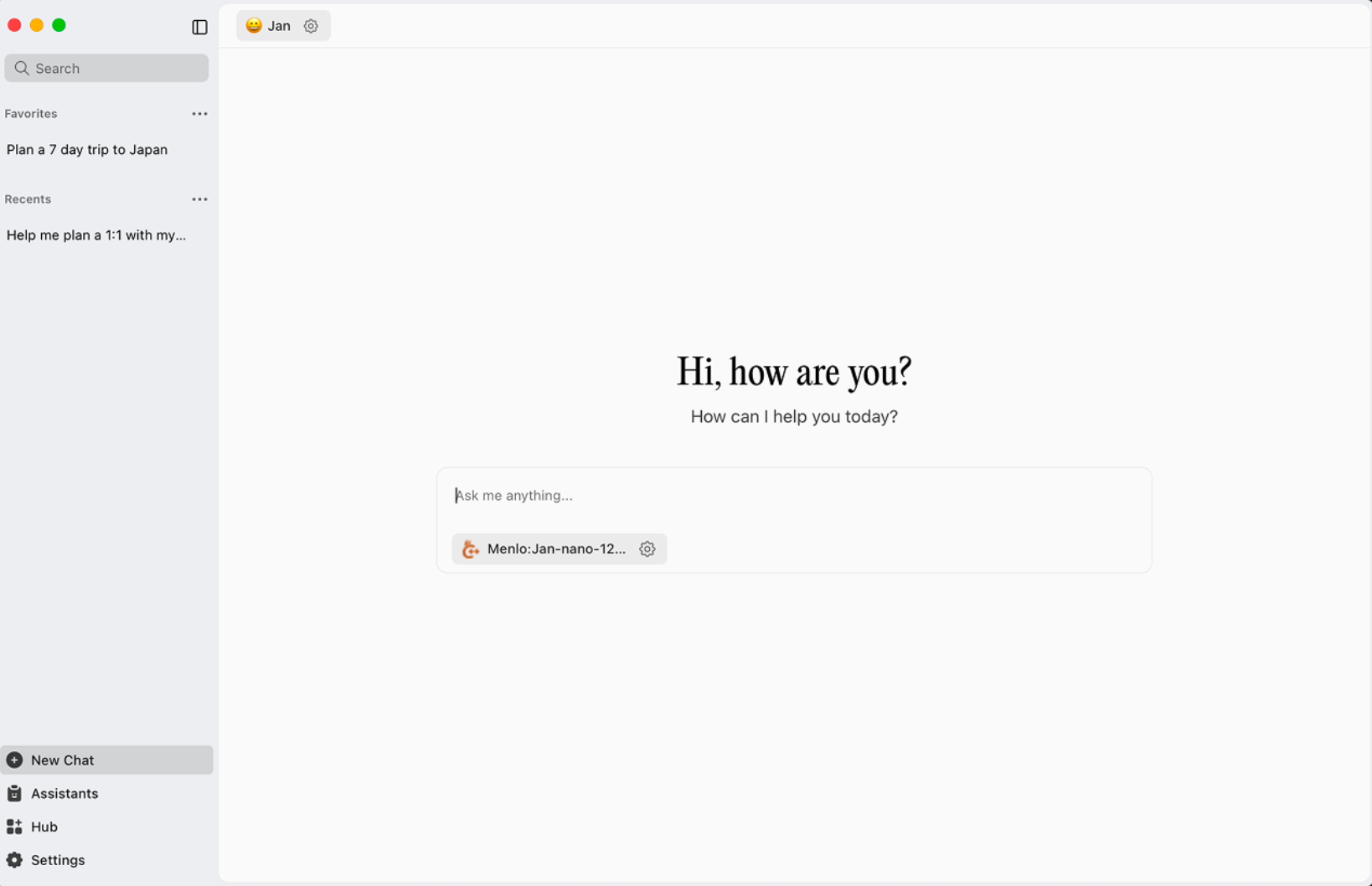
Can It Integrate with Current Systems?
Yes—and this is where things get exciting.
Modern AI scribes integrate with EHR systems in several ways:
Native API Integration
Platforms like Nuance DAX and Abridge offer deep, native integration with Epic, Cerner, and MEDITECH . This allows bi-directional data flow, the AI can read patient demographics, allergies, and lab results, and write back structured data into flowsheets, orders, and progress notes .
UI-Layer Automation
For systems with limited APIs, some AI scribes use UI-layer automation. They simulate clicks, keystrokes, and field entries, just as a human scribe would, directly into the EHR interface. This approach requires no API access and can deploy in under 24 hours .
Browser Extensions
Freed AI uses a Chrome extension called EHR Push that works with any browser-based EHR. With a single click, notes transfer directly into the correct fields—no IT setup required .
Hybrid Models
Some platforms combine approaches. S10.ai uses UI-layer automation for most tasks but can optionally ingest FHIR feeds for enhanced data accuracy, demographics, allergies, lab results, and order confirmations .
Example AI Scribe Software in 2026
Here’s a quick overview of leading options:
| Platform | Best For | Pricing | EHR Integration |
|---|---|---|---|
| S10.AI | Universal compatibility, cost efficiency | $99/month | 100+ systems, bidirectional sync |
| Nuance DAX | Large health systems, Epic environments | $600-830/month | Deep Epic, MEDITECH |
| Abridge | Patient engagement, enterprise | $2,500-3,000/year | Epic, Cerner |
| Freed AI | Budget-friendly, solo practitioners | $39-104/month | Chrome extension (any browser EHR) |
| Glass Health | Clinical decision support + scribe | Free-$200/month | Epic, eClinicalWorks, Athena |
| Suki AI | Voice-first clinicians | $299-400/month | Epic, Oracle, Athena, MEDITECH |
Is It Perfect? Not Yet.
Let me be honest about the limitations.
Hallucinations: AI scribes can produce fabricated but plausible content. One study noted that some models “invented meeting framing and participants” . Clinicians must review notes carefully.
Bias: Inadequate training data may lead to omitted ethnic or sex-specific information, particularly affecting female or racialized patients .
Consent: Patients must know we’re using AI scribes. Consent should be informed, documented, and revisited. A simple phrase works: “I wanted to ask your permission to use a secure AI scribe tool to help generate documentation during our visit so I can focus more on you. Is that OK?”
Over-reliance: There’s a risk of premature closure, stopping diagnostic thinking because the AI generated a plausible note. Clinicians must maintain their clinical judgment.
 Hazem Abbas
The Bottom Line
AI scribes are solving a fundamental problem: the gap between the time doctors have and the documentation they’re required to produce. They’re reducing burnout, restoring patient relationships, saving money, and giving clinicians their evenings back.
For the first time in years, we have a tool that lets doctors focus on what they actually trained for: taking care of people. Not data entry. Not clicking boxes. Just medicine.
I believe the AI scribe will become as standard in the exam room as the stethoscope. Not because it’s a shiny toy, but because it solves a problem that has been draining the humanity out of healthcare for decades.
If you’re a clinician who hasn’t tried one yet, I’d encourage you to take a demo. Ask about privacy. Ask about integration. Ask about the time it will save.
Because the stories I hear from doctors who made the switch aren’t about technology. They’re about coming home for dinner. They’re about remembering their patient’s name without looking at a chart.
They’re about remembering why they became a doctor in the first place.
Have you tried an AI scribe in your practice? I’d love to hear your experience. Drop a comment below or reach out—I’m always looking to learn from clinicians on the front lines.
Resources


 Eamonn Maguire
 ruzin
ruzin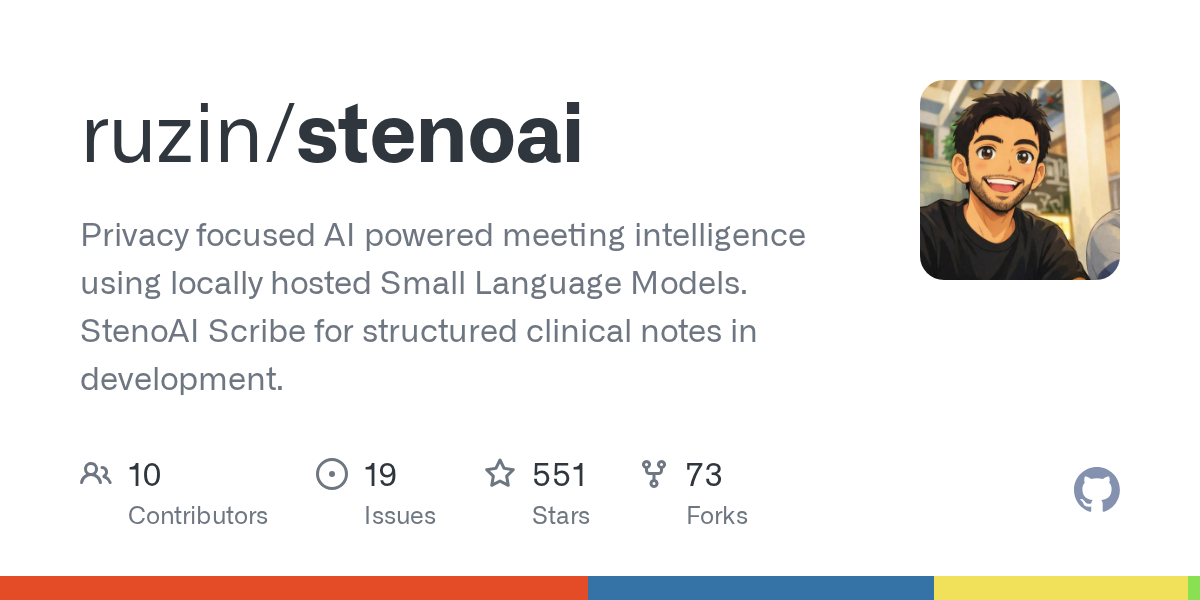
 Fatima Ali