The Death of the "Frankenstein" Stack: Why Laravel 13 Is the Final Nail in the Coffin for Manual Architecture


I remember the night clearly, it was early 2024, and I was deep in the trenches of a Node.js microservices build. I had three different terminal tabs open just to manage the service discovery, a Redis instance that was screaming for mercy, and a package.json that looked like a grocery list for a small nation. I was chasing "raw performance," yet I spent 70% of my week wiring up things that had nothing to do with the actual business logic.
Then I looked at my older Laravel projects. They were stable, sure, but they felt "heavy" compared to the sleek, event-driven promise of the Node world. I felt like I was stuck between two worlds: the speed of development in Laravel versus the "modern" AI-ready flexibility of JavaScript runtimes.
Fast forward to March 17, 2026. Taylor Otwell walks onto the Laracon stage and effectively tells us that the "Frankenstein" era, where we had to bolt on a dozen third-party SDKs to make an app "smart", is over. Laravel 13 isn't just another version number; it’s a fundamental shift in how we perceive the backend.
 Hazem Abbas
If you aren't planning a rewrite yet, you’re already behind. Here is why the "old way" is dead and why the Laravel 13 paradigm is the only way forward for serious developers.
The Chaos of "Before": The Burden of the Middleware
Before Laravel 13, building a modern, AI-native application was a chaotic mess of package management. You didn't just write code; you managed dependencies like a high-stakes juggler.
- The Package Bloat: To get a basic RAG (Retrieval-Augmented Generation) system working, you needed the OpenAI SDK, a Guzzle wrapper, a specific vector search package, and perhaps a separate failover handler.
- The Service Class Cemetery: We all have that
app/Servicesfolder filled withOpenAIService.php,AnthropicService.php, andGeminiService.php. Every time a new LLM dropped, we’d spend two days writing a new adapter just to keep the "fallback" logic from breaking our production environment. - Manual Rate Limiting: We were manually checking attempt counts against Redis keys, writing brittle
if ($this->tooManyAttempts())blocks that felt more like 2015 than 2026.
In the Node.js world, we thought we were "lean" because we picked our own libraries. In reality, we were just spending more time building the plumbing than the house. Laravel 13 has decided that the plumbing is now a utility, not a craft.
The "After": Why the Rewrite is Non-Negotiable
When I saw the Laravel AI SDK move from beta to stable in v13, I realized that my old codebases were officially technical debt. The new version introduces features that make manual implementation look like horse-and-buggy engineering.
1. Automatic Provider Failover
This is the feature that should make every Node developer sweat. In Laravel 13, failover isn't something you code; it's something you configure. If OpenAI hits a rate limit or a 500 error, the SDK automatically reroutes to Anthropic or Gemini without a single line of your business logic changing.
On production apps where an AI call failing means a visible error to the user, this is the difference between a "stable" product and a "hobby" project.
2. Semantic Search in the Core
We used to treat Vector DBs like specialized alien technology. Now, semantic search is baked directly into the Eloquent Query Builder.
$results = Post::query()
    ->semanticSearch('modern medical web apps', 10)
    ->where('status', 'published')
    ->get();
This uses pgvector under the hood, allowing your app to search by meaning rather than keywords. If you are still using basic LIKE %query% or even complex Elasticsearch setups for standard search, you are providing a subpar experience.
 Hazem Abbas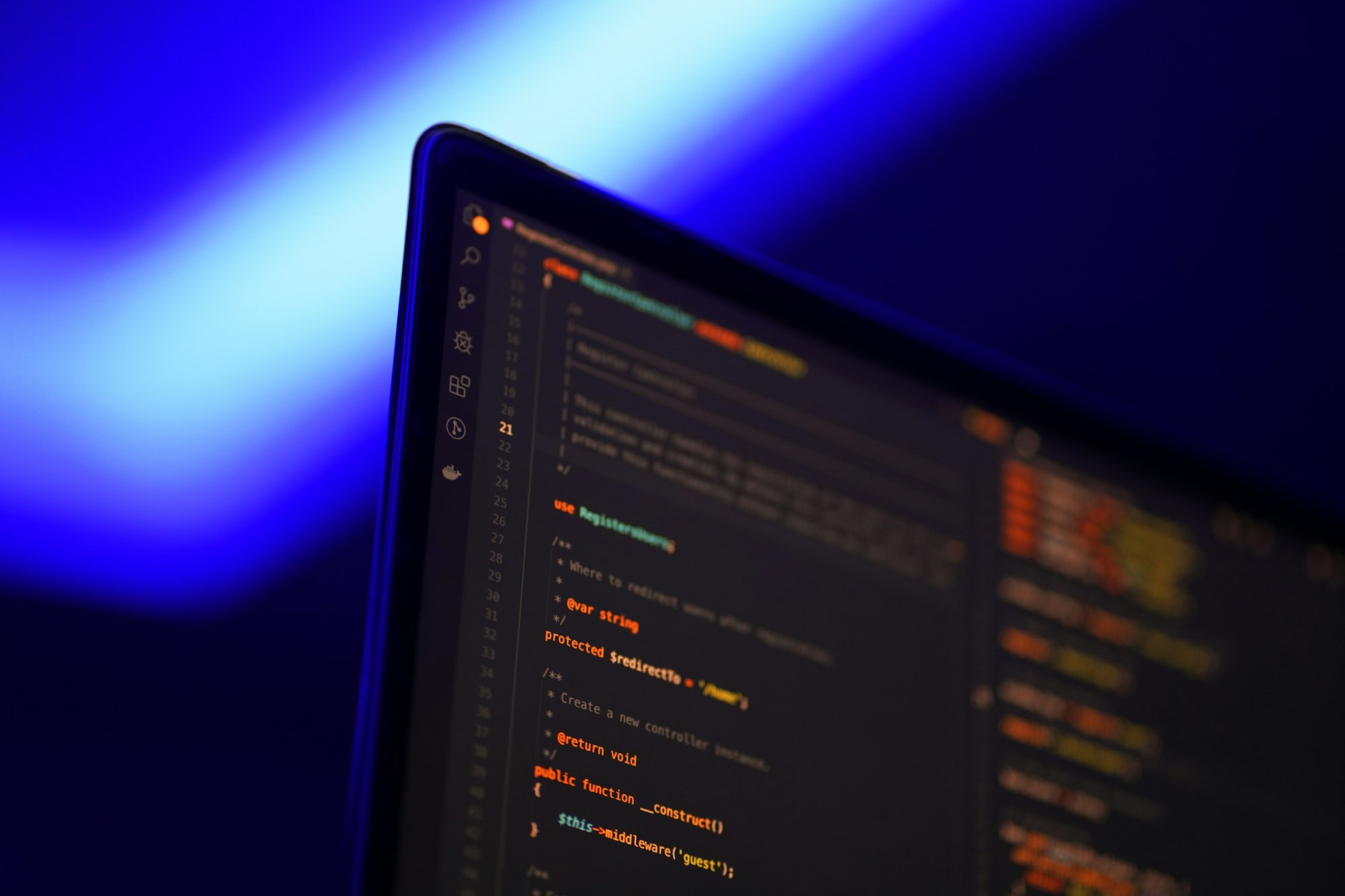
3. The Power of PHP 8.3 & Attributes
Laravel 13 requires PHP 8.3. This isn't just about speed; it's about the death of DocBlocks. We are moving toward native PHP #[Attributes] for everything from Middleware to Eloquent visibility. Your code becomes cleaner, more IDE-friendly, and significantly faster.
 Hazem Abbas
Laravel in the Critical Lane: The Healthcare Revolution
As someone who balances medicine and code, I’ve seen firsthand how "fragile" stacks can fail in healthcare. This is where Laravel's convention-over-configuration philosophy isn't just a preference, it’s a safety requirement.
Laravel is increasingly becoming the backbone for high-stakes healthcare ERPs and patient management systems.
- Compliance by Design: Recent case studies show Laravel-based systems achieving 100% HIPAA compliance through built-in protection against XSS, CSRF, and SQL injection.
- Efficiency Gains: Medical clinics using unified Laravel platforms have reported efficiency increases of up to 340%.
- AI in Med-Tech: With the new AI SDK, building a "Symptom Checker" or an automated "Prescription Audit" tool no longer requires a team of 10 data engineers. You can generate embeddings for medical journals and query them through the native
whereVectorSimilarTo()method in hours, not months.
When lives or sensitive data are on the line, you don't want a "hand-assembled" Node stack where a single package update in a deep dependency tree can break your auth flow. You want the battle-tested, opinionated security of the Laravel core.
The Great Migration: Why You Can't Wait
There’s a narrative that because Laravel 13 has "zero breaking changes" from v12, you can just wait. That is a lie of omission.
While the upgrade is "smooth," the architectural gap between a v12 app and a v13 AI-native app is massive. If you are building on the "old" Laravel patterns—manual service providers for AI, keyword-based search, and docblock-heavy models—you are building a legacy system on day one.
We are entering an era where users expect "intelligent" interfaces. They don't want to navigate menus; they want to talk to their data. Laravel 13 is the first framework that treats AI not as a "plugin," but as a first-class primitive like Routing or Validation.
Laravel vs. Node.js: The 2026 Reality Check
In 2024, we chose Node for its non-blocking I/O and "speed." But in 2026, the bottleneck isn't the framework; it's the database and the network calls to LLMs.
- Productivity: Laravel offers a faster path from zero to production for 90% of business applications.
- Performance: With Laravel Octane, the gap has narrowed so significantly that for most CPU-bound workloads, the difference is negligible.
- Ecosystem: Laravel’s first-party ecosystem (Filament, Pulse, Horizon, and now the AI SDK) provides a level of cohesion that the fragmented NPM ecosystem simply cannot match.
If you are a JavaScript-first team, Node still makes sense for real-time WebSockets or massive streaming APIs. But for everything else? Laravel has effectively "absorbed" the modern tech stack.
Conclusion: Your Code is Either Growing or Rotting
We will see a massive wave of rewrites in the coming months. Not because the old code stopped working, but because it stopped being competitive. A developer using Laravel 13 can build a fail-safe, AI-powered, semantically searchable healthcare app in the time it takes a Node developer to decide which ORM and AI wrapper to use.
The "Artisan" isn't just someone who writes clean code anymore. The modern Artisan is someone who leverages the framework to move at the speed of thought. If your project is still running on the "Old Laravel" architecture, you aren't maintaining an application—you're curating a museum.
If you aren't rewriting for the AI-native era, you're just writing the obituary for your own project.
Key Takeaways for the Transition
| Feature | Old Way (v11/v12) | New Way (v13) |
| AI Integration | Manual SDKs & Service Classes | Native AI SDK |
| Search | Keyword-based / External Search | Native Semantic Vector Search |
| Error Handling | Manual Try/Catch for LLM outages | Automatic Provider Failover |
| PHP Version | PHP 8.2 | PHP 8.3 (Minimum) |
| Metadata | DocBlocks & Annotations | Native PHP Attributes |
The choice is simple: Adapt to the unified stack or get lost in the dependencies.