The Psychology of Digital Bureaucracy: Why User Experience Design Fails in Government Services

By Zoey Keller.
The 47 Step Process Nobody Completes
To carry out a government service, a user visits an official portal. They are requested to open an account, validate the credentials, post the documents, re-key in the information, and go through various integrated systems. In the middle of the process, they give up. This outcome is common. Research has always indicated drop-off rates of 60-80 percent on complex governmental digital services.
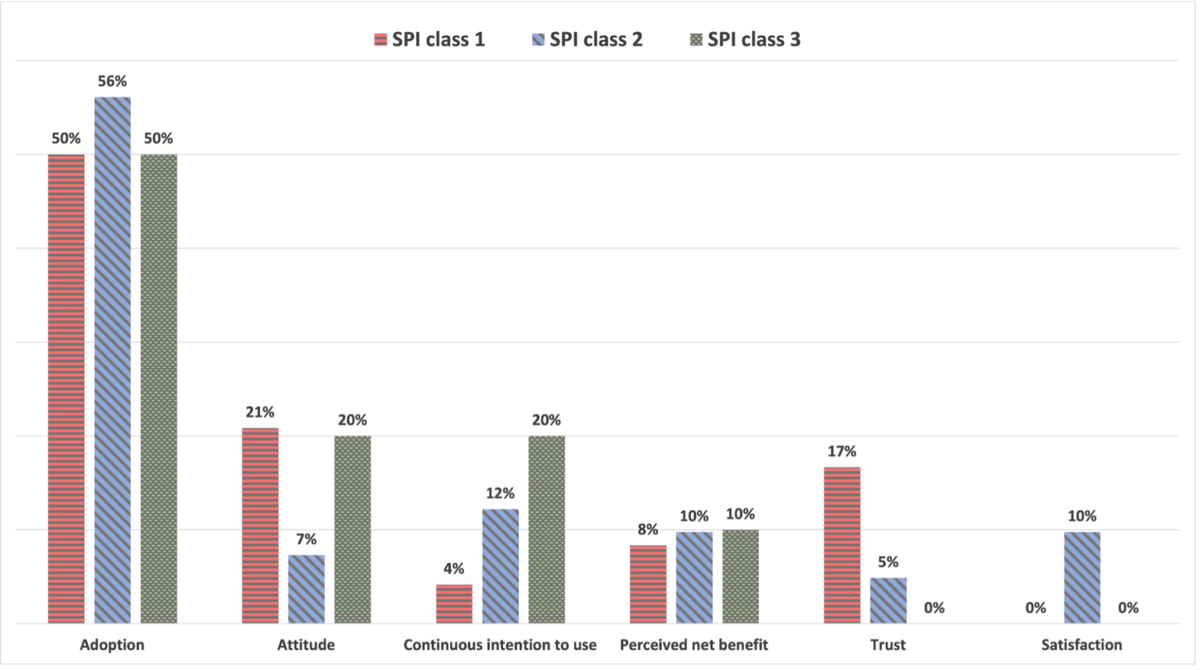
Comparison of adoption, attitudes, trust, and satisfaction across Service Process Innovation (SPI) class 1, class 2, and class 3 users
Such failures are normally blamed on the technical or regulatory limitations but the root causes are psychological. Government digital systems habitually surpass cognitive boundaries, increase anxiety, and disregard fundamental rules of motivation and trust. This paper discusses the failures of user experience design in governmental digital systems, the basis of which is cognitive load, emotional barriers, complexity of language, and structural design weaknesses in completing necessary tasks.
Cognitive Load and the Multi-Step Process Problem
The memory of human workers is not as small as it is, but quite often, the government services demand their users to remember various rules, documents, and verification procedures at once. The longer the process, the fatigue with decisions will be experienced, and the quality of decisions will reduce.
The problem is aggravated by information overload. The thick legalese and extensive teaching paragraphs compel users to filter through a lot of extraneous information in search of practical information. Split attention causes stress in the instances where the user is required to alternate among tabs, documents and reference materials.
The non-linear workflow progress can easily be lost and frustrating, and give up. Studies have continually demonstrated that completion rates decline at an alarming rate with an increase in perceived complexity, especially where progressive disclosure is not well-developed or even absent.
Anxiety and Trust Deficits in Government Interactions
Unique anxiety is created by government systems. The users are usually afraid of the possibility of making a mistake, which can lead to legal, financial, and administrative penalties. This power fear delays decision making and augments avoidance.
The lack of trust aggravates involvement. The past experiences of the opaque or inefficient public systems instill skepticism. The issue of privacy and the fear of being spied on also decreases the desire to proceed particularly when confidential information is needed.
The inhibition of help-seeking is typical. Users are afraid to call customer care out of being questioned or humiliated. Studies of the psychological reactions to stress during bureaucratic interaction reveal higher anxiety rates than the same tasks in the private sector, which adds to the chances of disengagement.
The Language Barrier: Bureaucratic Communication vs User Understanding
Language is one of the main UX failures in government services. Forms and instructions involve a lot of legal terms and complicated sentence structure. Government materials are often put above a general population reading level in readability studies.
The use of passive voice, acronyms (with no definitions), and language that is culturally inaccessible impairs cognition and loads it. This is a barrier that can be a determining factor to stressed users.
To solve these communication failures, services such as Claim Notify can be utilized to simplify complex bureaucratic requirements into an easily understandable set of action steps that will lower anxiety levels and decrease strain on the mind. Even though there are plain language pursuits, the uptake of plain language in the digital systems of the populace varies.
Error Handling and the Psychology of Failure
Complex workflows are likely to make mistakes but in such cases, the government systems tend to handle them poorly. Cryptic messages do not convey the cause of what was wrong and how to recover. Strict validation standards and strict inputs result in learned helplessness.
The fact that past data that has already been typed in is lost in case of an error is particularly devastating and is an indicator of a packet of frailty. Error messages are written in technical terms, which also adds to exclusion. It has been determined that clear recovery paths do greatly enhance user confidence and these practices are hardly ever put into practice.
Progress Visibility and Motivation Maintenance
Feedback is necessary for motivation and progress cannot be seen in the majority of public services. Users are not able to estimate the amount of effort or time that they have remaining without indicators.
Persistence is compromised by the fact that there are no percentages of completion or number of steps. The goal-gradient effect is manifested in behavioral science where motivation rises with the approach to completion. This effect is usually suppressed by government systems through concealing progress and providing no milestone reinforcement.
Mobile Experience Failures and Digital Divide Implications
A large number of government services are desktop-oriented when mobile connectivity is high. The non-responsive layouts, PDF-based workflows, and accessibility failures are of exclusion to large groups of the population.
Age-related and income-related assumptions about digital literacy are demonstrated to be disproportionately applied to older users and people with lower incomes, increasing the digital divide. Inadequate UX of public systems is not only inconvenient but it is actively limiting access to vital services.
Designing Government Services for Actual Humans
Government digital services do not fail due to a lack of motivation on the part of the user, but the systems do not take into account human thinking under stress. Poor feedback loop, anxiety, cognitive overload and use of unclear language are intertwined forces that lead to abandonment.
The successful design of the public service mandates accessibility research, behavioral science and the real user-oriented thinking. Transparency, simplification, and empathy always help in bettering results. Completion is possible instead of extraordinary when the government services are made to conform to real human behavior and not to idealized users.