Vibe Coding is Dead, What Developers Should Know to Progress?


This isn't just about another framework or a trendy library. We are currently living through the most significant shift in how software is built since the move from assembly to high-level languages.
If you’ve spent the last few months "vibe coding"—hitting Cmd+K, tossing a vague prompt at a chatbox, and praying the diff doesn't break your build—you’ve experienced the "magic." But we both know that magic starts to feel like a curse once you hit 5,000 lines of code. The "vibe" doesn't scale.
To survive the next shift, we have to move from being AI-assisted coders to Agentic Engineers. We need to stop treating the LLM like a magic wand and start treating it like a highly capable, slightly distracted junior engineer who needs perfect documentation and a solid set of tools to be effective.
Here is the blueprint for the modern stack, and why the "vibe" era is officially over.
The Hard Truth: Why Vibe Coding is a Dead End
Vibe coding is seductive. It’s fast. It’s dopamine-heavy. But it’s fundamentally reactive. You’re reacting to what the AI gives you.
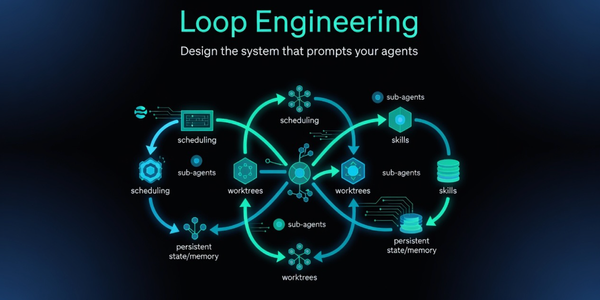
Agentic Engineering is proactive. It’s about building a system—an environment—where the AI can reason, verify, and execute. If you don't understand the infrastructure behind that reasoning, you aren't a developer; you’re a professional copy-paster.
The transition to agentic coding is about moving the "human" up the stack. You aren't writing the loops anymore; you’re designing the systems that ensure the loops are correct.
 Hazem Abbas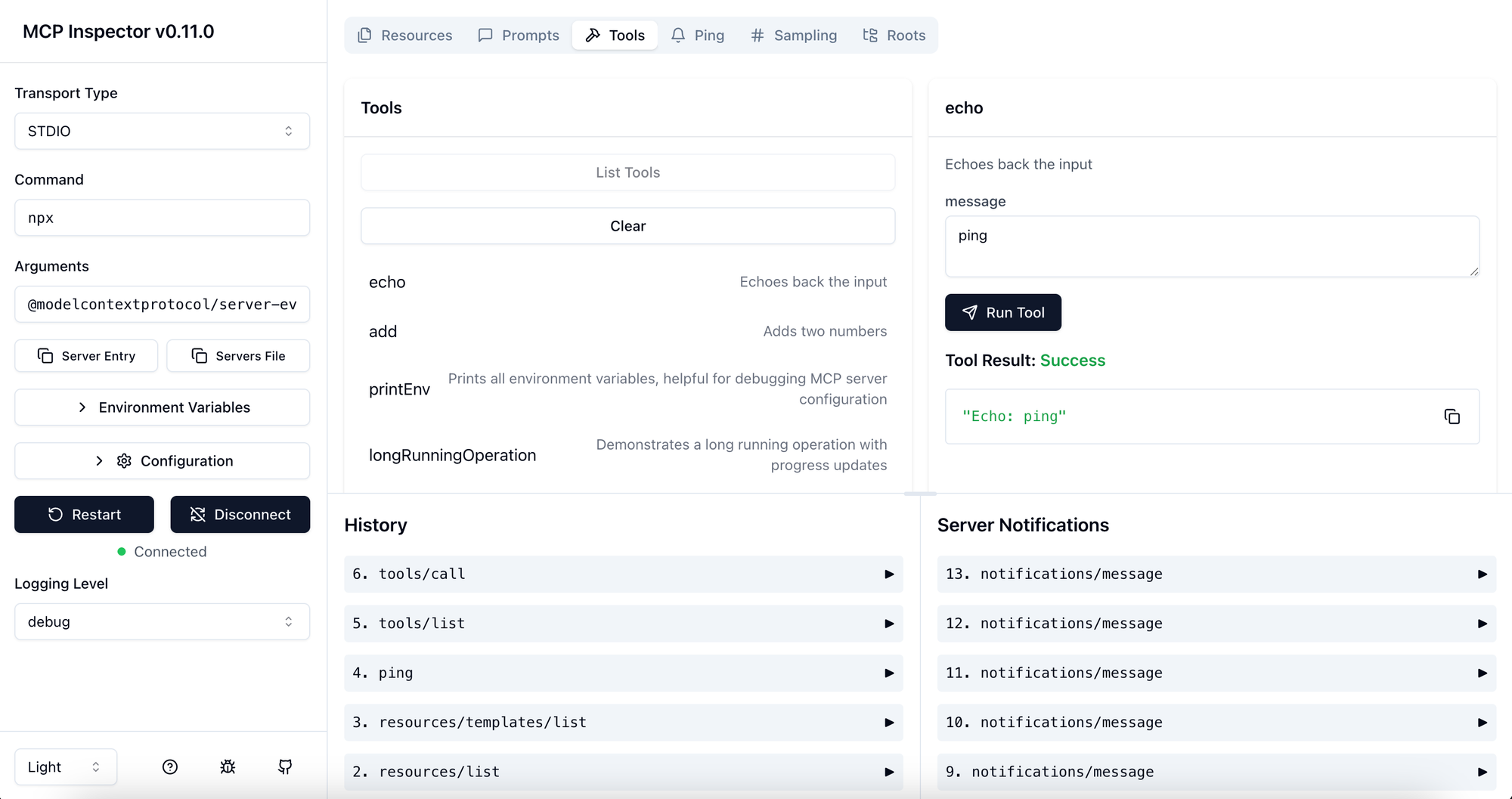
The Modern Developer’s Toolkit: Beyond the Chatbox
1. MCP (Model Context Protocol)
The biggest hurdle for AI has always been the "isolation ward." It knows the world's knowledge up to its training cutoff, but it doesn't know your world. It doesn't know your specific database schema, your local filesystem, or your internal API documentation.
MCP is the open standard that breaks the wall. It’s the universal interface that lets you plug your local environment directly into the AI’s "brain."
- The Skill: Don't just use MCP clients; learn to build MCP Servers. If you can expose your proprietary tools to an agent via MCP, you’ve just given that agent a superpower tailored specifically to your project.
 Hazem Abbas
2. Design.md: The "Source of Truth"
We used to joke that documentation is where code goes to die. In the agentic era, documentation is where code begins.
An AI Agent is only as good as the context you give it. A Design.md file shouldn't just be a list of features; it should be the architectural DNA of your project.
- The Logic: If the agent doesn't know the "Why," it will hallucinate the "How." Before you write a line of code, write the design doc. It is the most high-leverage coding you will do.
3. LLMs Locally (The Sovereignty Play)
Relying solely on closed APIs is a massive risk—both for privacy and for your wallet.
- The Move: Learn to run models locally using Ollama or LM Studio. Understanding how to quantize a model or run a local Llama-3 instance for sensitive codebase tasks isn't just a "hobbyist" move; it’s a professional requirement for data sovereignty.
 Hazem Abbas
4. Agentic Governance & Orchestration
Giving an AI a shell is terrifying. Agentic Governance (MCP Gateways) is the layer of "trust but verify."
- The Orchestration: You need to understand how to chain agents together. One agent to write the code, one agent to write the unit tests, and one agent (the "Gatekeeper") to run those tests and refuse the merge if they fail. This Feedback Loop is what separates a toy from a production-grade system.
What Else You Should Know (The "Unspoken" Stack)
If I were sitting down for coffee with a peer today, these are the three things I’d tell them to look into immediately:
- Synthetic Data Generation: Your agents need to be tested. Using a frontier model to generate thousands of edge-case datasets to "break" your agentic workflow is the new "TDD."
- AI Memory & Long-term Context: We’re moving past the context window limit. You need to understand how Vector DBs and RAG (Retrieval-Augmented Generation) work. An agent that forgets the architectural decision you made yesterday is an agent that will break your build tomorrow.
- Evaluations (Evals): How do you know if your prompt update actually made the agent better? You don't, unless you have an Eval suite. This is the "Unit Testing" of the AI age.
The Shift: From Writer to Architect
A Note to My Fellow Coders
As a developer, I’ve always viewed code as a form of literature—a way to document logic so that both machines and humans can understand it. But the "writer" part of my brain is now sharing space with the "architect" part.
When you upgrade from vibe coding to agentic coding, you stop being the person who swings the hammer. You become the person who designs the factory. This requires a higher level of discipline. It requires you to be clearer in your intent, more rigorous in your documentation, and more skeptical of the output.
We are builders. We create tools to solve problems. The AI Agent is the most powerful tool we’ve ever built, but it’s just that—a tool. It requires a skilled hand to guide it.
The "vibes" were fun for the honeymoon phase. But if you want to build things that last, things that scale, and things that actually solve human problems, it’s time to master the protocol.
Let's stop prompting and start engineering.