Critical Alert: The cPanel Vulnerability That Could Hand Hackers Your Server


If you manage a website using cPanel or WHM, stop what you are doing and read this. There is a critical security vulnerability currently circulating that could allow attackers to take full control of your server without ever needing a password.
Six days ago, a severe vulnerability was publicly disclosed under the identifier CVE-2026-41940. This isn’t just a minor bug; it has received the highest possible severity rating. In simple terms, it allows hackers to bypass authentication entirely, gain root privileges, and access your server as if they were the administrator.
How Does It Work?
The vulnerability is a dangerous combination of an Authentication Bypass and a CRLF Injection.
For those not deep into technical jargon, here is the plain English explanation: When you log into a system, your browser stores a "session cookie" to remember that you are logged in. This vulnerability allows an attacker to inject special characters (like "Enter" or carriage returns) into that session cookie.
By manipulating a specific cookie named whostmgrsession, the attacker can trick the server into believing two things:
- The user has already provided a correct password.
- The user is the "root" administrator.
The attacker sends a crafted request to the login page with this fake data. The server, confused by the injected characters, validates the session as legitimate. The result? The attacker lands directly inside your cPanel or WHM interface with full root access. No password guessing, no brute force attacks—just instant entry.
 Hazem Abbas
Who Is Affected?
The scope of this issue is massive. It affects all versions of cPanel from 11.40 up to the recent patches in April 2026. This includes widely used configurations like WP Squared.
Although the vulnerability technically existed since February 2026, it remained under the radar until recently. Now that the exploit code is publicly available on the internet, the clock is ticking. Estimates suggest that nearly half a million websites are currently vulnerable. If you haven’t patched your server in the last week, you are likely exposed.
 Hazem Abbas
Immediate Steps to Protect Your Server
If you are a server owner or administrator, you need to act immediately. Here is your emergency checklist:
- Update cPanel Immediately: Upgrade to version 11.86.0.41 or higher. This is the only permanent fix.
- Change Your Root Password: Assume your current credentials may be compromised. Change them now.
- Terminate Active Sessions: Log out all current users and destroy existing session data to kick out any potential intruders who might have already slipped in.
- Restrict Access (Temporary Mitigation): If you cannot update immediately, block external access to cPanel/WHM ports (2082, 2083, 2086, 2087) via your firewall. Only allow access from your specific IP address.
- Use a WAF: Place a Web Application Firewall (like Cloudflare) in front of your server to filter out malicious requests before they hit your infrastructure.
 Hazem Abbas
The Bigger Picture: Why Is This Happening Now?
While this specific cPanel bug is alarming, it is part of a larger, more disturbing trend. Over the past few months, I have noticed a dramatic increase in successful attacks and backdoors being planted on servers.
Why the sudden spike? Two main factors are driving this surge.
First, our reliance on Open Source packages has created a fragile ecosystem. We build our digital world on code written by thousands of developers. While open source is powerful, it is also a target. Malicious actors—including state-sponsored intelligence agencies—can insert backdoors into these packages. Sometimes, a developer is compromised; other times, a maintainer might be bribed or coerced. Even well-meaning developers can make mistakes that leave doors open.
Second, and perhaps more terrifying, is the role of Artificial Intelligence.
AI has changed the game for cybercriminals. In the past, finding a complex vulnerability like CVE-2026-41940 required highly skilled hackers spending weeks analyzing code. Today, AI models can scan millions of lines of open-source code, identify complex logical flaws, and write exploitation scripts in minutes.
AI-powered bots can now sweep the entire internet, checking millions of IP addresses for known vulnerabilities with minimal human effort. The barrier to entry for cybercrime has lowered significantly. You no longer need to be a coding genius to launch a sophisticated attack; you just need access to the right tools.
 Hazem Abbas
The Silent Crisis: Why Healthcare Is the Next Target for CVE-2026-41940
While web hosting giants scramble to patch cPanel, a quieter but far more dangerous crisis is unfolding in healthcare. Thousands of clinics, private practices, and small hospitals rely on similar web-based management systems for patient records, scheduling, and billing. Many of these platforms run on outdated infrastructure, mirroring the very vulnerabilities seen in the recent cPanel exploit.
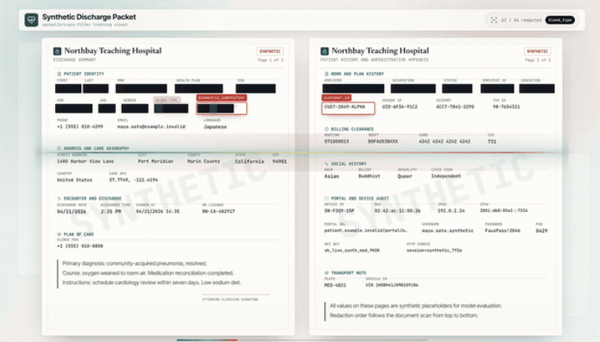
Imagine a hacker bypassing authentication not just to steal credit cards, but to access protected health information (PHI). With an authentication bypass vulnerability like CVE-2026-41940, an attacker could gain root access to a server hosting electronic health records (EHR). The consequences are catastrophic. Patient privacy is violated, medical histories are exposed, and worse, critical care data could be altered or held for ransom.
Healthcare IT teams are often understaffed and underfunded, relying on legacy systems that haven’t been updated in years. They assume their small size makes them invisible to hackers. But AI-driven scanning bots don’t discriminate based on size; they scan for weakness. If your patient portal runs on an unpatched web server, you are a target.
The lesson from the cPanel incident is clear: convenience cannot outweigh security. Healthcare providers must audit their underlying infrastructure immediately. Update your servers, isolate sensitive databases, and enforce strict access controls. In healthcare, a security breach isn’t just a data leak; it’s a threat to patient safety. Don’t wait for the headline. Patch now.
What Comes Next?
The reality is that the internet is entering a new phase of cybersecurity risk. The ease with which this cPanel vulnerability was exploited shows us how fragile our infrastructure can be.
We are moving toward a future where every system must be continuously re-evaluated. Static security measures are no longer enough. We need dynamic, AI-driven defense systems that can detect anomalies in real-time, because the attackers are already using AI to find our weak spots.
For now, patch your servers. Change your passwords. And stay vigilant. The next major vulnerability is likely already out there, waiting to be discovered.
Stay safe, and keep your systems updated.


 Rapid7